





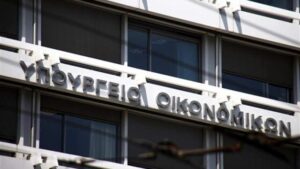
The Ministry of National Economy and Finance has issued a detailed response to criticism from former Greek prime minister Alexis Tsipras regarding the course of the Greek economy. In a detailed statement listed below, it presented what it described as “20 myths and 20 truths” about the government’s economic record from 2019 to 2026.
In its statement, the ministry accused Tsipras’s side of relying on “distortions, inaccuracies and misleading interpretations of the data,” arguing that the government’s record shows stronger growth, lower unemployment, higher wages, rising investment, reduced public debt as a share of GDP and a broader improvement in competitiveness.
It also noted that Tsipras himself had recently acknowledged that “the Greek economy has been outperforming expectations” since 2019.
“Since he has once again attempted to obscure the facts with distortions and inaccuracies, we are responding with data, point by point, to all of his claims,” the ministry said, adding that “for every piece of misinformation, there are facts.”
The 20 ‘myths’ and the ministry’s responses
1. Growth does not benefit society
The criticism argued that Greece’s growth rate remains virtually unchanged from 2019 and that the supposed economic “boom” has not reached households, despite Recovery Fund support.
The ministry responded that under SYRIZA, between 2015 and 2018, Greece recorded average annual growth of just 0.8%, compared with 2.1% in the Eurozone. By contrast, it said, from 2019 to 2025 Greece recorded cumulative growth of 10.8% at constant prices, compared with 6.5% in the Eurozone.
It also rejected the claim that Greece had received €70 billion from the Recovery Fund, saying the actual amount was approximately €36 billion.
According to the ministry, growth has been reflected in society through the creation of nearly 600,000 jobs since 2019, with unemployment falling from 17.3% to 8.9%. Net wages per employee rose by 32%, while the minimum wage increased by 41.5%.
2. Competitiveness is deteriorating
The ministry rejected the claim that Greece’s competitiveness has worsened, citing international rankings. It said Greece rose from 61st place in 2019 to 34th in 2025 in The Economist Intelligence Unit’s Business Environment Ranking, while improving from 58th to 50th in the IMD World Competitiveness Ranking.
On the trade deficit, the ministry said its increase was largely linked to higher imports of capital goods, reflecting stronger investment activity. Investments rose from €20.3 billion in 2019 and are estimated to reach €46.3 billion in 2026, while foreign direct investment rose from €4.5 billion in 2019 to €11.4 billion in 2025.
3. The surplus is based on austerity
Responding to claims that the primary surplus reflects austerity and higher taxes, the ministry said the surpluses recorded since 2019 stem from stronger growth, increased employment, lower borrowing costs and reduced tax evasion.
It contrasted this with the Tsipras government, which it said relied on 30 tax increases or new taxes. The current government, it added, has implemented 83 tax cuts.
The ministry said the primary surplus is projected to fall from 4.9% of GDP in 2025 to 3.2% in 2026, following tax cuts and energy-related support measures.
4. VAT revenue is rising because households are paying more
The ministry said VAT revenue has increased because of higher GDP, stronger consumption, tourism growth and a reduction in the VAT gap, meaning lower tax evasion.
From 2019 to 2025, it said, the VAT gap fell from 24% to 9%, real consumption rose by 15.1%, and tourism receipts increased by 30%.
5. Taxes are rising despite government claims of tax cuts
The ministry accused its critics of confusing higher tax revenue caused by growth and reduced tax evasion with higher tax rates.
It said income tax rates have been reduced, social security contributions have fallen by 5.4%, and the ENFIA property tax has been cut by 35%.
6. Public debt is not really decreasing
The ministry dismissed the argument that public debt has increased in absolute terms and that the fall in the debt-to-GDP ratio is merely an accounting effect.
It said Greece has achieved the fastest reduction in public debt in European economic history, with debt falling by nearly 63 percentage points of GDP over five years. It also linked this progress to Greece’s return to investment-grade status.
7. The debt reduction is only due to inflation
The ministry said the fall in debt is mainly due to growth outpacing borrowing costs, along with primary surpluses generated by stronger growth and reduced tax evasion.
It added that public debt has also declined in nominal terms in recent years, from €364 billion in 2021 after the pandemic to an estimated €357 billion in 2026.
8. The state owes more to citizens
Responding to the claim that overdue state debts have risen from €2 billion to €3.3 billion, the ministry said the figure includes €1.4 billion in pharmaceutical clawbacks and rebates, which are periodically offset once the relevant certifications are issued.
Excluding these amounts, it said, actual arrears stood at €1.9 billion in December 2025, broadly similar to 2019.
9. Poverty is rising
The ministry said the criticism confuses relative poverty with absolute poverty.
It acknowledged that the relative poverty rate stood at 19.6% in 2025, but said the poverty threshold rose by 43%, from €8,195 to €11,700, because incomes increased overall. Average annual disposable household income rose from €16,147 to €21,724.
According to ELSTAT data cited by the ministry, absolute poverty fell from 17.9% in 2019 to 11.3% in 2025.
10. Greece’s production model has not changed
The ministry said Greece’s economic model is changing, with investment rising from 11% of GDP in 2019 to nearly 17% in 2025.
It also said exports of goods and services have doubled from around 20% of GDP before the crisis to 40%, while industry and manufacturing have increased their share of GDP and employment. Productivity, it added, has been growing at twice the EU rate and three times the Eurozone rate since 2019.
11. Protection for primary residences has been abolished
The ministry said protection for primary residences ended in February 2019 under the Tsipras government, which also introduced electronic auctions.
It argued that the out-of-court debt settlement mechanism now provides meaningful protection for citizens genuinely unable to pay, with debts of more than €19 billion settled through the scheme.
12. Private debt is increasing
The ministry said total private debt figures include both servicing debt and credit expansion under the current government.
It added that overdue private debt as a share of total private debt has fallen by nearly 13 percentage points since 2019, reaching 57% in the fourth quarter of 2025. It also cited Eurostat data showing that Greece’s private debt-to-GDP ratio stood at 94.5% in 2024, below the EU average of 121.4%.
13. Non-performing loans were simply moved to servicers
The ministry said non-performing loans held by banks and servicers fell from €99.7 billion in 2018 to €72.65 billion in the fourth quarter of 2025.
Of that total, €5.68 billion was held by banks and €66.97 billion by servicers, representing a reduction of more than €27 billion in absolute terms.
14. Citizens owe more to the state
On overdue tax debts to Greece’s Independent Authority for Public Revenue, the ministry said that at least €35 billion of the €114.2 billion total has been classified as uncollectible.
It also said the number of debtors has fallen by around 77,000 and that 75.5% of total debt is owed by just 0.27% of debtors, each owing more than €1 million.
15. Social security debt is rising
The ministry said a large share of debt to EFKA, Greece’s main social security agency, concerns large corporate debtors and old debts accumulated more than a decade ago.
Of the €51 billion total, it said €21 billion relates to surcharges. Debtors, it added, can use either 72-installment arrangements or the out-of-court settlement mechanism.
16. Foreclosures have become widespread
The ministry said the percentage of successful bids in completed auctions averages around 24%, while in 2025 the rate was 21%.
For residential properties, it said the rate of successful bids stands at 10%, covering all types of homes, with no indication of how many are primary residences. The ministry argued that foreclosures of primary residences are therefore well below 10% of total annual auctions.
17. Out-of-court settlements are not solving the problem
The ministry said the figures cited by its critics are inaccurate. According to published monthly data, it said, successful settlements through the out-of-court mechanism had reached 62,600 by the end of May, corresponding to initial debts of €19.21 billion.
It said settlements increased by 245% from 2022 to 2023 and by 81% from 2023 to 2024. Comparing 2025 with the first year of operation in 2022, the ministry said the increase was around 700%.
18. Vulnerable borrowers remain unprotected
According to the ministry, 9,800 applications under the out-of-court mechanism concern vulnerable borrowers, of which 7,182 were successful.
It added that 460 cases involved people with disabilities who secured repayment plans while retaining their property, while 531 cases saved their homes at the last minute through the advance payment option combined with mandatory out-of-court settlement.
19. Greece is not converging with Europe
The ministry rejected the claim that Greece is not converging with Europe, calling it “fake news”.
It said per capita GDP at constant prices rose by 12.7% in Greece between 2019 and 2025, compared with 4.5% in the Eurozone.
20. Wages are rising only on paper
The ministry said the minimum wage rose by 41.5% between 2019 and 2026, from €650 to €920, while the average wage recorded in the ERGANI employment system rose by 30% between 2019 and 2025.
Over the same period, cumulative inflation stood at 19.4%, meaning, according to the ministry, that wages rose significantly more than prices.
On pensions, the ministry said the 16.4% figure cited by its critics refers only to increases based on inflation and GDP. It added that pensioners have also benefited from additional measures, including a €300 annual payment each November, income tax cuts, exemptions for former EKAS beneficiaries from prescription drug copayments, the abolition of the 30% pension cut for working retirees, and the gradual abolition of the personal difference offset from January 1, 2027.
Overall pension expenditure, it said, rose from €29.3 billion in 2019 to €35.7 billion in 2026, an increase of €6.4 billion, or 22%.
The ministry concluded that household disposable income has also been supported by reductions in taxes and social security contributions implemented in recent years.
Ask me anything
Explore related questions




