





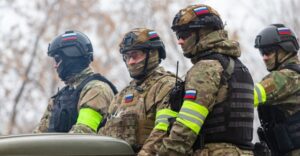
Newly recruited soldiers in the Russian army who are sent to the front lines in Ukraine have a life expectancy of just 20 to 35 minutes once they enter combat, according to Russian military bloggers cited by historian Peter Frankopan in an opinion piece published in Foreign Policy.
According to the same source, from the moment a soldier signs a contract to fight until his death, the average period ranges from 10 days to three weeks, including training and time spent at the front.
These claims are based on reports by Russian military bloggers and have not been independently verified.
Shortage of new recruits and mounting casualties
With Russia’s military campaign in Ukraine now entering its fifth year, senior military officials are reportedly scrambling to recruit enough soldiers to sustain what critics describe as Putin’s “meat grinder.”
In late 2025, Russian authorities announced that more than 420,000 soldiers had been recruited on one-year contracts. However, even Russian state media acknowledge that recruitment has fallen by approximately 30% compared with the previous year.
According to military bloggers, Russia continues to recruit between 800 and 1,000 volunteers each day, many of whom receive only a few days of military training before being deployed to the front.
Average monthly casualties are now estimated to exceed 30,000 personnel, while various Western sources estimate that total Russian casualties since the invasion began in February 2022 have surpassed one million.
Frankopan also writes that, according to the estimates he cites, Russia is currently sustaining eight casualties for every one suffered by Ukraine.
Bonuses of up to $80,000 for new volunteers
The growing difficulty in attracting new recruits has prompted Russian authorities to offer increasingly generous financial incentives.
In some cases, enlistment bonuses of up to $80,000 are reportedly being offered, along with debt forgiveness of up to $140,000, in an effort to encourage volunteers to join the armed forces.
For comparison, the average monthly salary in Russia is around $1,000 and significantly lower in many remote regions, where a substantial proportion of new recruits originate.
Drones are reshaping the battlefield
The article attributes the exceptionally high casualty rate largely to the widespread use of military drones, which have become one of Ukraine’s most effective weapons.
At the same time, Ukrainian forces have been conducting increasingly frequent strikes deep inside Russian territory. Among these was last week’s attack on Moscow’s largest oil refinery, which reports say has been put out of operation until next year. A similar strike also took place in St. Petersburg during the week of the city’s Economic Forum.
According to Reuters estimates cited in the article, Ukrainian drone attacks have reduced Russia’s oil refining capacity by approximately 700,000 barrels per day.
As a result, more than half of Russia’s regions have reportedly introduced fuel rationing—an extraordinary development for the world’s third-largest fuel producer.
Warnings over the economy and domestic stability
According to the report, Russia now devotes more than half of its national budget to military expenditure, while analysts warn that the country’s economy is approaching a critical point.
A Russian military blogger and veteran of the war in Ukraine, known as Alexander Lunin, has publicly accused Russian commanders of systematically torturing their own soldiers and has even warned of the possibility of a military mutiny.
In a video released online, Lunin called for a live televised meeting with Vladimir Putin, warning that otherwise “the army will turn its guns on the Kremlin,” according to Fortune magazine.
However, Peter Frankopan, Professor of Global History at the University of Oxford, believes that a revolution in Russia remains unlikely.
Instead, he argues that the more probable scenario is that President Putin will conclude he has less to lose, leading to a further escalation of the war. “Fear the man who is drowning. The coming months are likely to be dangerous both inside and outside Russia, as Putin desperately tries to stay afloat,” Frankopan concludes.
Ask me anything
Explore related questions




