





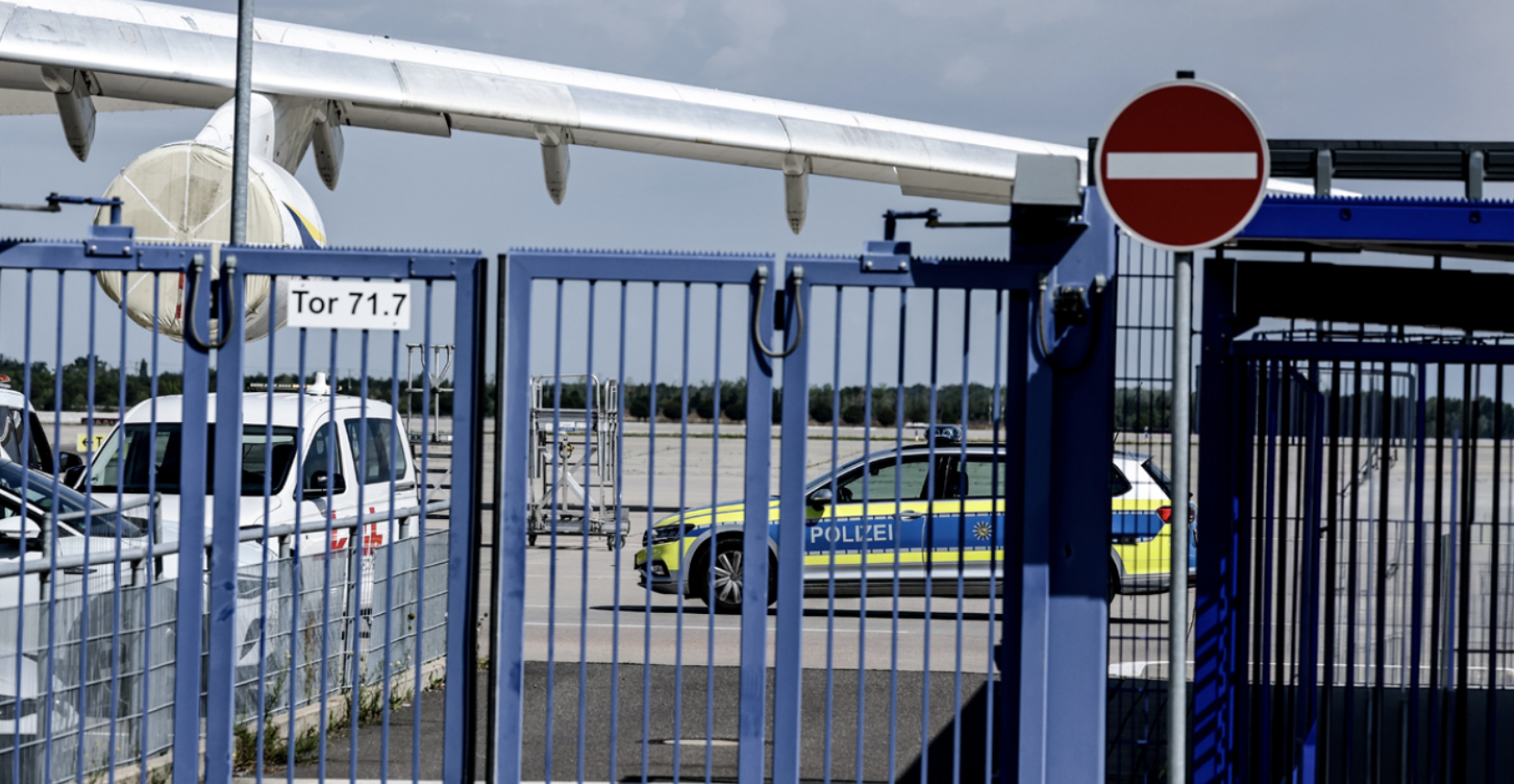
As Germany points the finger at Russia over the alleged attempted hybrid attack involving drones at Leipzig Airport—accusations Moscow rejects—the EU and NATO are preparing their “response.” What that response will be is expected to be discussed at a meeting today between European Commission President Ursula von der Leyen and NATO Secretary General Mark Rutte.
While the two discuss the issue, the foreign ministers of the two blocs are expected to prepare additional sanctions against Russia at an upcoming meeting, the time and location of which have not yet been determined. Germany has already raised the matter at the EU level, calling for measures against Russia’s shadow fleet and for new sanctions.
Sanctions, however, are only one side of the story, as tensions between Germany and Russia are rising dangerously—with the United States so far maintaining “radio silence” while the two sides exchange increasingly harsh rhetoric.
Germany accuses Russia of being responsible for the drone that was discovered on August 4 near Ukrainian transport aircraft and was carrying an explosive device that failed to detonate because it had malfunctioned. German authorities suspect that a second drone also collided with a cargo aircraft located nearby.
“They will get their response”
German Interior Minister Alexander Dobrindt, presenting evidence that he said demonstrates Russia’s responsibility for the hybrid attack in Leipzig—including the drone’s design, the components used, the explosives and the pattern of Russian operations in Europe—said German security services are recording a “high level of threats” through hybrid operations in Germany and other European countries.
The German minister said the Leipzig incident “is not an isolated event, but part of a broader pattern of hybrid activities,” and expects Germany to remain a target of Russian hybrid attacks.
“Let us be clear: We are not at war, but we are a daily target of hybrid warfare,” he stressed.
Germany has also moved from words to action. In response, it announced that it would close the “House of Russia” in Berlin and the Russian Consulate in Bonn on September 18. The decision was welcomed by European institutions, Berlin’s partners and NATO.
“Well, they will receive an appropriate response,” warned Russian Foreign Ministry spokeswoman Maria Zakharova, who said that “with a completely unfounded and exaggerated pretext, Berlin has once again escalated bilateral relations. As usual, no convincing or serious evidence has been presented. It simply does not exist and cannot exist.”
Zakharova speaks of “responses,” and the president of the European Commission has used similarly forceful language. Welcoming Berlin’s measures, Ursula von der Leyen stressed that “hybrid attacks will not go unanswered.” French President Emmanuel Macron used similar wording, saying: “These hybrid attacks are increasing in Europe. They cannot go unanswered.”
Macron appears to share the view of NATO Secretary General Mark Rutte, who said that “Russia’s attempts to intimidate us, undermine our unity and undermine our determination to support Ukraine are futile and will fail.”
He also echoes Greek Prime Minister Kyriakos Mitsotakis, who said: “Greece expresses its full solidarity with Germany following Russia’s hybrid attack in Leipzig. Attempts to intimidate our democracies will not succeed. We remain steadfast and will maintain a credible deterrent force to protect our citizens and our security.”
NATO-EU and… the US in the background?
Britain, Italy, Sweden, Finland, Ireland and Ukraine have also sided with Germany amid the deterioration in relations.
European Commission spokeswoman Paula Pinho confirmed yesterday that a meeting of foreign ministers on the issue is imminent, as part of efforts to strengthen defense cooperation between NATO and the EU. NATO sources said the meeting of ministers would focus primarily on deepening cooperation between the two sides against hybrid threats.
EU foreign policy chief Kaja Kallas said Russia is increasing such “incidents” in an effort “to frighten us and discourage us from supporting Ukraine.”
Estonian Defense Minister Hanno Pevkur warned that Europe should prepare for more hybrid attacks from Russia. The Leipzig incident, the discovery of explosive devices at power facilities in Germany, and allegations by Romania and Estonia of Russian hybrid attacks, he said, are only the beginning.
“Russia is testing where our limits are. We need to be clear,” he warned.
The real puzzle, however, is the limits of Washington’s response.
Despite European leaders and other NATO members expressing solidarity with Germany and calling for a united position and a common response toward Moscow, Washington has remained silent.
The major question—whether the United States will choose to publicly support Germany or instead seek to lower tensions with Russia, potentially leaving its European allies feeling more or less betrayed—could be answered as soon as today.
Following the meeting between von der Leyen and Rutte, as well as meetings and decisions by the foreign ministers of the countries involved, US President Donald Trump, or another American official, is likely to be called upon to comment.
Ask me anything
Explore related questions




