





Authorities are scrutinising 18 influencers, among them well-known rappers and models, over cases involving the promotion of illegal gambling online and on social media.
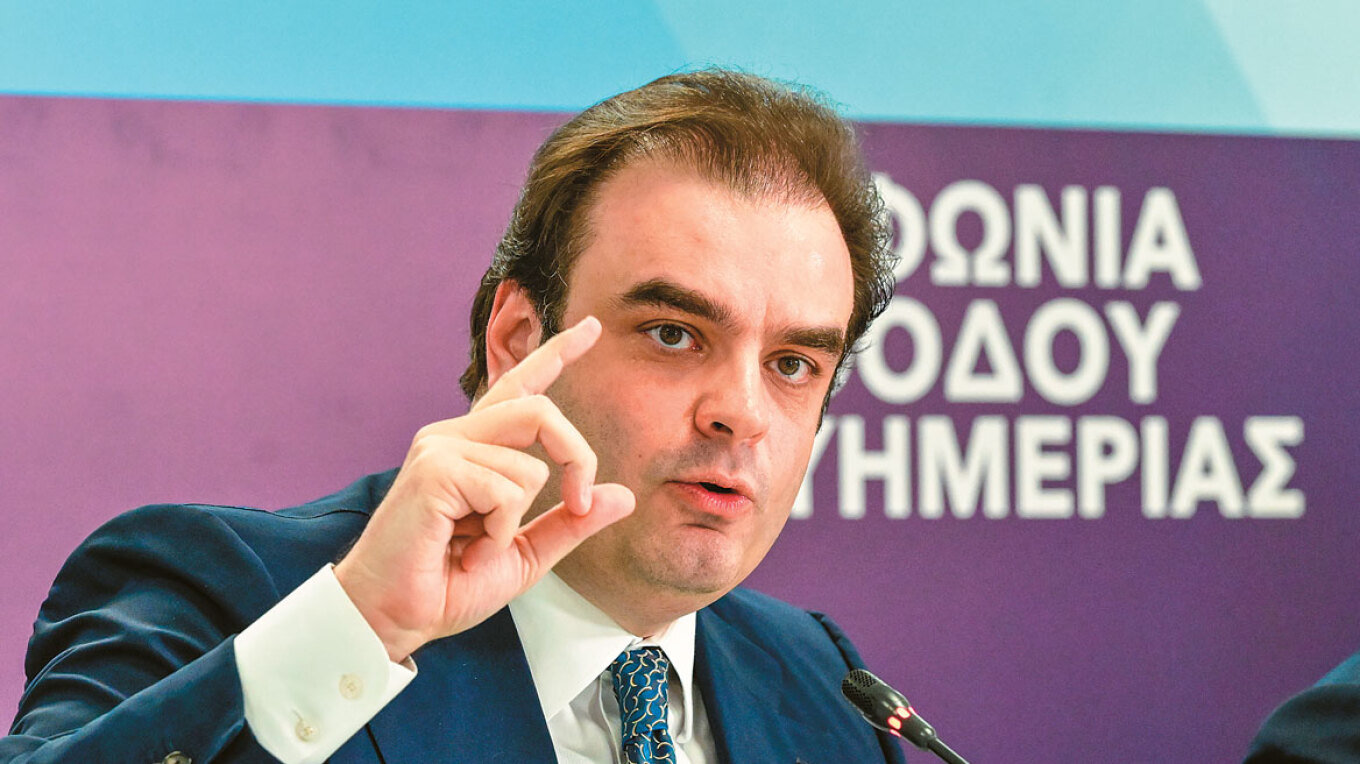
As Finance Minister Kyriakos Pierrakakis revealed, complaints have already been filed and the cases are at the preliminary investigation stage, with a clear message that “popularity does not grant immunity and influence carries responsibility”. “The message in every direction must be one: the internet is not a jungle,” the minister stressed.
Pierrakakis noted that around 15,000 websites had been added to the blacklist, which illustrates the scale of the challenge in tackling illegal gambling.
He explained that illegal gambling is constantly changing shape, exploiting the internet, mobile phones, platforms and social media. An illegal website can change address and reappear very quickly, while an illegal game can reach a large audience through a link, a video, an influencer or a streamer.
Pierrakakis’s full speech
The following is the speech by the Minister of National Economy and Finance to the Hellenic Gaming Commission, during a briefing on the implementation of the law against illegal gambling and the progress of inspections.
Ladies and gentlemen,
In politics, a law is judged on the day it is passed. But above all it is judged on whether it is enforced and, ultimately, on whether it changes reality. In the case of illegal gambling, the difficult reality we faced can be summed up in three figures.
In 2025, around €1.8 billion was wagered in the illegal market, around 900,000 people took part in illegal gaming, and around 15,000 websites had been added to the blacklist.
These figures show the scale of the challenge we had to confront. First of all, there is a serious social problem, with hundreds of thousands of people exposed to the dangers of illegal gambling, particularly younger age groups, who are increasingly in the sights of aggressive forms of online promotion. At the same time, there is an illegal market of enormous economic scale, which deprives the state of revenue and operates to the detriment of the legal market and of those who abide by the rules.
The problem becomes even more complex because illegal gambling is constantly changing shape. It is moving onto the internet, mobile phones, platforms and social media. An illegal website can appear, change address and reappear very quickly, while an illegal game can reach a huge audience through a link, a video, an influencer or a streamer. Lawbreaking evolves. The state’s response must stay ahead of it.
That was the commitment we made, and it is why we changed the institutional framework last June.
We gave the Hellenic Gaming Commission stronger tools to do its job more effectively.
We strengthened the Gaming Inspectors’ Corps with special investigative powers.
We staffed the Commission with 110 permanent posts, 40 of them for specialist scientific personnel, so that it has the expertise and operational capacity that a modern supervisory authority requires.
We introduced the ability to impose immediate administrative sanctions for illegal online promotion, with fines of up to €50,000 per violation.
Today, a few months on, we are here to see how all of this translates into practice. The first results are already in, and we will go through them in detail shortly. We know, however, that complaints have been filed against 18 influencers and that the relevant cases are at the preliminary investigation stage.
The message in every direction must be one: the internet is not a jungle. Popularity does not grant immunity, and influence carries responsibility. Anyone who uses their power and reach to promote illegal gambling must know that they will be identified, scrutinised and will face the consequences provided for by law.
The aim, however, is not only to become more effective at imposing sanctions once a violation has already taken place. The real challenge is to detect lawbreaking earlier and to intervene faster. That is why the work being done here with new digital tools and Artificial Intelligence is so important, allowing us to map illegal networks, to identify illegal websites and the channels through which they are promoted more quickly, and, in cooperation with the Hellenic Telecommunications and Post Commission (EETT) and access providers, to proceed with blocking them.
Technology cannot serve as a shield for lawbreaking. It must become a tool for tackling it. In previous years we used technology to make the state easier for citizens to deal with. Now we have the opportunity to harness it even further to make the state more effective in protecting its citizens. This is a state that does not simply wait for a complaint before acting, but uses data, modern digital tools and Artificial Intelligence to detect, inspect and intervene.
I want to be clear on this point. The fact that an illegal activity takes place online does not create any “grey zone”. The fact that a website may be based outside Greece does not mean there is tolerance. And the fact that promotion takes place through social media does not absolve anyone of responsibility. The rules apply everywhere and to everyone.
However, repression alone is not enough, because the core of the problem remains social. We need prevention, awareness and cooperation with all the competent bodies to tackle addiction and, above all, we need to protect minors and young people. We cannot accept as normal a new generation that encounters gambling ever earlier in its everyday digital life. That is why the Commission must be present not only in inspections, but also in public information efforts, on platforms and on social media, where young people are today.
The Hellenic Gaming Commission is an independent authority, and its independence is fully respected. The political leadership neither indicates who will be inspected nor interferes in the way an inspection is carried out. Our responsibility is to shape the appropriate institutional framework and to give the authority the people and the technological tools it needs to do its job. We also have the responsibility to monitor whether the public policy we designed produces the result for which it was intended.
That is why I am here today. We did not pass the law in June in order to consider our work done. We passed it so that it would be enforced and bring real change. And we will be beside you, supporting you every step of the way.
Ask me anything
Explore related questions




