

×
GreekEnglish

×
  • Politics
  • Diaspora
  • World
  • Lifestyle
  • Travel
  • Culture
  • Sports
  • Cooking
Saturday
17
Jan 2026
weather symbol
Athens 8°C
  • Home
  • Politics
  • Economy
  • World
  • Diaspora
  • Lifestyle
  • Travel
  • Culture
  • Sports
  • Mediterranean Cooking
  • Weather
Contact follow Protothema:
Powered by Cloudevo
> World

Mysterious radio signal is coming from inside our galaxy, scientists announce

Scientists have had trouble tracking down the origin of such blasts

Newsroom November 8 05:32

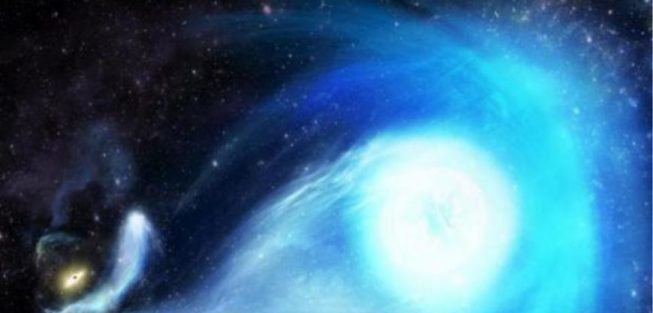
Mysterious, intense blasts of radio energy have been detected from within our own galaxy, astronomers have said.

Fast radio bursts, or FRBs, last only a fraction of a second but can be 100 million times more powerful than the Sun. Despite their intensity, their origin remains largely unknown.

Now astronomers have been able to observe a fast radio burst in our own Milky Way, for the first ever time. As well as being closer than any FRB ever detected before, they could finally help solve the mystery of where they come from.

Scientists have had trouble tracking down the origin of such blasts because they are so short, unpredictable and originate far away. It is clear that they must be formed in some of the most extreme conditions possible in the universe, with suggested explanations including everything from dying stars to alien technology.

See Also:

Crete at center of converging, conflicting interests for Turkey, Greece in Eastern Mediterranean

>Related articles

Trump threatens tariffs against those who oppose U.S. plans for Greenland

CIA chief in Venezuela meets with Rodriguez

Ballistic missile strike hits pier in Ukraine

This is what it’s like to spend your whole life growing up in Erdogan’s Turkey

The bursts of radio energy appear to have come from a magnetar, or a star with a very powerful magnetic field, the scientists who discovered the new FRBs said. They were able to confirm that the blast would look like the other, more distant FRBs if it was observed from outside of our own galaxy – suggesting that at least some of the other blasts could be formed by similar objects elsewhere, too.

Read more: Independent

Ask me anything

Explore related questions

#astronomers#astronomy#astrophysics#physics#science#signal#space#technology#world
> More World

Follow en.protothema.gr on Google News and be the first to know all the news

See all the latest News from Greece and the World, the moment they happen, at en.protothema.gr

> Latest Stories

War, diplomacy, or insurrection: What’s next in Iran

January 17, 2026

New tensions in the Middle East as Trump invites regional leaders to the Gaza Peace Council

January 17, 2026

Weather: A return to winter in the coming days – Cold and strong northerly winds – Kolydas’ post

January 17, 2026

A view of Nikolaos Stasinopoulos of Viohalco – The “enduring imprint” of Greece’s greatest industrialist

January 17, 2026

The horror of the “Tariff of the Dead”: how the Iranian regime prices the bodies of protesters

January 17, 2026

Mitsotakis on the Karystianou party: “There is a long distance between being the parent of a tragedy victim and being the leader of a political party”

January 17, 2026

Patras in carnival mode – This evening, the city’s official opening ceremony

January 17, 2026

Greenland as the first line ofdefense for the U.S. and NATO:

January 17, 2026
All News

> Greece

Weather: A return to winter in the coming days – Cold and strong northerly winds – Kolydas’ post

Winter tightens Its grip across Greece as cold spell persists

January 17, 2026

A view of Nikolaos Stasinopoulos of Viohalco – The “enduring imprint” of Greece’s greatest industrialist

January 17, 2026

Patras in carnival mode – This evening, the city’s official opening ceremony

January 17, 2026

Weather: Noticeable drop in temperature from today – Where it will snow and at which altitudes

January 17, 2026

President of Air Traffic Controllers: Another communications blackout possible in the near future

January 16, 2026
Homepage
PERSONAL DATA PROTECTION POLICY COOKIES POLICY TERM OF USE
Powered by Cloudevo
Copyright © 2026 Πρώτο Θέμα



