





Tiny, tubular structures uncovered in ancient Canadian rocks could be remnants of some of the earliest life on Earth, scientists say.
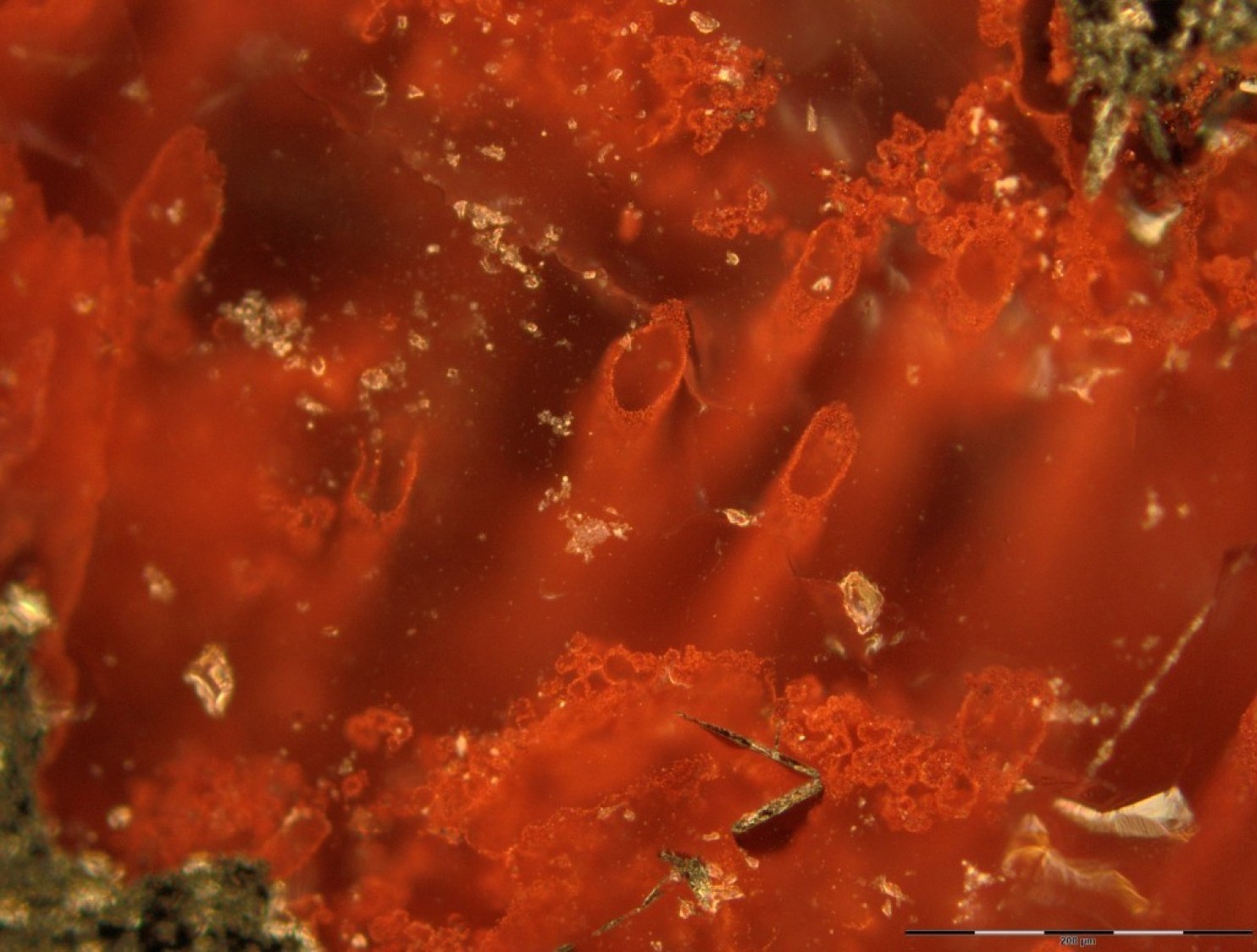
The straw-shaped “microfossils,” narrower than the width of a human hair and invisible to the naked eye, are believed to come from ancient microbes, according to a new study in the journal Nature. Scientists debate the age of the specimens, but the authors’ youngest estimate — 3.77 billion years — would make these fossils the oldest ever found.
Claims of ancient fossils are always contentious. Rocks as old as the ones in the new study rarely survive the weathering, erosion, subduction and deformation of our geologically active Earth. Any signs of life in the rocks that do survive are difficult to distinguish, let alone prove. Other researchers in the field expressed skepticism about whether the structures were really fossils, and whether the rocks that contain them as as old as the study authors say.
But the scientists behind the new finding believe their analysis should hold up to scrutiny. In addition to structures that look like fossil microbes, the rocks contain a cocktail of chemical compounds they say is almost certainly the result of biological processes.
If their results are confirmed, they will boost a belief that organisms arose very early in the history of Earth — and may find it just as easy to evolve on worlds beyond our own.
“The process to kick-start life may not need a significant length of time or special chemistry, but could actually be a relatively simple process to get started” said Matthew Dodd, a biogeochemist at University College London and the lead author on the paper. “It has big implications for whether life is abundant or not in the universe.”
The microfossils were discovered in rocks from the Nuvvuagittuq (nuh-vu-ah-gi-took) belt in northeastern Canada. This strip of iron-rich jasper now cuts across the eastern shore of Hudson Bay, but it was once a hydrothermal vent on the ocean floor. Billions of years ago, Dodd and his colleagues say, ancient microbes flourished around those vents, taking advantage of their chaotic chemistry to generate fuel.
When the microbes died, iron in the water was deposited on their decaying bodies, replacing cellular structures with stone. The rocks that contained them were buried, heated, squashed, and then forced upward to form the part of North America where they now sit. Depending on the dating method used, the material could be as old as 3.77 billion years — or as stunningly ancient as 4.28 billion years.
When Dodd’s UCL colleague Dominic Papineau visited the Nuvvuagittuq belt in 2008, he knew immediately he would have to bring some samples back to his lab. Once back in London, he and Dodd peered at very thin slices of the rocks, first with an optical microscope, then with a laser-based device called a Raman microscope.
The optical observations revealed complex fossil structures encased in hematite, a mineral that would have formed as iron in the seawater interacted with the microbe’s decaying organic matter. John Slack, a co-author and emeritus scientist at the U.S. Geological Survey who studies jaspers from ancient hydrothermal vents, said that the fossils look just like the ones he sees in younger rocks, and around modern-day vents.
Read the article here: washingtonpost.com
Ask me anything
Explore related questions




