

×
GreekEnglish

×
  • Politics
  • Diaspora
  • World
  • Lifestyle
  • Travel
  • Culture
  • Sports
  • Cooking
Friday
05
Jun 2026
weather symbol
Athens 21°C
  • Home
  • Politics
  • Economy
  • World
  • Diaspora
  • Lifestyle
  • Travel
  • Culture
  • Sports
  • Mediterranean Cooking
  • Weather
Contact follow Protothema:
Powered by Cloudevo
> Culture

The Philistines were likely of Greek origin, according to new DNA evidence

According to scientists there was a European-related gene flow that took place during the transition from the Bronze to the Iron Age

Newsroom October 15 11:01

Δείτε περισσότερα άρθρα μας στα αποτελέσματα αναζήτησης

Add Protothema.gr on Google

The Ancient Egyptians are thought to have been descendants of the Ancient Cretans. The Palestinians have claimed the same. Scientists are searching for the truth, but the evidence is growing towards this theory.

In the case of the Philistines, however, the tribe that was accused more than any other in the Hebrew texts, the investigation provided tangible evidence that they were not only related to the Ancient Greeks, but may have been their descendants.

According to DNA found in a large mass grave of Philistines, the tribe was proven not to be indigenous, but they had migrated to the area of ​​today’s Middle East in 1,200 BC, from southern Europe and probably the Aegean, as at that time, the Greeks were powerful and crossed the Mediterranean with their ships.

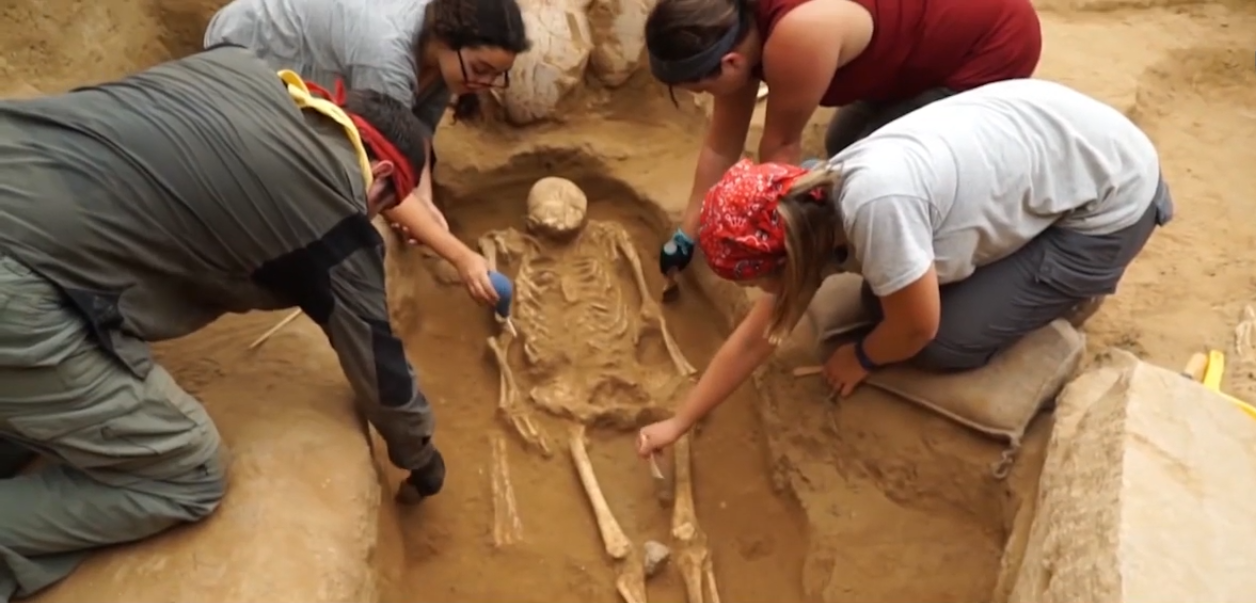
The genetic findings came from skeletons discovered by archaeologists in Israel in 2016, including the bones of newborns buried under Philistine homes.

The Philistines were one of the great enemies of the Israelites, as they are always referred to as criminals in the Bible, with the giant Goliath being a prime example.

“Our study showed for the first time that the Philistines migrated to this area in the 12th century BC”, said Daniel Master, director of the Leon Levy mission to Ashkelon, a coastal city where the first Philistine cemetery was found.

“We did not prove it by presenting a similar style of ceramics, we did not show it by looking at texts, we showed it by looking at the DNA of the people themselves”, added the head of the scientific team.

See Also:

Never underestimate the intelligence of trees

“We can see in Ashkelon new DNA coming from this migratory population that is really changing the whole region”, he said, in an effort to highlight the significance of the discovery.

The Ashkelon team sent more than 100 skeletal specimens to the German Max Planck Institute for the Science of Anthropological History. The DNA was found in ten people, especially in the bones of the inner ear.

>Related articles

NASA’s “Quiet Concorde” to be tested at supersonic speeds for the first time, could cut New York–London flight time to four hours

The “Resurrection” of Mystras after 777 years of decay & 42 years of restoration work: The castle town is now open to visitors

Samaras on a new party: “They tell me I’ve reached 75, why don’t I sit quietly? I reply: in struggles for the homeland there is no retirement – I have made my decisions”

The findings, published Wednesday in the journal Science Advances, showed three stages: before migration, after migration, and after a thinning of the genetic imprint in the local population, a few hundred years later.

“Although genetic modeling suggests southern Europe as a region of origin, there are some limitations to the 3,000-year-old DNA test”, said Michael Feldman, an archaeologist who worked on the study at Max Planck.

“This ancestral element comes from Europe or more specifically from southern Europe. The ancestors of the Philistines must have traveled to the Mediterranean and arrived in Ashkelon sometime between the end of the Bronze Age and the beginning of the Iron Age”, Feldman said. “We could say a lot more if we had more data, for example we could pinpoint the source of this migration,” he added.

Ask me anything

Explore related questions

#aegean sea#archaeology#culture#discovery#dna#europe#greece#Greeks#israel#Max Planck Institute#mediterranean#Middle East#Philistines#world
> More Culture

Follow en.protothema.gr on Google News and be the first to know all the news

See all the latest News from Greece and the World, the moment they happen, at en.protothema.gr

> Latest Stories

NASA’s “Quiet Concorde” to be tested at supersonic speeds for the first time, could cut New York–London flight time to four hours

June 5, 2026

The “Resurrection” of Mystras after 777 years of decay & 42 years of restoration work: The castle town is now open to visitors

June 5, 2026

Samaras on a new party: “They tell me I’ve reached 75, why don’t I sit quietly? I reply: in struggles for the homeland there is no retirement – I have made my decisions”

June 5, 2026

Another Paros: Finding the Island’s True Character

June 5, 2026

SYRIZA Political Secretariat approves Famellos’ proposal to reach out to Tsipras – Final clarification tomorrow at the Central Committee

June 5, 2026

Iran “throws the ball back” to Trump: $24 billion stands between Tehran and Washington as negotiations reach a deadlock

June 5, 2026

Trump and Patriarch Theophilus discussed the protection of Christians in the Middle East

June 5, 2026

George Souflias has died at the age of 85

June 5, 2026
All News

> Greece

In reverence, the emotional deposition in Jerusalem, see photos & video

The Holy Temple of the Resurrection opened after many days due to the war between Israel and Iran

April 10, 2026

In the final stretch for the accreditation of joint master’s degrees: Aiming for their launch in the coming academic year

April 10, 2026

Schedule for Epitaph Procession today (10/4)

April 10, 2026

Perfect weather for Easter excursions, according to Tsatrafyllia’s forecast

April 10, 2026

Easter in Greece: The customs that continue in Greek tradition – From Nafpaktos to Corfu

April 10, 2026
Homepage
PERSONAL DATA PROTECTION POLICY COOKIES POLICY TERM OF USE
Powered by Cloudevo
Copyright © 2026 Πρώτο Θέμα



