

×
GreekEnglish

×
  • Politics
  • Diaspora
  • World
  • Lifestyle
  • Travel
  • Culture
  • Sports
  • Cooking
Thursday
21
May 2026
weather symbol
Athens 20°C
  • Home
  • Politics
  • Economy
  • World
  • Diaspora
  • Lifestyle
  • Travel
  • Culture
  • Sports
  • Mediterranean Cooking
  • Weather
Contact follow Protothema:
Powered by Cloudevo
> World

A ‘captured’ alien planet may be hiding at the edge of our solar system — and it’s not ‘Planet X’

An international team of researchers recently simulated the unstable celestial mechanics of the early solar system

Newsroom June 29 11:32

Δείτε περισσότερα άρθρα μας στα αποτελέσματα αναζήτησης

Add Protothema.gr on Google

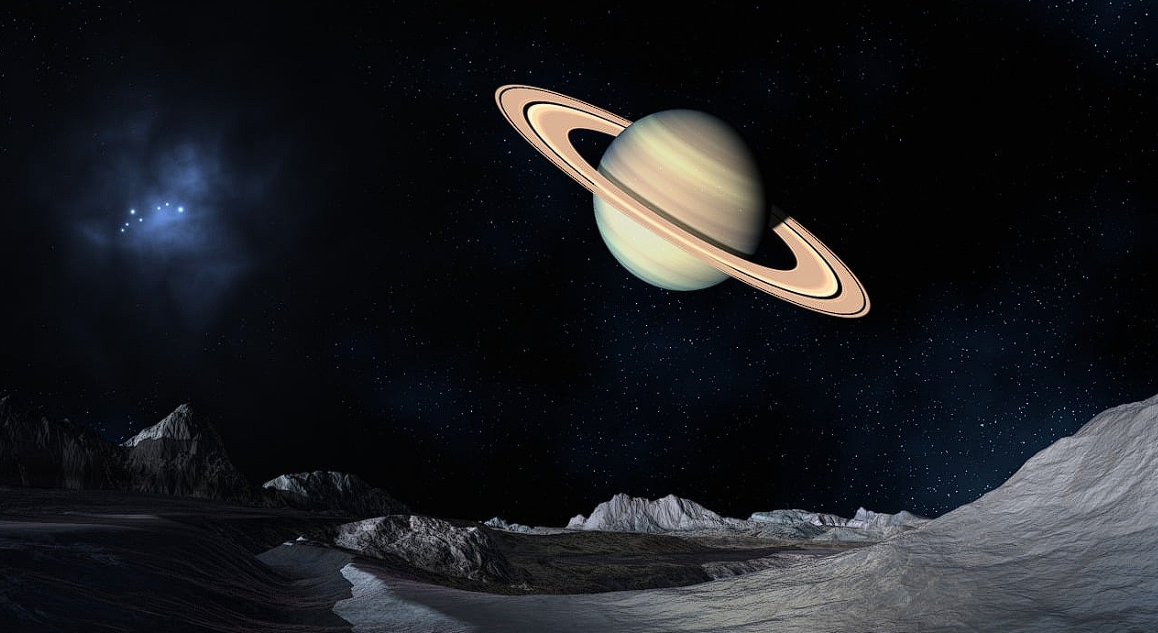
In 1906, astronomer and businessman Percival Lowell launched a search for “Planet X,” a hypothetical giant planet orbiting the sun beyond Neptune. Lowell was convinced that Planet X existed based on some supposed irregularities he had observed in the orbits of Neptune and Uranus. His belief eventually led to the discovery of Pluto in 1930, though scientists later determined that the dwarf planet was too small to have a gravitational impact on Neptune’s orbit (let alone Uranus’).

Today, the Planet X hypothesis is largely considered to be discredited. However, that hasn’t stopped astronomers from looking for planets in the far reaches of the solar system. And according to a new study, they might be out there — only much farther away than Lowell could have predicted.

>Related articles

NASA launches new mission to discover the origin of the mysterious energy ring around Earth

The telescope malfunction that led to the remarkable discovery of a second Earth that may even have…water

Authorities search to…space for the identity of the USV found in Lefkada: The satellite dish, the router & the increased surveillance measures

An international team of researchers recently simulated the unstable celestial mechanics of the early solar system. They found that there is a possibility that one or more planet-size bodies came to rest in the Oort cloud, a vast collection of icy objects stretching between a few hundred billion to several trillion miles from the sun, according to NASA. The new paper describing the work has been published to the preprint server arXiv and has yet to be peer-reviewed.

Approximately 4.5 billion years ago, when the solar system was first forming, it was an unsettled place. Gravity sent debris from the rapidly cooling protoplanetary dust cloud pinging around like cosmic pool balls. Occasionally, the researchers calculated, large pieces of debris — even planet-size ones — would have been hurled far enough to escape the sun’s gravity altogether.

source livescience.com

Ask me anything

Explore related questions

#missing planet#space
> More World

Follow en.protothema.gr on Google News and be the first to know all the news

See all the latest News from Greece and the World, the moment they happen, at en.protothema.gr

> Latest Stories

Gas smell in Attica: What the new data analysis and the map of “suspicious” areas show

May 21, 2026

Athens public transport upgraded: New trains, “smart” network, and more frequent metro and bus routes

May 21, 2026

Thyranoixia of the Saint Tychon Parish in Luleå, Sweden

May 20, 2026

Tehran considers a new US proposal after the visit of the Pakistani mediator

May 20, 2026

Eurostat: Inflation in Greece confirmed at 4.6% in April

May 20, 2026

Trump on Iran: Either we’ll finish it or they will sign an agreement

May 20, 2026

Dendias: Ukraine owes a big apology for the drone, I am not among those who have believed the narrative of “calm waters”

May 20, 2026

“Life of Byron”opens at the Greek Center next week

May 20, 2026
All News

> Greece

In reverence, the emotional deposition in Jerusalem, see photos & video

The Holy Temple of the Resurrection opened after many days due to the war between Israel and Iran

April 10, 2026

In the final stretch for the accreditation of joint master’s degrees: Aiming for their launch in the coming academic year

April 10, 2026

Schedule for Epitaph Procession today (10/4)

April 10, 2026

Perfect weather for Easter excursions, according to Tsatrafyllia’s forecast

April 10, 2026

Easter in Greece: The customs that continue in Greek tradition – From Nafpaktos to Corfu

April 10, 2026
Homepage
PERSONAL DATA PROTECTION POLICY COOKIES POLICY TERM OF USE
Powered by Cloudevo
Copyright © 2026 Πρώτο Θέμα



