





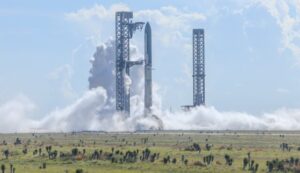
SpaceX is preparing for one of the most important tests in the history of Starship. The giant spacecraft is expected to launch today, Monday 28 September, from the company’s facilities at Starbase in South Texas, during a 75-minute launch window opening at 3:15 p.m. Greek time.
The launch will be Starship’s 14th flight since its first test in April 2023. To date, all missions have been suborbital, meaning they have been flights into space but without the speed required to enter orbit, approximately 28,000 kilometers per hour.
Standing approximately 124 meters tall, Starship is the largest and most powerful rocket ever built. It consists of the Super Heavy booster and the Starship spacecraft, both of which are reusable.
During Flight 14, the 52-meter-tall Starship will attempt to complete six orbits around Earth, while also deploying 26 Starlink Version 3 satellites, which are intended to become the first satellites in a new large constellation in low Earth orbit.
Almost ten hours after launch, Starship is expected to return to Earth and splash down in the Pacific Ocean, off the coast of Chile. The Super Heavy booster will complete its mission approximately seven minutes after liftoff, splashing down in the Gulf of Mexico.
As far as the goals of space exploration are concerned, today’s test, although important, does not mark the end of the road: SpaceX will subsequently have to demonstrate the safe transfer of fuel between spacecraft in orbit, as future missions to the Moon and Mars will require multiple fuel transfers from specialised “tanker” spacecraft.
At the same time, Starship will need to be equipped with a life-support system before crewed missions can begin. That prospect is not far away: NASA has selected Starship as the first crewed lunar lander for the Artemis program, with the goal of returning humans to the Moon in 2028 as part of the Artemis IV mission.
Today’s flight, therefore, is more than just another test. It is a crucial step towards proving whether Starship can move from the experimental flight stage into the era of regular space missions.
Ask me anything
Explore related questions




