$3.1 trillion is the astronomical amount estimated to be required for a peace deal in Ukraine over the next decade, according to Bloomberg Economics. Donald Trump is seeking to shift most of that financial burden to European countries, which could push the European Union to its limits.
The former US president has already begun sending clear messages to European leaders about the obligations they will have to assume if they want to ensure peace in Ukraine.
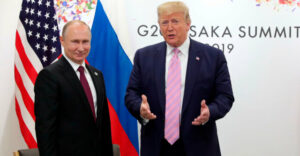
Following his communication with Russian President Vladimir Putin and the start of the peace talks, US Defense Secretary Pete Hegseth explained to European allies that the primary responsibility for funding the deal should fall on them.
Surprise the Europeans
European officials were surprised by Trump’s phone call with Putin, a major diplomatic move of which key allies had received no notice, two officials said.
A European supporter of Ukraine called it a sellout, saying the U.S. was caving in to Putin’s key demands before talks even began.
The dramatic developments have revealed the scale of the challenge facing the Europeans, and it is a challenge for which, at the moment, they are largely unprepared.
The analysis
Bloomberg Economics looked at the costs of supporting Ukraine through future negotiations, rebuilding the war-ravaged country and its defense, and strengthening the military power of European countries as a deterrent to Russian aggression.
Rebuilding Ukraine’s military could cost about $175 billion over 10 years, depending on the state of its forces when a peace deal is reached with what territory it will need to defend.
A 40,000-man peacekeeping force would cost about $30 billion over the same period, though Zelensky says many more troops would be needed.
Most of the money would go to military aid for EU countries and increase their overall defense budgets to close to 3.5 percent of GDP, according to the latest discussions at NATO headquarters in Brussels.
The additional funding would cover artillery batteries, air defence systems and missile systems. It would strengthen the EU’s eastern border, prepare EU armies for rapid deployment and lead to a massive increase in the European defence industry.
If these huge expenditures were financed by issuing debt, it would increase by an additional $2.7 trillion the borrowing needs of the five largest European NATO members over the next decade, according to Bloomberg Economics.
Major changes to budgets
To mobilize resources on such a large scale, European governments will have to radically rethink how they draw up and prioritize their budgets, work with experts to redesign their defense industries and agree on joint debt issuance.
This will require a level of political will, long-term thinking and sacrifice that many EU members have so far failed to demonstrate, particularly in Western Europe, where some still see war as a distant problem.
Berlin, Rome and Paris have also reacted to efforts to seize some $300 billion of frozen assets of the Russian central bank and use that money to help Ukraine.
This means that difficult choices will have to be made in terms of spending on health, education and social welfare. And these decisions will be made against a backdrop of popular unrest.
But with an authoritarian state threatening its eastern border and a growing realization that they cannot rely on the White House, the cost of inaction could be much higher for European countries.
Some leaders and many security officials warn that if the Europeans fail to create a convincing deterrent, Putin will increase his efforts to weaken and eventually even dismantle the EU and the NATO alliance.
Ask me anything
Explore related questions