





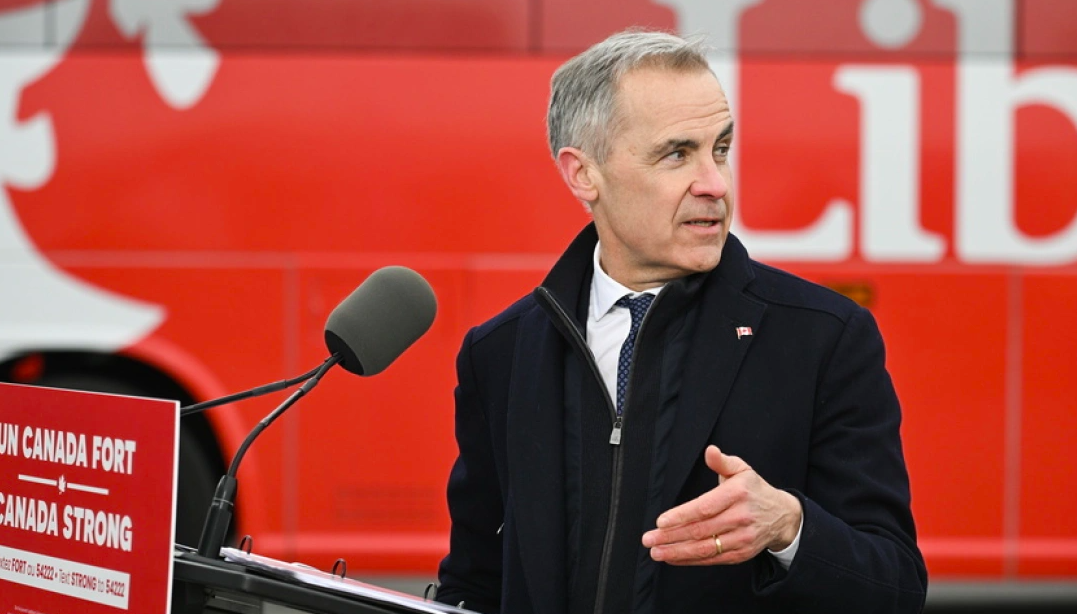
With 99% of the votes counted, Mark Carney, the successor to Justin Trudeau as the Liberal Party leader, seems set to become the new Prime Minister of Canada. According to numbers from Canada’s Ministry of the Interior, Carney, like his predecessor, will not hold an absolute majority in the House, gathering 168 seats with the threshold for complete control of Parliament being 172.
However, beyond the Centrist Liberals, the Conservative Party led by Polievre also shows a significant increase in seats, effectively splitting the electoral body in the country and negatively impacting all smaller parties, which have lost a substantial portion of the popular support recorded in January polls.
While Polievre’s Conservatives are significantly boosting their numbers compared to the 2021 elections, it appears that in yesterday’s Canadian elections, the public sent a clear message that this is not a “normal” electoral battle but rather an informal “referendum” with a key question: “Should we remain an independent country or become the 51st state of the USA?”
The results make it clear that Canadians continue to support their absolute autonomy, sending a strong personal message to the opposition leader, Polievre, who lost his parliamentary seat… despite the fact that his party, which closely aligned itself with Donald Trump’s political positions, increased its percentage.
What Does the Liberal Electoral Victory Mean?
Firstly, it is evident from the statements of Mark Carney himself, who took over the presidency of the party last March and has served as interim Prime Minister ahead of the elections, that Canada will not remain passive and silent in the face of the economic tariffs imposed by Donald Trump’s USA. Carney has made clear that he and the country are open to dialogue with the US President regarding an agreement but will not tolerate the 25% tariffs the US has imposed on some of the country’s key export products. Carney has also emphasized that Canada is now closer to the rest of the world than it is to neighboring USA and has not ruled out the possibility of immediate dialogue on economic agreements and “opening up” to both Europe and China. The former banker, with a career in both the US and Europe, seems to have already made initial contacts, as indicated by the congratulatory telegrams from the European Commission and Beijing (an unusual move for China) just minutes after his first address to the Canadian people.
On another level, Canadians, who until the end of January were giving Polievre’s right-wing party a 20-point lead, decided to support the party that clearly advocated for the country’s independence following Trudeau’s departure from the scene. Despite having significant reservations about specific policies – primarily economic ones – they have not fully entrusted the fate of Canada to Carney and did not grant him an absolute majority. Traditionally, minority governments in Canada struggle to maintain power for more than two years, and this is the message from the Canadian people to the new Prime Minister: “You don’t have much time.”
Despite the increase in their percentage (over 7 points compared to the 2021 elections), the opposition should be concerned. Polievre, who has been publicly supported by Trump, seems not to have even been elected as a member from his own region, and his alignment with specific positions, especially on immigration and the economy in relation to the American President, has cost him dearly. While the Conservatives will exercise opposition from their sufficient number of seats, they will also be closely scrutinized by Canadians who do not want to become a US state and would prefer to avoid close relationships, especially over the next three years, with their nearest neighbor.
According to analysts in the US, the elections in Canada also indicate something else. With only 100 days in the Oval Office, Donald Trump has managed, beyond creating global upheaval, to transform electoral processes into informal “referendums,” with citizens choosing between candidates and policies that contrast with or align to his doctrine. Canada, through its choice, sends a clear message to Washington that the coming years will not be “friendly,” even if this means painful choices and sanctions.
Ask me anything
Explore related questions




