Death Toll in Israel Rises to 2 from Iranian Missile Strike
Another person has been declared dead following the direct impact of an Iranian missile on residential buildings in Rishon LeZion, central Israel, according to Jewish media reports citing the Magen David Adom ambulance service.
Two people were killed and at least 20 others were injured in the strike, the reports state.
June 14, 2025 – 06:48
Brief Alarms After New Wave of Missiles Launched from Iran
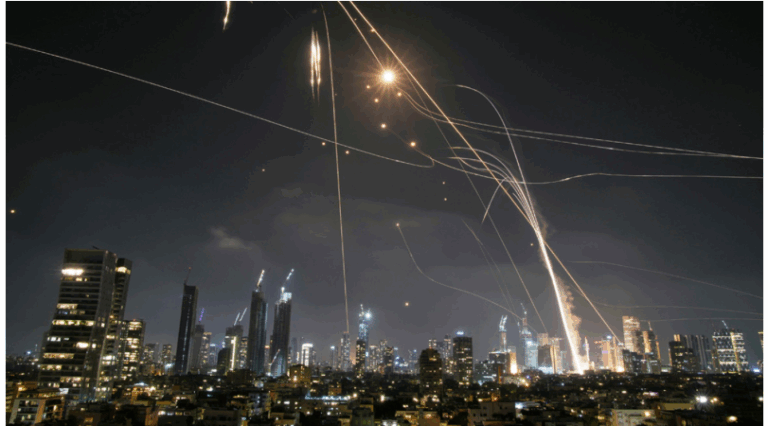
Air defense sirens were activated in several areas of Israel early this morning as the military announced that it had detected a new wave of missiles launched from Iran towards Israeli territory and was working to intercept them, before subsequently ending the alert.
“Sirens sounded in various parts of Israel after the detection of Iranian missiles heading toward Israel,” the military said via Telegram.
Approximately ten minutes later, however, it announced that the population could leave the shelters, provided they remain “close” to them.
Tehran launched at least 100 ballistic missiles toward Israel, causing explosions in Tel Aviv and Jerusalem. Earlier, Israel struck a nuclear facility in Isfahan. Russian President Vladimir Putin offered to mediate between the two countries. The U.S. is deploying ships and troops to the Middle East amid fears of Iranian retaliation, while Iran threatens “hell.” Israel’s military reported attacks on Iranian nuclear sites and claimed that top Iranian Revolutionary Guard commanders, including Hossein Salami, were killed. Israeli Prime Minister Netanyahu revealed that the U.S. was informed prior to Israel’s strikes. Meanwhile, former U.S. President Trump urged Iran to negotiate its nuclear program, warning of harsher Israeli attacks. Explosions were heard over Jerusalem, and at least one Iranian missile reportedly fell near Tel Aviv’s air defenses. Concerns rise internationally over regional stability, including shipping and tourism.
Updated: According to The Times, Iran retains the capacity to destabilize the Middle East and the global economy despite international sanctions and isolation. The paper outlines five possible responses by Iran to Israel’s recent strike. Meanwhile, the U.S.–Iran nuclear talks scheduled for Sunday in Oman have been postponed indefinitely due to the escalating conflict. Former President Donald Trump remarked that Iran “missed an opportunity” for a deal but might get another chance. Concurrently, Israel launched a new wave of airstrikes, with multiple explosions reported across Tehran and near nuclear sites. Iran’s air defenses intercepted missiles and an Israeli drone, as the Israeli military confirmed ongoing strikes on missile and drone facilities
Updated: Greek Prime Minister Kyriakos Mitsotakis held a phone call with Cypriot President Nikos Christodoulides to discuss recent regional developments, security concerns, and the potential impact on regional stability. Amid heightened tensions following Israel’s major strike on Iran, Greece has tightened security around Israeli and Iranian sites in Athens and Thessaloniki. The National Security Council (KYSEA) convened urgently under Mitsotakis, prioritizing the safety of Greeks in conflict zones and reinforcing protection measures domestically, including increased patrols and plainclothes security personnel.
Updated: A meeting of Greece’s Government Council for Foreign Affairs and Defense (KYSEA) began shortly after 6:00 p.m. on June 13, chaired by Prime Minister Kyriakos Mitsotakis, to assess the escalating crisis in the Middle East. Mitsotakis returned urgently from Sweden, where he was advancing bilateral cooperation in defense and economic sectors. Meanwhile, the Greek Foreign Ministry issued guidance to Greek citizens in Jordan—following the closure of the country’s airspace—and reiterated travel warnings for Lebanon. At the same time, the Israeli military confirmed ongoing strikes across Iran under “Operation Rising Lion.” Former U.S. President Donald Trump told The Wall Street Journal the attacks are “great for the market,” claiming they will prevent Iran from acquiring nuclear weapons.
Updated: According to a BBC analysis, Donald Trump’s ambiguous stance on Israel’s attack on Iran could fracture his voter base. While Trump has campaigned on a “no more wars” promise and vowed to end conflicts in Ukraine and Gaza, his social media posts seem to endorse Israeli military action, raising concerns among his anti-interventionist supporters. This internal division could challenge his credibility and affect his campaign. Simultaneously, Israel’s escalating conflict with Iran has severely impacted Greek tourism, as Israel was projected to be one of the fastest-growing inbound markets for Greece in 2025, with a 41% increase in flight bookings compared to 2024. Air raid sirens have also sounded in northern Israel near the Lebanon border, signaling further regional instability.
Updated: On June 13, 2025, Israel launched a large-scale attack on Iran targeting nuclear facilities, including the underground site in Natanz. The strikes resulted in 78 deaths and 329 injuries, including top Iranian commanders and scientists. Donald Trump issued direct threats against Tehran, promising more severe actions. In response to fears of Iranian retaliation, Israel shut down its embassies worldwide. Military and diplomatic forces in both nations are on high alert, raising concerns of a broader Middle East conflict.
Significant damage was reported in Tehran, Natanz, Tabriz, and other cities. Air traffic has been rerouted to avoid Iranian airspace, straining Gulf aviation hubs. The Natanz facility is central to Iran’s uranium enrichment program and has long been under scrutiny. Hamas condemned the Israeli strikes, reaffirming its alliance with Tehran. Despite the tensions, life in Jerusalem remains relatively calm, reflecting the region’s grim normalization of conflict.
When and where did the Israeli attacks take place?
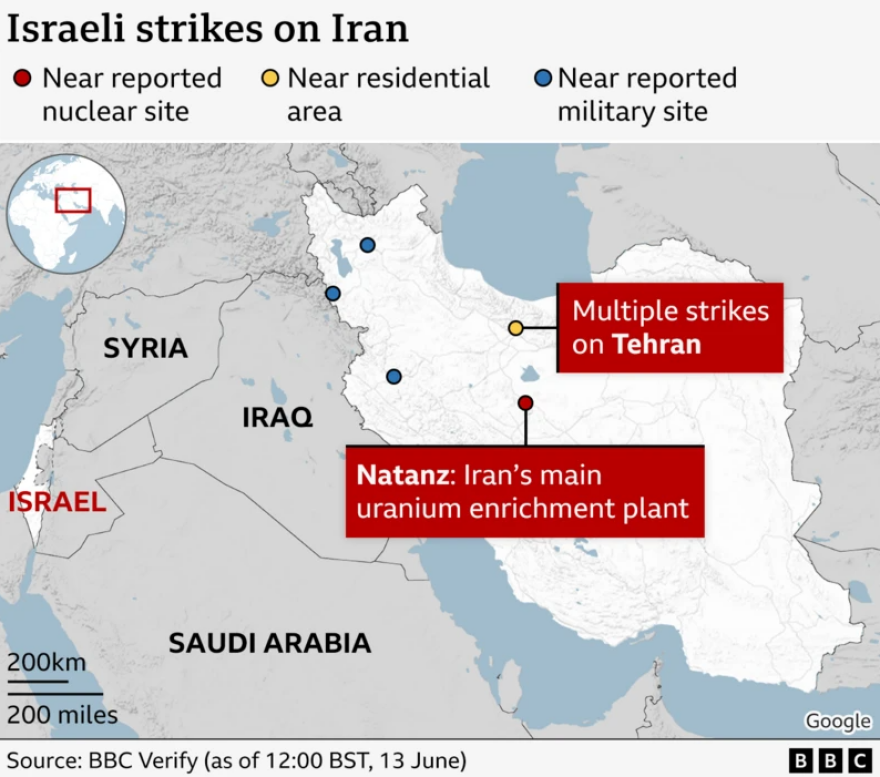
Explosions were reported in Iran’s capital, Tehran, around 03:30 local time (01:00 BST).
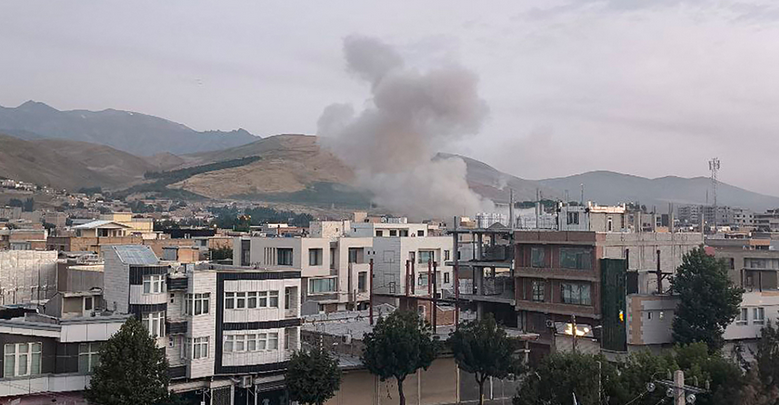
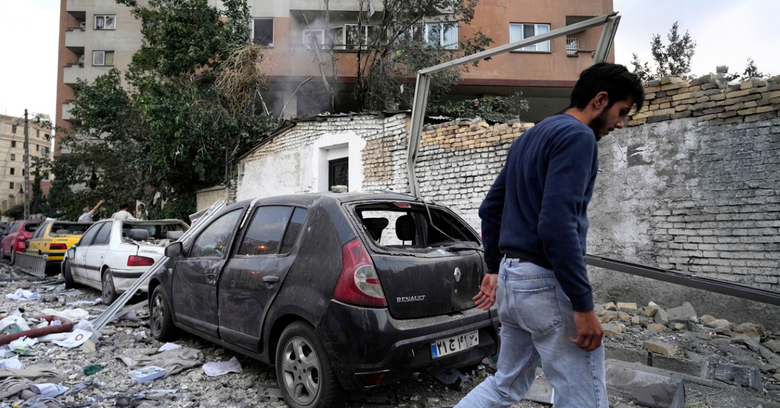
Iranian state television reported that residential areas in Tehran were hit, while explosions were also heard northeast of the capital.
A few hours after the initial attacks, an explosion was reported at the Natanz nuclear facilities, located about 225 kilometers south of the capital, according to Iranian state media.
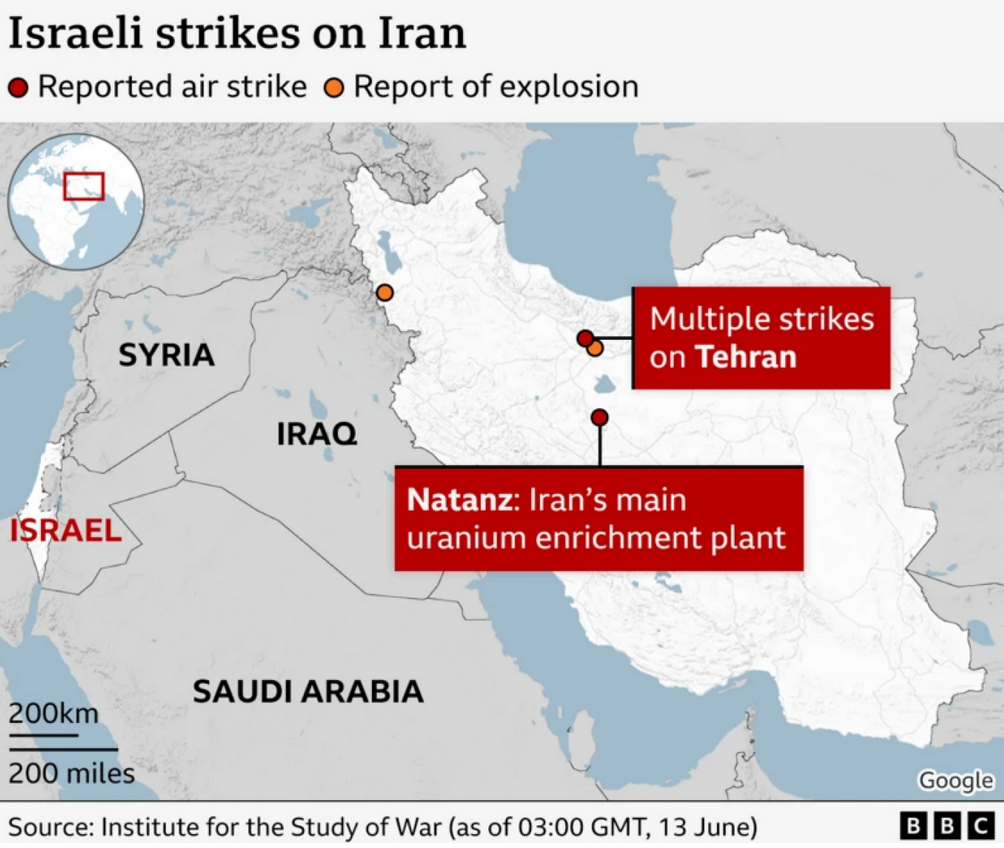
The global nuclear body, the International Atomic Energy Agency (IAEA), later confirmed that the Natanz facility had been struck, adding that it had been informed by Iranian authorities that no increase in radiation levels had been recorded.
The Israeli military stated that it had struck “dozens of military targets, including nuclear targets in various areas of Iran.”
Tehran confirms damage to Natanz nuclear facility, extent unknown
Iran’s Natanz nuclear facility sustained damage from today’s Israeli attack, according to a statement by the Atomic Energy Organization of Iran, though investigations have not shown any radioactive or chemical contamination outside the facility.
“The attack caused damage to parts of the facility. Investigations are ongoing to assess the extent of the damage,” the statement added.
Meanwhile, a spokesperson for Israeli President Isaac Herzog said that the head of the International Atomic Energy Agency (IAEA), Rafael Grossi, informed the Israeli president that the Iranian nuclear facility at Natanz had suffered “serious damage” from the Israeli strikes.
The IAEA had earlier confirmed that the Natanz uranium enrichment facility, located north of Isfahan, had been targeted by Israeli forces. Iranian nuclear authorities announced that the strike on Natanz did not result in radioactive or chemical contamination. The IAEA stated that radiation levels in the area had not increased.
Moscow “concerned” after Israeli strikes on Iran and condemns “escalation”
Russia expressed concern today following Israel’s strikes on nuclear and military facilities in Iran, denouncing “the severe escalation of tensions” in the Middle East.
“Russia is concerned and condemns the strong escalation of tensions,” said Kremlin spokesperson Dmitry Peskov, as quoted by Russian news agencies, emphasizing that Russian President Vladimir Putin “was being updated in real time” on developments.
The Russian embassies in both Israel and Iran subsequently advised Russian citizens to avoid traveling to either country.
“The international community must do everything possible to end the violence and bring both sides to the negotiating table,” said Leonid Slutsky, the head of the Russian Parliament’s Foreign Affairs Committee.
“A full-scale war between Iran and Israel could ignite the entire Middle East and lead to a third world war,” he warned.
Russia traditionally maintains good relations with Israel, which has a significant Russian-speaking community. However, these ties have been affected by Russia’s invasion of Ukraine, and Moscow has sharply criticized Israel’s war in Gaza.
In recent years, Moscow has drawn closer to Tehran, and Iran has been widely accused of participating in Russia’s military campaign in Ukraine by providing explosive drones and missiles.
Oman and Saudi Arabia Condemn Israeli Attacks — China’s Reaction
The Sultanate of Oman, which plays a mediating role between Washington and Tehran in their talks over Iran’s nuclear program, condemned the Israeli strikes against Iran, describing them as a “dangerous escalation” that threatens diplomatic efforts.
Oman considers “this action a dangerous escalation” and “calls on the international community to adopt a clear and firm stance to end this dangerous approach, which threatens to block diplomatic solutions and undermine the security and stability of the region,” reported the official news agency of the Sultanate.
Saudi Arabia also condemned the Israeli strikes, calling them a “blatant attack” against a “brotherly country.”
Riyadh “strongly condemns and denounces the blatant Israeli attacks against the Islamic Republic of Iran, a brotherly country, which violate its sovereignty and security and constitute a blatant breach of international laws and norms,” emphasized the Saudi Ministry of Foreign Affairs.
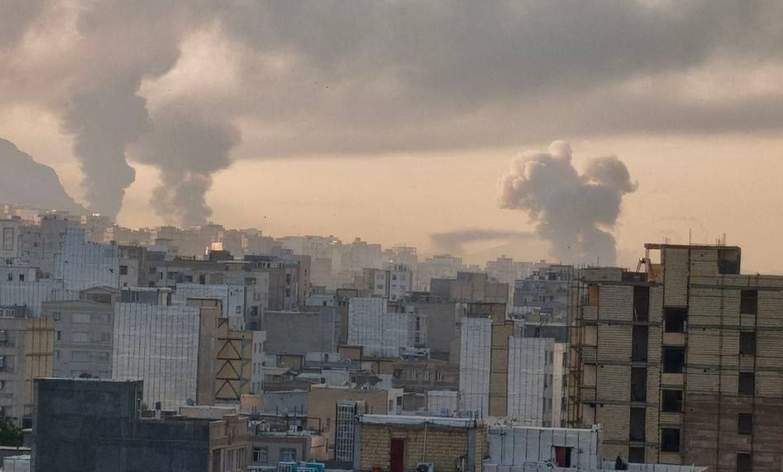
Meanwhile, China urged its citizens in Israel “to remain calm” and “be extremely cautious,” as well as to “prepare to protect themselves against various attacks,” according to the Chinese embassy in Tel Aviv.
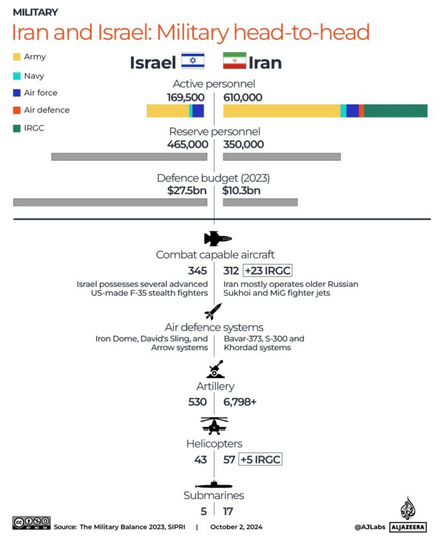
International Atomic Energy Agency: No Increase in Radiation Levels at Iran’s Natanz Nuclear Facility
The International Atomic Energy Agency (IAEA) announced today that there is no increase in radiation levels at the Natanz nuclear facility targeted during the Israeli attack, citing information provided by Iranian authorities.
The international nuclear energy agency also added that the Bushehr nuclear power plant was not targeted during the attack.
IDF: Over 200 Aircraft Participated in Initial Strikes Against Iran
More than 200 fighter jets of the Israeli Air Force participated in the initial strikes against Iran at dawn, said IDF spokesperson Brigadier General Effie Defrin in a press conference.
Defrin also confirmed that Israel neutralized several senior Iranian officials, including the Chief of the Iranian Armed Forces Mohammad Bagheri, the head of the Revolutionary Guards Hossein Salami, and General Gholam Ali Rashid.
IDF Spokesperson: Iran Launched 100 Drones Toward Israel
Over 100 drones were launched by Iran toward Israel in the past hours, according to IDF spokesperson Brigadier General Effie Defrin.
He said the IDF is trying to shoot them down. The drones launched from Iran will take several hours to reach Israel.
Israel Expects Iran’s Response “In the Coming Hours”
Two Israeli officials told Reuters that the country is preparing for Iran’s response in the coming hours.
According to these officials, Iran’s response could include the launch of hundreds of ballistic missiles.
As Israeli Prime Minister Benjamin Netanyahu stated earlier, “Israeli citizens may need to remain in shelters for an extended period.”
Greek Foreign Ministry: Greeks in Israel Should Remain in a Safe Place Near a Shelter and Follow Local Authorities’ Instructions
The Greek Ministry of Foreign Affairs, taking into account the state of emergency declared in Israel, advises Greek citizens currently in the country to remain in a safe place, close to a shelter, and to follow the instructions of local authorities. Israeli airspace is closed, and no flights are currently operating to or from Ben Gurion Airport.
The Ministry of Foreign Affairs has activated the Crisis Management Unit. Contact numbers: (+30) 210-3681350 and (+30) 210-3681730.
New Netanyahu Address: First Attack Successful
Shortly after 7 AM, Israeli Prime Minister Benjamin Netanyahu made statements congratulating Israeli forces for the “successful first attack.”
He reiterated claims that the strikes killed senior Iranian commanders and urged the public to “comply with military instructions regarding public safety measures.”
He also said, “Israeli citizens may need to remain in shelters for an extended period.”
U.S. National Security Council Meets Under Trump
U.S. President Donald Trump will attend a meeting of the National Security Council this morning, the White House announced following the Israeli strikes against Iran.
The meeting will take place at 11:00 AM (local time, 6:00 PM Greek time), the White House clarified.
Iran Accuses the U.S. of the Consequences of Israel’s “Adventurous Policies”
Iran’s Foreign Ministry stated that the U.S., as the main supporter of Israel, will be held responsible for the consequences of the “adventurous nature of Israel’s policies.”
In its statement, the ministry says the Israeli attack “exposes global security to an unprecedented threat” and calls on the international community to condemn it.
Times of Israel: Five Waves of Attacks by the Israeli Air Force
The Israeli Air Force has so far carried out five waves of attacks in Iran, according to a military official who spoke to the Times of Israel.
In total, hundreds of strikes have been conducted, according to the same official.
The Israeli military had earlier announced that it was targeting Iranian nuclear facilities, military installations, and high-ranking Iranian military and nuclear officials.
Israeli Prime Minister Benjamin Netanyahu confirmed that Israeli raids struck nuclear targets in Iran and stated that the operation will continue for several days.
“Earlier today, Israel launched Operation Rising Lion, a targeted military operation to eliminate the Iranian threat to Israel’s very survival,” Netanyahu said in a televised address.
Iran’s Supreme Leader, Ayatollah Ali Khamenei, declared that Israel will face severe punishment following its attack on Iran early Friday.
Khamenei: Israel’s punishment will be severe
Iran’s Supreme Leader, Ayatollah Ali Khamenei, stated that Israel will suffer a harsh punishment following its attack on Iran early Friday.
Khamenei confirmed that several commanders and scientists were killed in the attacks and warned that Israel has “prepared a bitter fate for itself.”
USA: We had no involvement
There was no involvement or assistance from the United States in the raids carried out by Israel in Iran, said Secretary of State Marco Rubio on Thursday.
“Tonight, Israel took unilateral action against Iran. We are not involved in attacks against Iran, and our top priority is the protection of U.S. forces in the region,” he said in a statement.
“Israel’s attacks on Iran early Friday targeted the country’s nuclear program and long-range missile capabilities,” said an Israeli military official. “The strikes were a ‘preemptive, precise, combined attack’ that involved ‘dozens of targets’ in different regions of Iran,” he added.
Israel plans to carry out multiple rounds of attacks against Iran, an Israeli source told CNN.
“This is not a one-day operation,” the source stated.
Israeli network Kan: Israel had informed the U.S. before the strikes
Israel fully coordinated with Washington on the Iran issue and informed the U.S. before launching strikes on Iranian targets, the state network Kan reported, citing an Israeli official.
The unnamed official told Kan that recent reports of a rift between Israel and the U.S. were false but were not denied as part of a media ploy to mislead Iran.
Ask me anything
Explore related questions