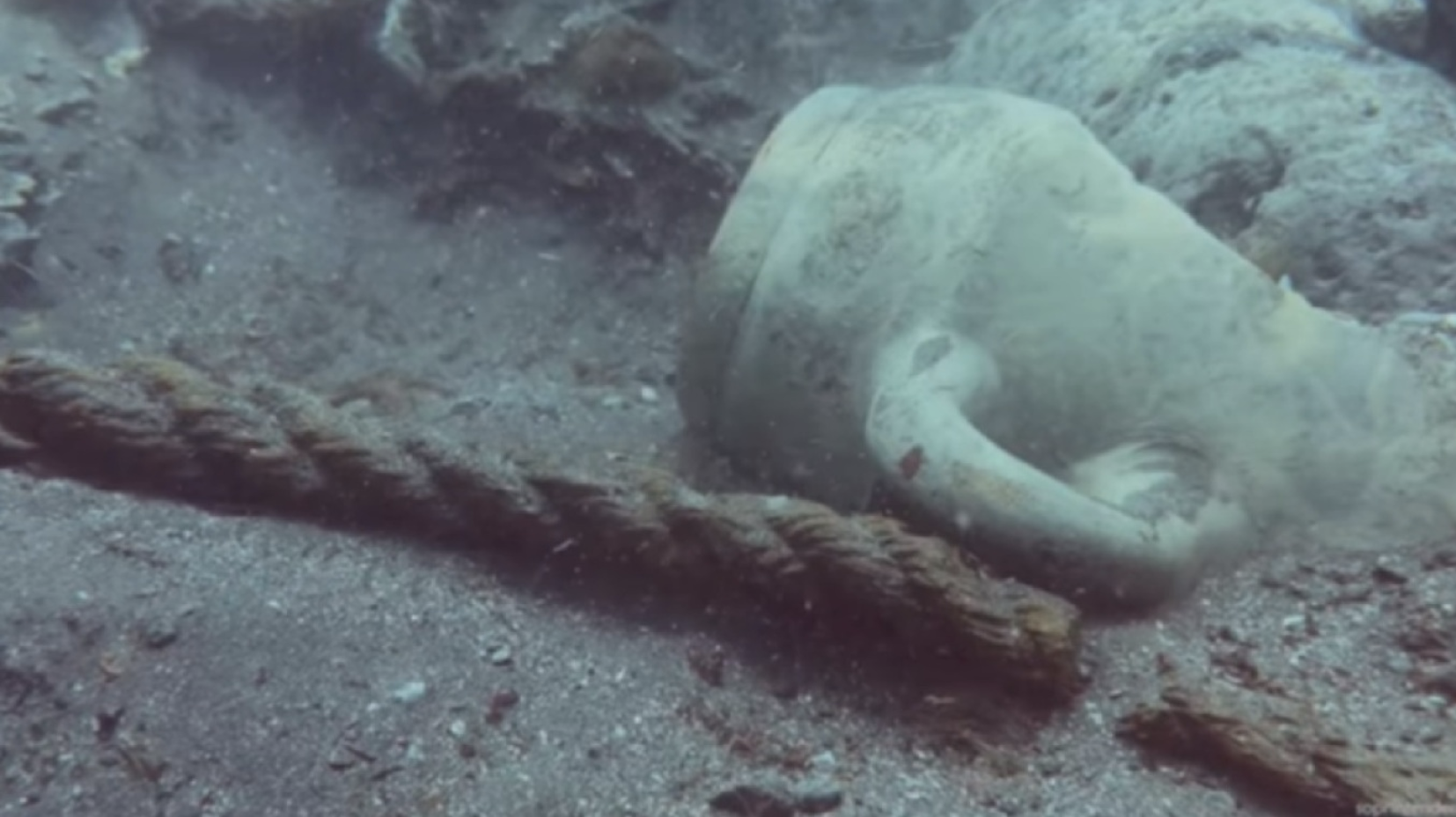
An impressive ancient Greek shipwreck, dating between the 6th and 5th centuries BC, has been discovered almost entirely intact off the coast of Santa Maria del Focallo, in the Ispica region of southern Sicily, at a depth of just six meters. According to Italy’s ANSA news agency, this remarkable find was made during the sixth underwater archaeological expedition by the Department of Humanities and Cultural Heritage at the University of Udine, in collaboration with the Superintendency of the Sea of the Sicilian Region, as part of the Kaukana Project research initiative.
During excavations carried out between May and June, not only was the ship’s structure uncovered, but also extremely rare elements — including the ship’s mast, a part that is seldom preserved in ancient wrecks. Other findings include black-figure decorated pottery, a small alabastron (perfume vessel) inscribed with the word “Ναῦ” (Greek for “ship”), and a section of ship’s rope in remarkable condition.
“With a careful approach, we managed to document new and significant parts of the wreck, such as the mast — which is extremely rare to find preserved,” said Professor Massimo Capulli, head of the research program from the University of Udine.
3D Mapping and Documentary Filming
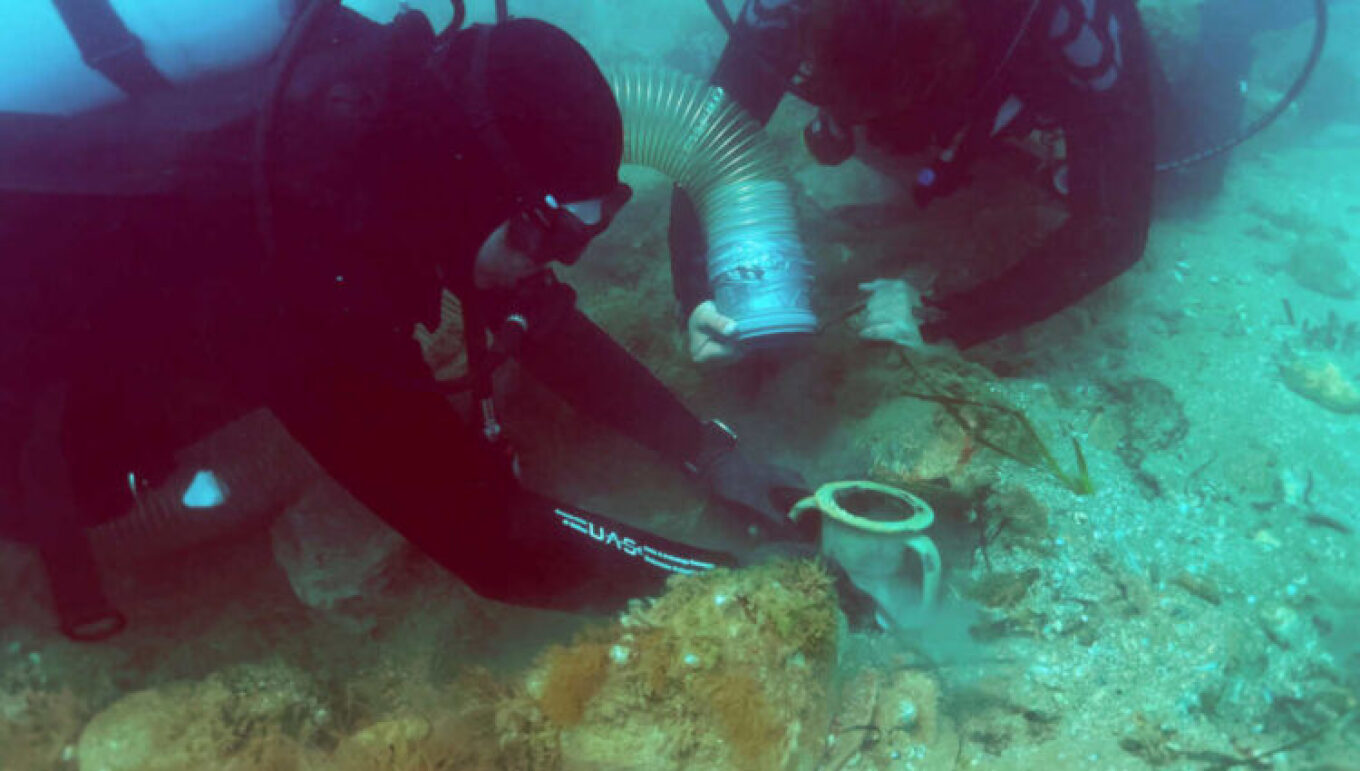
Thanks to the use of a hydraulic suction excavator, the research team was able to expand the dig, revealing additional parts of the vessel, such as an internal beam and one of the connecting joints. Much of the shipwreck had been buried beneath sand and stones.
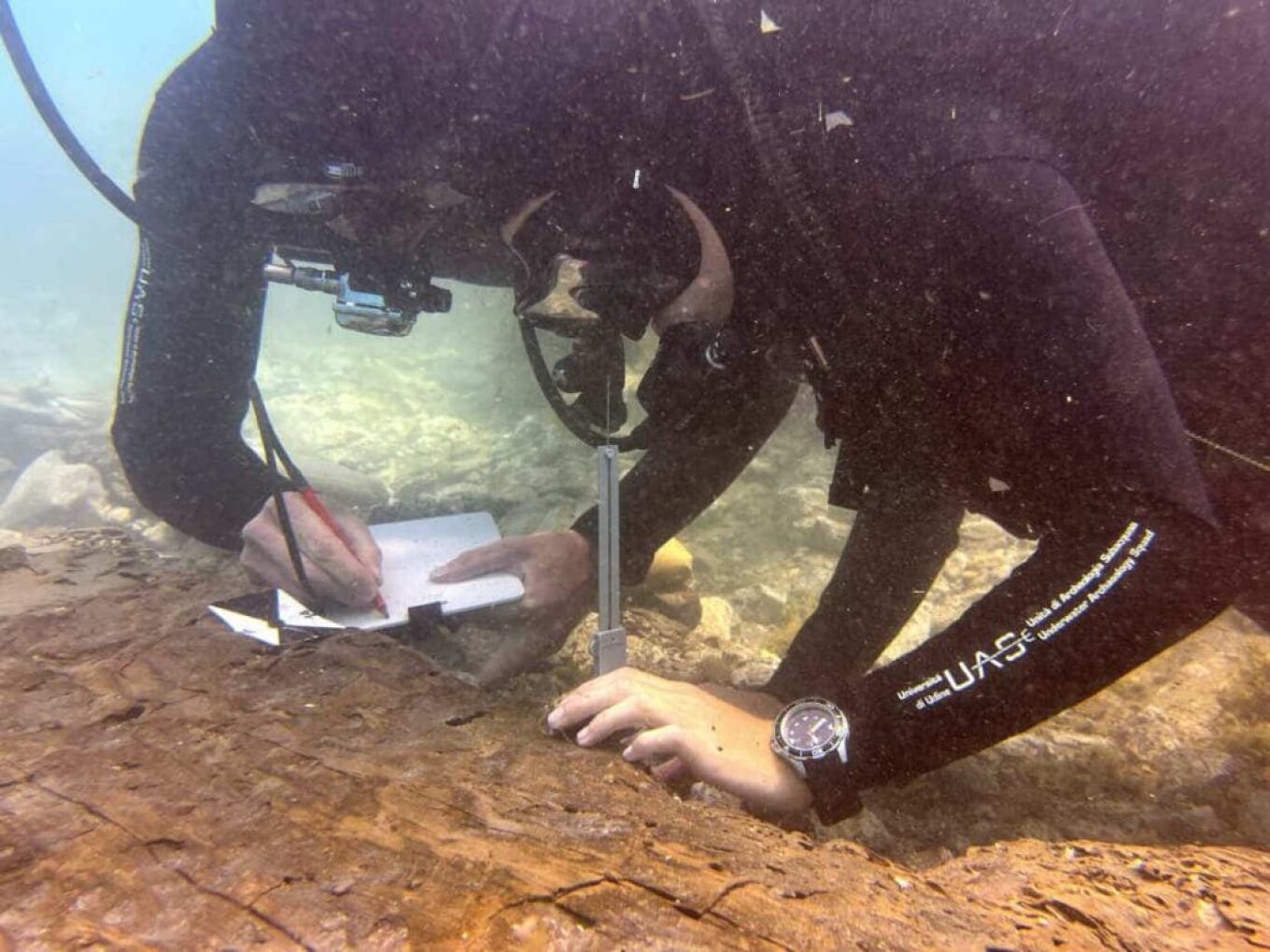
The findings were recorded through direct measurements and photogrammetric techniques, leading to the creation of a 3D model of the ship — a valuable tool for studying ancient Greek shipbuilding technology.
Part of “Shipwrecks of Sicily” Documentary
Impressively, the excavation was also part of the filming of the documentary “Shipwrecks of Sicily,” a co-production by Sunk Costs Productions, featuring the participation of Oscar-winning director Martin Scorsese.
This discovery is considered one of the most significant in the Mediterranean in recent years. It greatly enhances our understanding of commercial and maritime routes during the Archaic period, highlighting the pivotal role of Greek civilization in the wider region of Magna Graecia (Greater Greece).
Ask me anything
Explore related questions