





China is entering this new phase of the war involving Iran in the way it usually acts when an international crisis does not place it at the center but may still offer gains. It does not take a direct stance, does not burn bridges with anyone, yet does not let any opportunity go to waste.
While Donald Trump is trying to decide whether to keep the conflict with Iran in a controlled pause or return to full military escalation, Beijing is operating on two levels. On one hand, it pressures Tehran to continue negotiations with Washington; on the other, it allows Chinese companies to maintain trade channels with Iran—even when some of the materials involved may have dual (civilian and military) use.
This is not a contradiction but a method. China does not want a war that would drive energy prices out of control, disrupt shipping routes, and harm its economy and heavy industry. But it also does not want a quick, clean American victory that would restore Washington’s full confidence ahead of the Trump–Xi Jinping meeting in Beijing, or reestablish U.S. dominance in the Middle East.
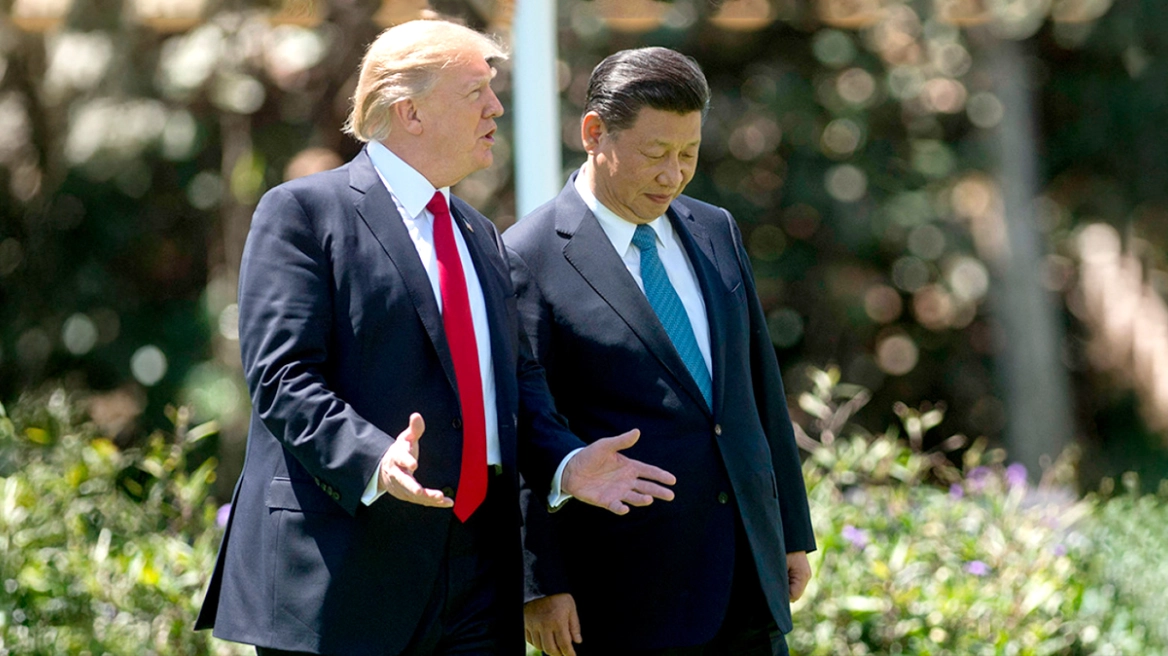
The May 14 summit, already postponed once due to the war, will no longer be just about tariffs and trade balances. The war in Iran becomes the major unpredictable factor. For Trump, it is a matter of power. For Xi, it is a matter of timing, cost, and strategic calculation.
The benefit of a war that wears down the U.S.
At first glance, another American war in the Middle East benefits China in many ways. Washington consumes ammunition, drains resources, diverts attention from Asia, and spends political capital in a region where China prefers to act as a commercial and diplomatic player—not a military guarantor.
The key factor is stockpiles. The war has already strained the U.S. military at a pace that concerns the Pentagon. Missiles, interceptors, precision munitions, and critical platforms are being consumed in a conflict that does not directly involve China but could weaken the U.S. in a future Indo-Pacific confrontation.
For Beijing, this is a strategic gain without direct involvement. Every week the U.S. remains tied down in the Persian Gulf is a week its attention shifts away from Taiwan, the South China Sea, and containment strategies around China.
But there is a second, more complex reading. China does not want the war to spiral. It does not want a collapse of shipping through the Strait of Hormuz. It does not want an energy shock hitting its industry. Nor does it want U.S. naval control over access to Iranian ports.
In short, Beijing wants U.S. attrition—but not chaos that would also harm itself.
Hormuz, oil, and the limits of Chinese patience
The Strait of Hormuz is where China’s strategy meets its limits. Early in the conflict, Iran effectively restricted passage for most ships, while still allowing tankers carrying Iranian oil—including shipments to China.
But as energy prices rose and U.S. naval pressure increased, the crisis became a Chinese problem as well. China needs stable energy flows, secure export markets, and predictability. It has no desire to turn Gulf security into its own military responsibility.
Thus, Chinese diplomacy pushes for de-escalation while maintaining ties with Iran.
The message to Tehran: continue negotiations, avoid regional collapse, keep the possibility of a ceasefire open.
The message to Washington: China can help—but will not act as a subcontractor of U.S. strategy.
Trump needs Xi—but won’t show it
Trump enters the meeting with a difficult equation. He wants to appear strong in Beijing—but not arrive with an open war draining resources and destabilizing markets.
This creates room for China. If Trump asks Xi to pressure Iran, Beijing can position itself as an indispensable diplomatic actor—not an ally, but a necessary power.
At the same time, Washington holds intelligence suggesting Chinese firms may have attempted to supply Iran—even with portable air-defense systems. Trump has handled this cautiously, avoiding a direct rupture with Xi, signaling the importance of keeping the summit alive.
Trump wants a trade deal, political gains, and proof he can manage war, China, and markets simultaneously. Xi wants recognition of China’s role—without paying the cost of regional security.
Iran looks increasingly to the East
For Tehran, the crisis revives an old debate with new urgency. Within the Islamic Revolutionary Guard Corps, there is growing support for deeper alignment with China and Russia—even at high economic cost.
Comparisons with Pakistan are increasingly common—a model of long-term Chinese military and economic support. For some in Tehran, this is no longer ideal—but necessary.
If this trend strengthens, Iran may become more deeply integrated into a China–Russia axis—not a formal alliance, but increased dependence in exchange for technology, military support, trade access, and political backing.
For China, this is both opportunity and risk: influence grows—but so does the danger of being drawn into regional instability.
Arab states want more from China
Countries like Saudi Arabia and the United Arab Emirates want China to go beyond being a trade partner and use its leverage over Iran.
They point to 2023, when China helped facilitate rapprochement between Saudi Arabia and Iran. Now, amid war, they expect Beijing to pressure Tehran to avoid escalation.
Similarly, Pakistan has hosted U.S.–Iran talks and relies on China to advance diplomacy. A joint China–Pakistan statement calling for ceasefire, civilian protection, and open sea lanes reflects this effort.
China is thus one of the few actors able to speak simultaneously with Iran, Russia, Arab states, and—cautiously—the U.S. This gives it influence, but it does not mean it wants to replace America in the region.
The limits of China’s ambition
China wants secure energy, stable markets, open sea lanes, and a reduction in U.S. power. But it does not want to inherit Middle Eastern security burdens or become the region’s military guarantor.
This explains its “double game”:
- Publicly supporting de-escalation
- Quietly pressuring Iran
- Maintaining trade and technological ties with Tehran
China wants to be necessary—not exposed. Connected to all sides—but dependent on none. It seeks strategic gains from U.S. strain without absorbing the geopolitical costs.
Beijing as a power broker in the next phase
The Trump–Xi meeting will show whether China can turn this balancing act into negotiating leverage.
- If Trump seeks Chinese pressure on Iran, Xi will demand concessions
- If escalation continues, China will position itself as a stabilizing force
- If diplomacy succeeds, Beijing will claim part of the credit
- If Iran becomes more dependent on China and Russia, Beijing’s strategic gains increase
This is the essence of China’s stance. Not neutrality—but calculated ambiguity. China pushes Iran not to destabilize the region, but does not abandon it. It may help Trump find an exit—but not for free. It wants de-escalation—but not an American triumph.
Ask me anything
Explore related questions




