





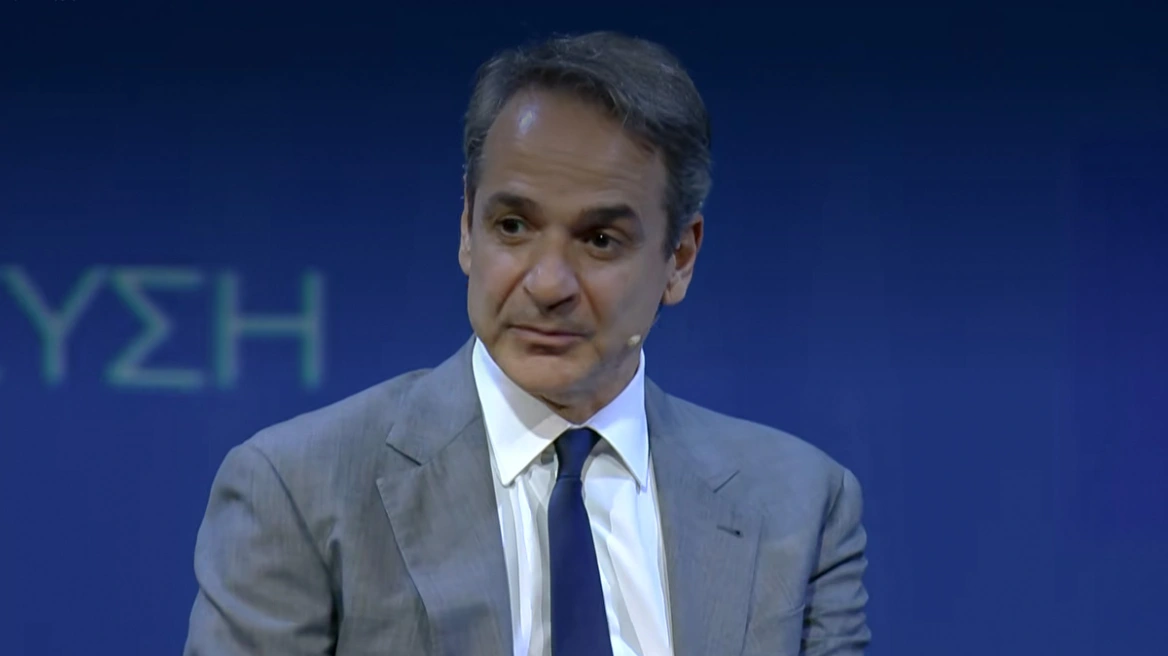
With a message of calm but also vigilance in the face of geopolitical turbulence, Prime Minister Kyriakos Mitsotakis appeared at the SETE general assembly, emphasizing that Greek tourism has proven it can withstand even the most difficult crises.
Referring to the possible impacts of the war on international arrivals, the prime minister noted that if the conflict is prolonged, the consequences for the global economy would be “extremely negative.” However, he clarified that so far there is no indication of a “major systemic crisis” for Greek tourism.
“The first two months were excellent for the country. Obviously there is now some slowdown, but I do not think we are facing a major systemic crisis in terms of tourism performance this year,” he said, adding that if the positive scenario of de-escalation is confirmed, Greece could see a new wave of last-minute bookings from its traditional markets.
Mr. Mitsotakis stressed that the country has already been tested under far more difficult conditions, recalling the management of the pandemic. “With the cooperation of the state and SETE, we proved that we can overcome very great adversities,” he said, attributing the foundations of today’s strong momentum in Greek tourism to those decisions.
He placed particular emphasis on the resilience and adaptability of the sector, noting that “it is not easy every year to go from record to record.” As he pointed out, in a period of international uncertainty, the goal is not only the absolute number of arrivals, but Greece’s position relative to its competitors.
“If the pie shrinks, we should be the country least affected,” he said, emphasizing that regional realignments may also create new opportunities for Greek tourism.
At the same time, the prime minister presented the government’s plan for the sustainable development of tourism, stressing the need for balance between economic and environmental sustainability. He announced the completion of the special spatial planning framework for tourism, while acknowledging that there are destinations where “we need to hit the brakes” and others where “we need to step on the gas.”
In this context, he highlighted the importance of infrastructure, citing the E65 highway as an example, which—he said—opens new prospects for previously underdeveloped tourist areas of the country.
Concluding, Mr. Mitsotakis reiterated that the government will continue to support both the extension of the tourist season and social tourism programs, stressing that development cannot come at the expense of destination sustainability. “We cannot, for the sake of a short-term gain, saw off the branch we are sitting on,” he said meaningfully.
Agapi Sbokou new president of the Association of Greek Tourism Enterprises
With the election of Agapi Sbokou as president of the Board of Directors of the Association of Greek Tourism Enterprises (SETE), the proceedings of the closed session of the 34th regular general assembly of the association were completed. She succeeds Giannis Paraschis in the presidency.
Agapi Sbokou is the CEO of PHĀEA, a leading Greek hotel group. With many years of experience in tourism, she has also served, among other roles, as vice president of the SETE Board.
Giannis Chatzis was elected First Vice President, while the vice presidents include Panagiotis Tokouzis, President of SETKE, Lysandros Tsilidis, Board Member of HATTA, Evangelos Vassilakis of Aegean Airlines, Emmanouil Giannoulis of Kritikos Tourism ATBEE, and Stavros Mitsis of Mitsis Hotels.
Ask me anything
Explore related questions




