





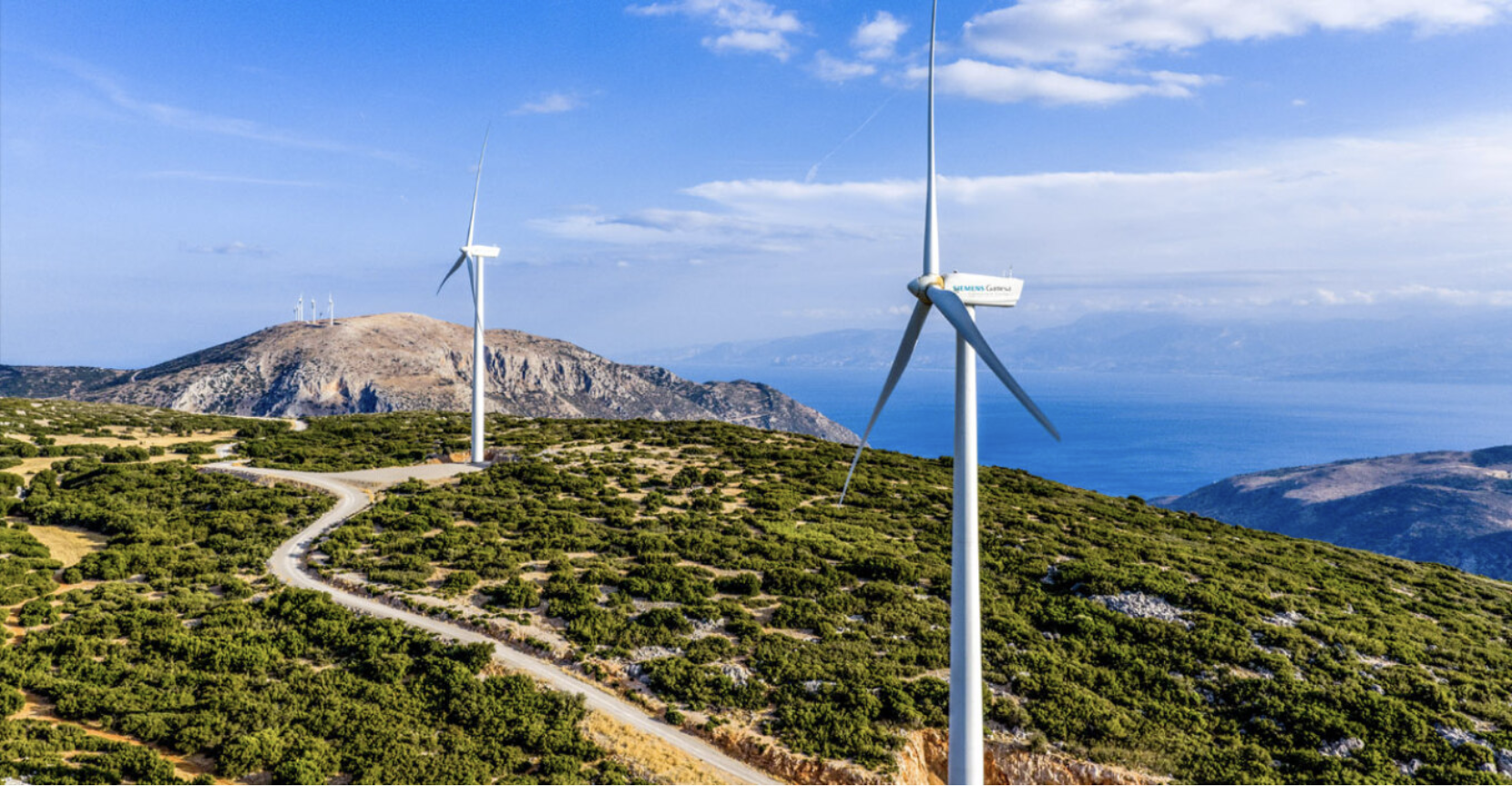
With stricter restrictions on the siting of Renewable Energy Sources (RES) projects, a new maximum land coverage limit for photovoltaic (solar) installations, and a “cut-off” for the installation of wind farms in areas above 1,200 meters altitude, the new Special Spatial Planning Framework for RES aims to completely reshape the landscape of energy development in the country.
The Ministry of Environment and Energy is, for the first time, introducing a unified, stricter set of rules for the siting of large-scale renewable energy projects, aiming to combine the acceleration of the energy transition with environmental protection, the safeguarding of productive land, and balance with local communities.
The new framework covers all major renewable energy technologies and storage, including photovoltaics, wind farms, small hydropower projects, biomass, biogas and biofuels units, geothermal installations, and— for the first time—energy storage systems such as batteries. The new rules exclude projects already in operation or at an advanced stage of licensing, small RES installations exempt from permitting procedures, large hydropower projects, pumped-storage facilities, as well as rooftop solar installations.
Particular emphasis is placed on photovoltaic plants, as for the first time horizontal bans are introduced in Natura 2000 areas, forests and woodland areas, Ramsar wetlands, national parks, protected landscapes, terraced land areas, roadless zones, and bathing coastlines.
At the same time, a clear spatial limit is introduced: new solar projects that have not yet received environmental licensing cannot exceed 1.5% land coverage per regional unit. This aims to prevent excessive concentration of projects, preserve agricultural land, and ensure a fairer geographical distribution of investments.
What changes for wind farms
The framework for wind farms is also tightened, with the most significant measure being a new restriction banning their installation above 1,200 meters altitude.
This measure aims to protect high-value mountain ecosystems and areas of high visual and ecological sensitivity. In addition, wind farms are excluded from Attica and the Metropolitan Area of Thessaloniki, from small islands under 300 sq. km (with limited public-interest exceptions), from high-tourism areas, protected core zones, wetlands, and bathing coastlines.
According to the Ministry of Environment and Energy, which has launched the plan for public consultation, the framework seeks to end fragmented and often conflicting renewable energy development by introducing a unified, transparent, and stricter national system for siting major energy investments.
The government aims to link the energy transition with sustainable development, environmental and cultural protection, and improved legal certainty, in a period where energy autonomy is increasingly becoming a geopolitical and economic priority.
The announcement of the new Special Spatial Planning Framework for Renewable Energy Sources (RES)
In today’s geopolitically critical context, energy security is part of national security. Therefore, strengthening the country’s energy autonomy is a priority for the government of New Democracy under Kyriakos Mitsotakis.
At the same time, the climate crisis and the urgent need for a more sustainable energy model, combined with technological progress and new opportunities for harnessing clean sources such as solar and wind and for energy storage, make RES a key energy policy tool. Greece is also meeting its European commitments, with an increased share of renewables in electricity generation, expansion of storage investments and interconnections, and reduced emissions.
Over the past seven years, Greece has made significant progress. Today, more than 50% of electricity consumption comes from RES. Greece ranks 3rd globally in solar penetration and 9th in wind energy. Electricity production from lignite has been reduced by over 90% compared to 2005, while installed RES capacity has reached 18 GW, compared to 6.3 GW in 2019. Since 2024, Greece has become a net exporter of electricity.
This progress requires rules, planning, and balance. A realistic energy transition must be structured, environmentally conscious, and socially fair. For the first time, three spatial frameworks are being developed in parallel: for tourism, industry, and renewable energy.
The aim is to create a coordinated development model that avoids past conflicts, overlaps, and lack of planning. The goal is a sustainable, functional, and fair Greece that ensures energy independence while protecting its environment and promoting regional development.
Ask me anything
Explore related questions




