





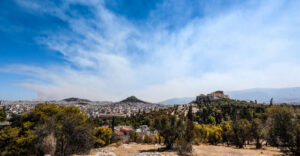
According to him, the characteristic smell that disturbed a large part of Attica yesterday, especially the southern suburbs, may be linked to the special characteristics of the Saronic Gulf combined with meteorological conditions, as well as the nearby Psyttaleia sewage treatment plant.
The academic emphasizes that the Saronic Gulf has been under long-term environmental pressure from nutrient and organic loads, which under certain conditions can lead to the release of hydrogen sulfide and other gases.
He stresses that “what is immediately required is systematic measurements of the chemical composition of the waters, monitoring and public transparency: measurements of oxygen, nutrients, hydrogen sulfide and sea currents, as well as clear communication from the responsible authorities.”
He adds that residents of the Saronic Gulf deserve scientific documentation and reassurance that the environmental quality of the area is being properly monitored.
Specifically, he explains:
In recent days, a strong unpleasant odor has been observed in the sea area between Salamis, Psyttaleia, and the outlet toward the Saronic Gulf. While similar phenomena are not unusual in enclosed or semi-enclosed bays during warm periods, the intensity and extent of the event justify immediate scientific investigation and clear public communication.
It is important not to draw premature conclusions, as there are several possible explanations. One is linked to natural oceanographic processes: during spring and summer, parts of the Saronic Gulf experience strong thermal stratification, where warmer surface waters sit above deeper, colder, and often oxygen-poor waters. Under certain wind and circulation conditions, deeper waters containing hydrogen sulfide, ammonia, and organic decomposition byproducts can rise to the surface through upwelling or vertical mixing. Such events are often associated with a characteristic “rotten egg” smell.
At the same time, the proximity to Psyttaleia — one of the largest wastewater treatment plants in the Mediterranean — raises understandable questions. Even advanced treatment systems can occasionally experience temporary malfunctions, overload, sludge-management issues, or odor-control system failures. Because the inner Saronic Gulf has relatively weak water renewal and local recirculation patterns, even short disruptions can produce widespread noticeable odors.
A third possibility relates to eutrophication and oxygen depletion in deeper layers and seabed sediments. Long-term environmental stress in the Saronic Gulf has made some areas vulnerable to low-oxygen (anoxic) conditions during warmer months, leading to the release of hydrogen sulfide and other gases.
Finally, possible contributions from shipping or industrial activity in the broader Piraeus–Perama–Elefsina area cannot be excluded.
Ask me anything
Explore related questions




