





A highly unusual case of political intervention at the World Cup has triggered controversy after the White House was reportedly mobilised to help overturn the suspension of Folarin Balogun, the United States’ leading scorer, following the red card he received in the win over Bosnia and Herzegovina.
FIFA’s decision to lift the automatic ban on the US forward has opened a wider debate over the boundaries between political power and the independence of football. It has also unsettled parts of the football establishment, with strong criticism of the ruling and questions over the disciplinary process that led to it.
According to a report by the Wall Street Journal, the episode began only hours after the United States recorded its first knockout-stage World Cup win in more than 20 years. The victory over Bosnia and Herzegovina in Santa Clara, California, should have been a moment of celebration. Instead, the mood inside the White House was reportedly tense, as Balogun’s red card meant he would automatically miss the United States’ next match against Belgium in Seattle, with a place in the quarter-finals at stake.
A football decision becomes a White House issue
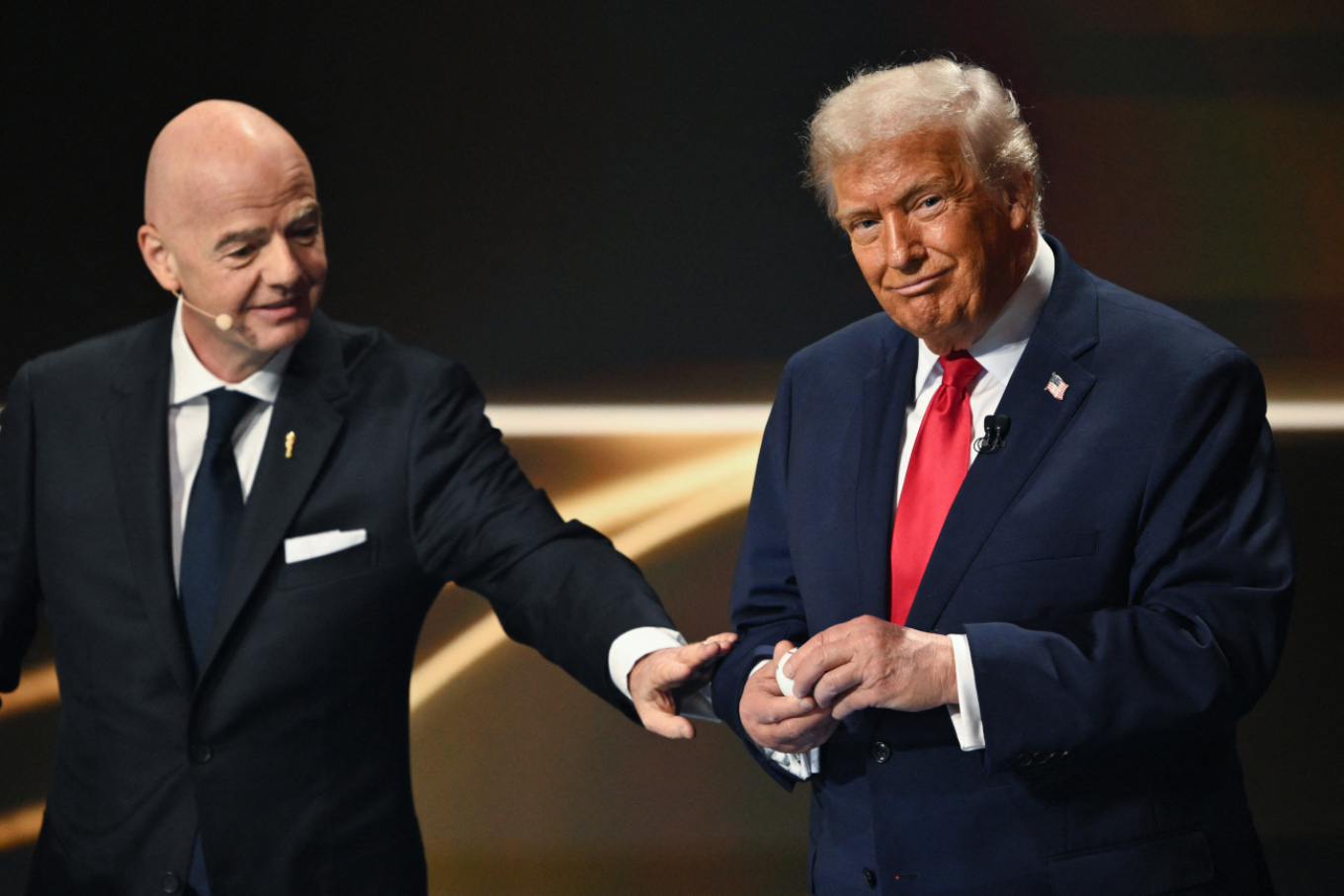
Senior Trump administration officials are said to have drawn up an unusual plan: to turn a refereeing decision into a matter of national interest and seek to have it reversed. Although FIFA has long defended the autonomy of football and penalises political interference in the sport, the White House reportedly believed it had a powerful channel of influence: FIFA president Gianni Infantino, whom Donald Trump has previously described as the “king of soccer”.
According to the same report, Commerce Secretary Howard Lutnick and Andrew Giuliani, executive director of the White House World Cup task force and son of Rudy Giuliani, played central roles in the effort. Both men reportedly believed the decision was unfair and that the matter required intervention at the highest level.
From that evening, Lutnick and Giuliani are said to have organised a series of calls with Trump, arguing that Balogun’s suspension was not only unjustified but could also damage the US team’s chances in the crucial match against Belgium. Trump, who had played a role in securing the World Cup for the United States and has treated the tournament’s success as a matter of personal prestige, reportedly instructed his team to find a way to have the ban lifted.
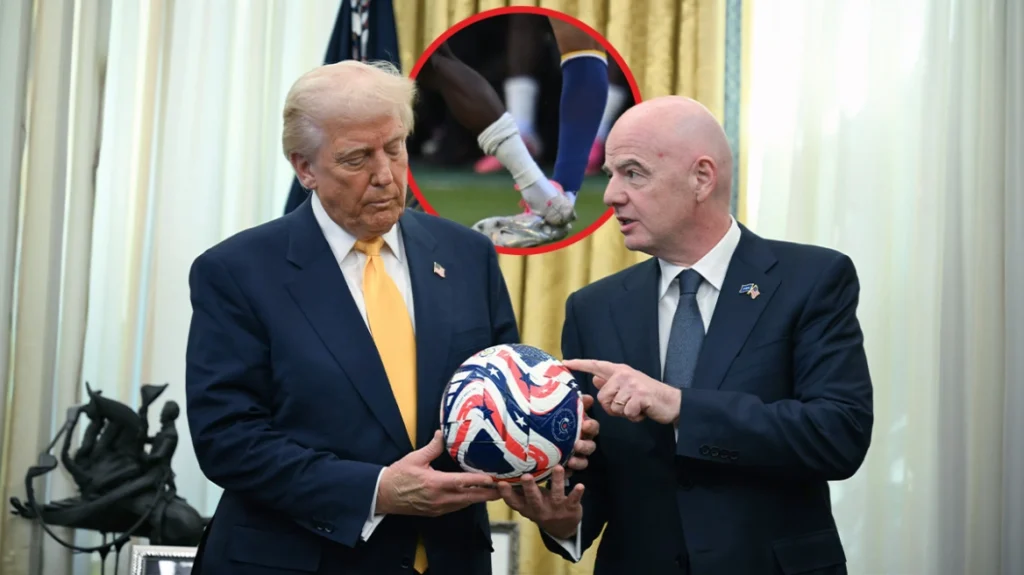
Officials then began looking for influential lawyers close to Trump to prepare a legal challenge to the decision. One argument reportedly discussed was FIFA’s use of slow-motion replay to determine whether Balogun’s challenge on an opponent’s ankle warranted a red card.
The call to Infantino
The US Soccer Federation was quickly informed of the plan, while publicly maintaining that it had no obvious route to appeal the decision and no clear replacement for Balogun in the squad. Within the next 24 hours, Trump called the man he believed had the authority to change the situation: Gianni Infantino.
Infantino has led FIFA since 2016 and has developed a close relationship with Trump. He has appeared several times at the White House and alongside the US president on other occasions, from a UFC fight in Miami to the Gaza peace summit in Egypt. During their call, Trump reportedly asked the FIFA president to review the decision involving Balogun.
At first, Infantino agreed to look into the matter but did not commit to overturning the suspension. When the two men spoke again several days later, the FIFA president reportedly told Trump that the ban would be lifted. FIFA relied on a lesser-known provision, Article 27, which it says allows its Disciplinary Committee to exercise discretion when reviewing sanctions.
Trump quickly celebrated the outcome. “Thank you to FIFA for doing the right thing and overturning a great injustice,” he wrote on social media on Sunday afternoon.
Belgium reacts with anger
The decision has drawn strong criticism outside the United States. Fans and commentators around the world accused a head of state of tipping the scales and undermining the integrity of the tournament. FIFA declined to comment on any White House influence and insisted that its Disciplinary Committee is an independent body. The White House did not respond to a request for comment, according to the Wall Street Journal.
The Belgian football federation said it was “surprised” by the reversal and announced that it was examining its options. Belgium coach Rudi Garcia questioned whether the episode was an April Fools’ joke in July, while Norway coach Stale Solbakken called the decision “bad, bad, bad, bad, bad” and warned that it would damage the World Cup.
“I feel sorry for the United States as well,” Solbakken said, “because if they win, this will always hang over their success.”
In a statement, the Royal Belgian Football Association said it was “surprised” by the ruling and was examining “all possible options”, challenging the rule that allowed what it described as a “scandalous” decision.
Balogun himself has not commented publicly. Instead, a few hours ago he posted a photograph on Instagram showing him on the pitch with his back turned, his name visible on the shirt.
Pochettino avoids the political question
The United States coach, Mauricio Pochettino, has also found himself in a difficult position. After Balogun was sent off in the 64th minute of the 2-0 win over Bosnia and Herzegovina, he insisted that it “was never a red card”, arguing that the Americans had already been punished enough by having to finish the match with ten men.
But Pochettino avoided saying whether it was appropriate for the president of the United States to become involved in a football disciplinary decision.
“In the end, it’s not that we are victims,” Pochettino said in Spanish. “But we are not the bad guys here.”
For the United States, Balogun’s return is a significant sporting boost before the knockout match against Belgium. For FIFA, however, the decision raises uncomfortable questions about the independence of its disciplinary procedures.
And for the World Cup itself, the case has opened a debate that goes far beyond football: how far can political power reach when even a red card is treated as a matter of national interest?
Ask me anything
Explore related questions




