





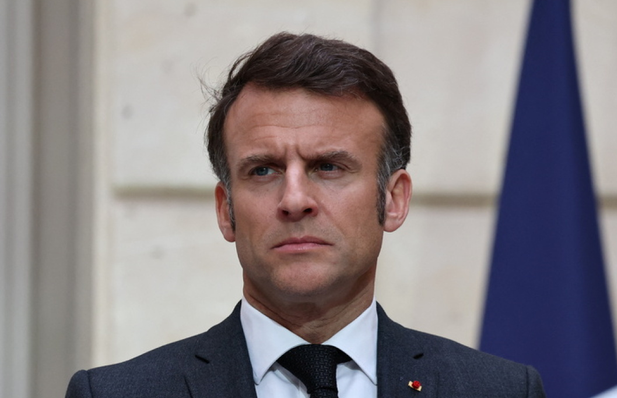
The Constitutional Council also rejected provisions requiring all internet users to provide identity verification before accessing social media platforms, citing concerns about government monitoring and surveillance of citizens. Despite this clear judicial rebuke, Emmanuel Macron immediately instructed Defense Minister Sébastien Lecornu to draw up a “legally robust” version of the ban, promising “absolute determination” to implement the measure by spring 2027.
A pattern of restrictions on speech
This is not the first time France’s Constitutional Council has blocked Macron’s efforts to control information and speech. On December 8, 2017, the court struck down provisions supported by the International League Against Racism and Anti-Semitism that would have rendered citizens ineligible for public office on the basis of certain offenses related to opinions, ruling that the measures were disproportionate.
More recently, the Bergé bill, which draws on the controversial Yadan proposal, has sought to criminalize positions criticizing mass immigration and other politically sensitive issues under the pretext of combating racism, according to Causeur.
Russian journalist’s case raises further questions
The government’s approach to controlling information extends beyond restrictions on social media. Xenia Fedorova, a Russian journalist who appears on CNews, has been declared persona non grata in France by the government, raising questions about whether the Constitutional Council’s protection of freedom of expression will apply in her case.
Official paranoia regarding Russian interference, used by candidates struggling to find political arguments, has so far resulted only in marginal amateur operations, according to the French publication. More concerning is a Senate report on the regulation of information in the digital sphere published in early July, which proposes a new offense of “internal interference” — a term coined by centrist Senator Laurent Lafon that could potentially enable the creation of a thought-police mechanism.
Excessive regulatory intervention
France’s audiovisual regulator, Arcom, recently reprimanded journalist Franz-Olivier Giesbert after he said on CNews that he would not want to be Jewish in Roubaix because he would be forced to leave. Meanwhile, Interior Minister Laurent Nuñez lamented the circulation on social media of images showing tens of thousands of migrants, most of whom have since departed, storming into Ceuta, Spain, in late July.
Ask me anything
Explore related questions




