





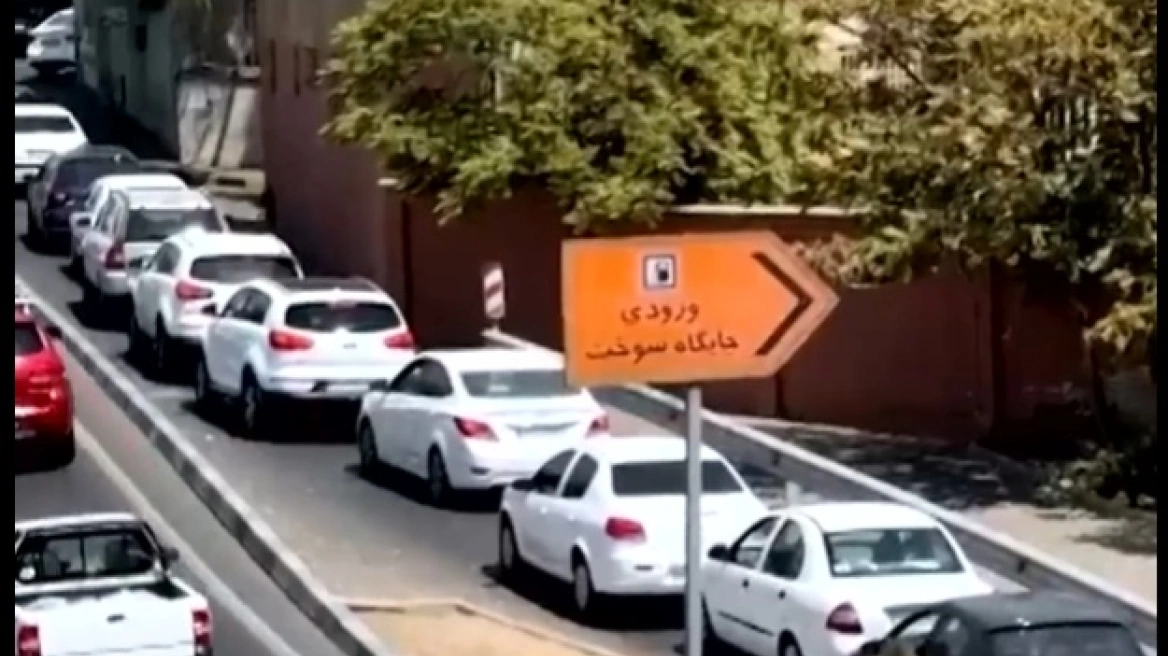
The withdrawal of fuel from Iran’s strategic reserves has reached “red alert” levels, with the remaining supplies tending toward depletion within the coming weeks, according to sources cited by Iran International.
The worsening situation has sparked a dispute between the government of Masoud Pezeshkian and the Islamic Revolutionary Guard Corps over how long the use of the reserves should continue.
These reserves were created to mitigate the effects of severe shortages and emergencies. However, according to Iran International, the rate at which they have been consumed in recent weeks has led experts within the state apparatus to warn about the consequences.
If withdrawals continue at the current rate, the remaining reserves could be depleted within a few weeks.
The Islamic Revolutionary Guard Corps opposes the uncontrolled use of the strategic reserves. Government officials, by contrast, are seeking to continue drawing on them so that gas stations can remain operational and public concern over shortages and price increases can be contained.
Daily shortfall of up to 15 million liters
Iran produces approximately 120 million liters of gasoline per day, while daily consumption reaches around 135 million liters. The shortfall therefore stands at 15 million liters per day.
The head of Iran’s Energy Optimization and Strategic Management Organization, Ali Akbar Shaghag Esfahani, estimated on August 15 that the daily gasoline shortage ranged between 14 and 15 million liters.
Before the crisis intensified, approximately half of the shortfall was covered by imports, a large portion of which came from Russia. However, the U.S. naval blockade, Ukrainian strikes on Russian refining infrastructure, and the closure of the supply route through the Caspian Sea have drastically limited Tehran’s ability to maintain these imports.
Iran’s diplomatic efforts to secure alternative supplies from allies and neighboring countries have so far failed to produce an agreement.
At the same time, Britain and Qatar have supported the new U.S. campaign of economic pressure against the Islamic Republic. Washington is seeking to restrict the country’s financial, maritime, and energy trade routes.
Fuel is being transported to Tehran to reopen gas stations
Gasoline shortages have now reached Tehran, forcing some gas stations to suspend operations.
Authorities ordered fuel to be transported from neighboring provinces in order to reopen some stations in the capital. Dozens of others, however, remain at risk of closure.
Videos and messages from citizens document long queues, closed gas stations, and difficulties obtaining gasoline in Tehran and in the provinces of Alborz, South Khorasan, and Razavi Khorasan.
The regional director of the National Iranian Oil Products Distribution Company in Tehran attributed the temporary closure of some gas stations to a sudden increase in demand and congestion along fuel transportation routes.
Transportation fares have soared
The crisis also appears to be affecting the cost of transportation. Citizens told Iran International that fares on the Snapp and Tapsi apps, which are similar to Uber, have increased significantly as fewer drivers are accepting rides.
“The gas stations are packed with people, GPS isn’t working, and you can’t work for Snapp. Fares have increased, but there are no drivers to accept the ride. We’ve been left without money and without gasoline,” a Tehran resident said.
Another citizen said the cost of a typical Snapp ride had increased from one million rials the previous month to 3.2 million rials. A resident of Shiraz also reported major increases in transportation costs, despite the fact that no gasoline shortage has been reported in the area.
The three scenarios being considered by the government
The Iranian government is reportedly considering three different options for dealing with the crisis:
- limiting available gasoline to the level of domestic production;
- reducing subsidized quotas and selling additional quantities at market prices;
- transferring fuel quotas from vehicles to individual citizens.
Fear that an increase in prices could trigger new protests has pushed the government to consume the strategic reserves in order to buy time.
Fuel price increases are an extremely sensitive political issue in Iran. The sudden increase in the price of gasoline in November 2019 triggered protests across the country, followed by a bloody crackdown by state forces.
The government’s decision to delay difficult decisions by using the reserves now creates a new risk: the strategic “buffer” intended to protect the country during periods of severe disruption could be depleted within just a few weeks.
Ask me anything
Explore related questions




