





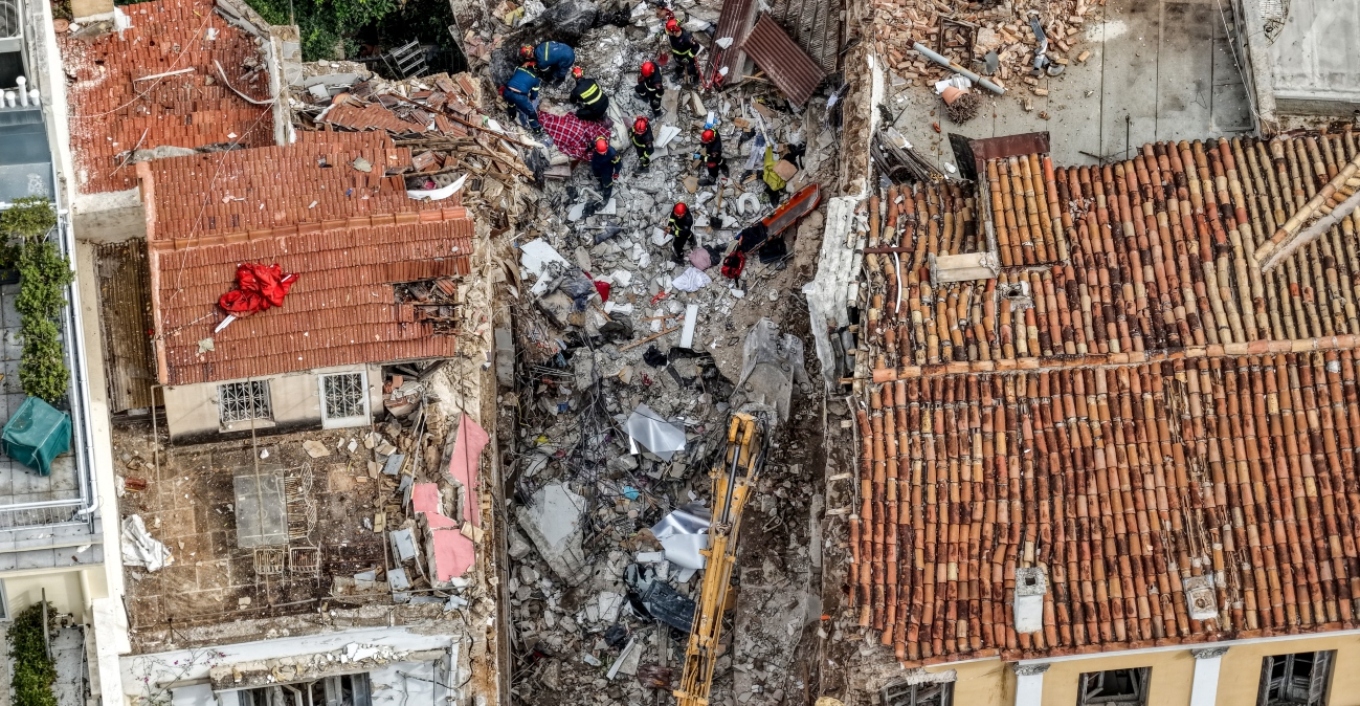
Fire service investigators are sifting through the remains of a building in Plaka, the historic neighbourhood beneath the Acropolis, as they try to establish what caused Friday’s explosion, which killed six people and brought the two-storey structure down.
The inquiry is centred on the natural gas installation in the second-floor flat, the only unit in the building still connected to the gas supply.
Findings so far point to a leak, with experts believing a large amount of gas may have built up in the upper part of the building before being ignited. A spark, a light switch or any other small ignition source could have been enough to trigger the blast, investigators believe.
They are also examining the condition of the installation and the age of the building, to determine whether either contributed to the disaster and to establish the exact sequence of events.
Specialists from the Fire Service’s Directorate for Arson Crime Investigation (DAEE) remain at the site on Lysikratous Street. They are working to reconstruct what happened from the moment of the explosion, through the fire that broke out, to the collapse of the building.
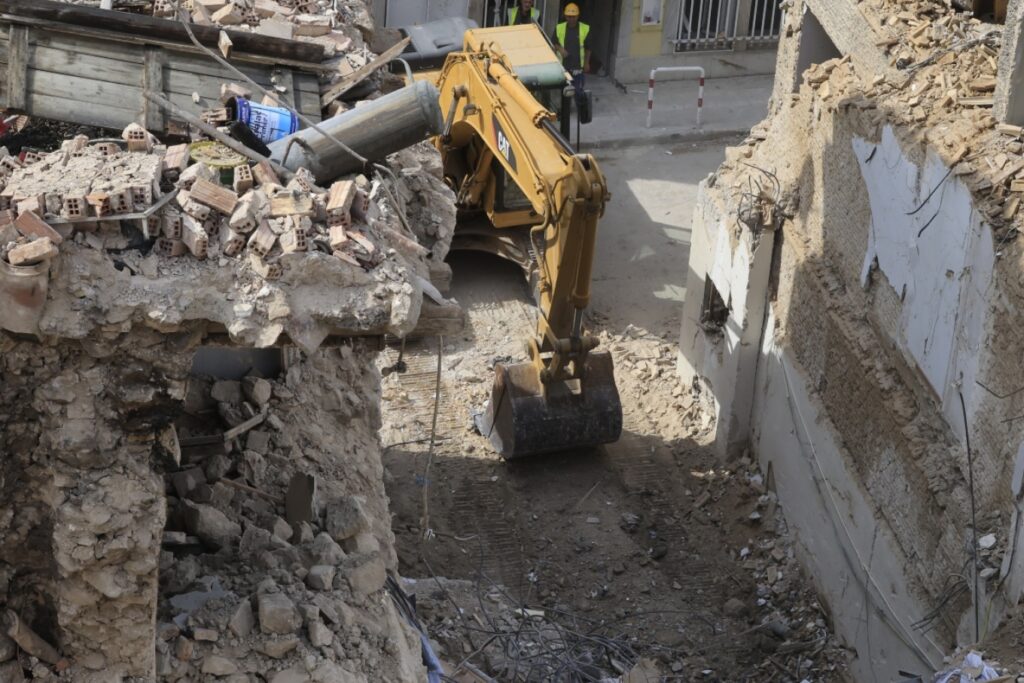
Heavy machinery from the City of Athens has now cleared almost all of the debris. The material is being taken to a dedicated site provided by the municipality, where it is being examined in detail by arson investigators and experts appointed to the inquiry.
Hellenic Police spokeswoman Constantia Dimoglidou has confirmed that authorities received reports from residents of a possible smell of gas before the explosion.
Neighbouring buildings inspected
Official inspections and structural safety checks on neighbouring buildings damaged in the blast begin on Monday (28 September).
The explosion, shortly after 7.30am on Friday 25 September, caused extensive damage across the surrounding streets. The shockwave shattered glass frontages, damaged facades and affected the structure of nearby buildings. Two women were rescued from an adjacent building and taken to hospital.
The checks are particularly important because many of the affected properties are old buildings in one of the city’s most historic districts. Engineers must assess not only the extent of the damage but also whether each building remains structurally sound.
City of Athens Deputy Mayor for Technical Services Panagiotis Charlaftis told the Athens-Macedonian News Agency (ANA-MPA) that the inspections would focus on how dangerous each structure was and whether it could remain accessible and be used safely. Any building judged unsafe would require further, secondary checks and technical work, he said.
In that case, Charlaftis explained, the owner would have to commission a restoration study for the property. The building would remain off limits until the process was complete and it had been declared fit for use.
Victims’ families arrive in Greece
Relatives of the victims arrived in Greece on Sunday at the invitation of the authorities. They are expected to visit the Athens Forensic Medicine Service to give DNA samples, so that the formal identification of the bodies can be completed.
Those killed were Florida Hoxha and her husband Ian Alexander Kirkpatrick, Erisa Cani and her husband Florin Hoxha, and an elderly couple, Athina Papareskou and Edmond Hings, who lived in the second-floor flat now at the centre of the investigation.
The two younger couples, all US citizens, were staying in a short-term rental apartment on the first floor and had been due to leave Greece that day. Florida Hoxha and Florin Hoxha were siblings. Hings was British and Papareskou Greek, according to reports.
Ask me anything
Explore related questions




