





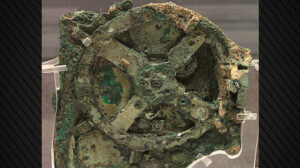
The most famous and mysterious mechanism of antiquity returns to the spotlight as, according to a Live Science article, it is not a scientific device but an elaborate game. Scientists from the National University of Mar del Plata created a computer simulation of the Antikythera Mechanism and, by examining the triangular teeth of its gears, concluded that construction inaccuracies would have caused jamming. Therefore, by design, this elaborate creation would not have been suitable for scientific use.
As a result, the research team insists that the Antikythera Mechanism likely served only as a game—albeit a remarkably sophisticated one for its time—with its systems not functioning as a planetarium-style computer, but rather as a form of entertainment.
The publication by the Argentinian scientists quickly gained massive attention after being picked up by leading global outlets. However, scientists who have studied the mechanism for years maintain that its complexity precludes the idea of it being merely a toy.
The Legendary Shipwreck
But it’s not just the Antikythera Mechanism that is so rich in legend—the shipwreck that brought it to light also unearthed countless treasures and continues to attract scientific interest. The wreck was first discovered by chance in October 1900 by a team of sponge divers from Symi, diving with primitive helmets and suits. After a year-long effort, they brought to light treasures that still grace the prominent displays of the National Archaeological Museum.
Many of these temporary finds were recently exhibited in the special exhibition “The Antikythera Shipwreck: 124 Years of Underwater Archaeological Research” on the ground floor of the Historical Library of the Aikaterini Laskaridis Foundation, which for years has supported scientific research related to the wreck through its sponsorships. The site was revisited in 1976 by Jacques-Yves Cousteau after 75 years, and he conducted further research, discovering a number of artifacts—mainly coins.
In this area, long known for harsh weather conditions—the famous Cape Maleas even challenged Odysseus himself!—underwater archaeologist Brendan Foley launched a preliminary investigation using rebreathers (closed-circuit breathing apparatus) to enable prolonged stays at 70 meters depth. These expeditions, carried out with the approval of the Greek state and the participation of members of the Hellenic Ephorate of Underwater Antiquities such as Theotokis Theodoulou, aimed at more detailed exploration.
Predicting Stars and Sports Events!
The latest and most comprehensive phase of this endeavor is named “Return to Antikythera”, ongoing today with a large team of diving archaeologists, seabed technicians, divers, and scientists of various specialties—including geologists, chemists, and physicists. The main goal of the current research—supported by the Aikaterini Laskaridis Foundation, the Nereus Research Foundation, Swiss watchmaker Hublot, and Cosmote—is not just to uncover more artifacts, but also to use technology to solve long-standing questions. These include the exact location of the wreck, its direction, and the conditions under which it sank—details that have remained unknown until now.
Although countless scientific studies have attempted to unravel the mystery of a mechanism that even inspired an Indiana Jones film, no definitive answer has yet been found to solve all the riddles. The unfortunate fact is that the device was discovered corroded and fragmented, meaning that we don’t have all the critical elements needed for a conclusive understanding. Some believe it was a type of primitive computer with gears and a system that helped ancient Greeks predict planetary movements—tracking the positions of the Sun, Moon, and other celestial bodies. Others, like the Argentinian scientists, argue it was an intricate game.
This complex mechanism, mounted within a wooden box about the size of a modern laptop, remains difficult to decode even with today’s technological capabilities. In addition to weather patterns, it could predict eclipses and determine the dates of specific athletic competitions, such as the Olympic Games. Some speculate that Archimedes, known to be involved in designing such devices, may have been its intellectual creator. Other theories suggest it may have been conceived by other great minds of the time—its ingenuity considered highly advanced even by today’s standards.
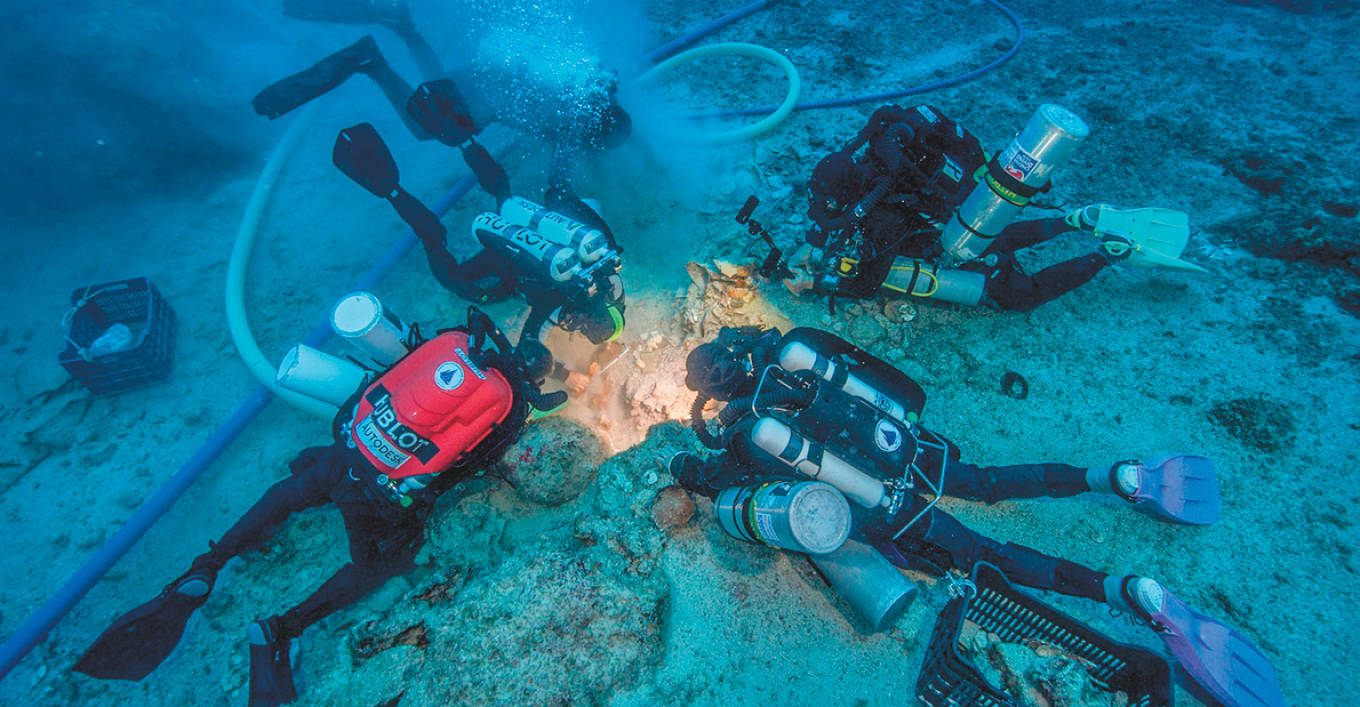
“Return to Antikythera” is the name of the current project being carried out by diving archaeologists, seabed technicians, and divers, alongside geologists, chemists, and physicists. The research is supported by the Aikaterini Laskaridis Foundation, the Nereus Research Foundation, Swiss watchmaker Hublot, and Cosmote.
The ongoing studies, enhanced by technological advancements, have yielded valuable insights, proving the high level of technology behind a mechanism that, after 22 centuries, remains so complex that it defies the notion of being “just a game,” as the Mar del Plata team suggests. Furthermore, in his book “A Portable Cosmos – Revealing the Antikythera Mechanism, a Scientific Wonder of the Ancient World” (Crete University Press), Alexander Jones—a historian of science specializing in Ancient Greek Astronomy and a member of the Antikythera Mechanism Research Project—recounts the incredible story behind this astounding discovery, which holds as many secrets as there are scientists working to decode it.
When it was first discovered among other finds at the beginning of the 20th century, very few believed that the “inscribed plaque,” as it was then called, could reveal anything significant. Today, it is compared to a toy, a computer, or even (as some have humorously suggested) a device used to communicate with advanced extraterrestrial civilizations. The truth is, no one could have imagined that this remarkable artifact of the advanced Hellenistic world—one that attracted the attention of top scientists and philosophers—would continue to fascinate the global scientific community centuries later, still unable to fully solve its mysteries.
What the Argentinian Scientists Don’t Answer
The story grew even more intriguing when it became clear that the fragments could not possibly be interpreted as a single formation. It reportedly took the intervention of the Minister of Education at the time, Spyridon Stais, who oversaw the project and noticed—being a mathematician—that the surface of one plate featured gear-like structures, indicating it was part of a unified mechanism. Still, due to its complexity, no clear conclusions could be drawn, and the focus shifted more toward preservation than evaluation.
The core issue remains that, due to the lack of comprehensive data, even simulations fail to yield definitive conclusions.
A more productive approach than simulation might be a thorough, multidisciplinary study—like the one undertaken by the Antikythera Research Team from University College London (UCL). The team included two Greeks: archaeometallurgist Myrto Georgakopoulou and physicist Aris Dakanalis. This group organized a landmark conference on November 30 and December 1, 2006, and followed up with publications a year later.
Their findings, taken seriously by the scientific community, accurately predicted the planetary motions known in antiquity that the mechanism could track. These discoveries led researcher Michael Wright—the only one at the time to have created a physical model of the mechanism—to revise his original replica and build a new one.
Opposite him stood the Antikythera Mechanism Research Project, led by British mathematician Tony Freeth, who had studied the device for over two decades and proposed his own reconstruction based on his team’s scientific data. Upon seeing Wright’s updated and accurate replica, Freeth reportedly could not hide his enthusiasm.
The Rear Side
In order for the findings to align with modern standards, scientists studied all the theories of ancient astronomers and scholars, reaching conclusions that are astonishing even by contemporary scientific benchmarks. According to yet another scientific announcement released two years ago, nearly all the inscriptions found on the dozens of fragments on the rear side of the mechanism have now been decoded. These inscriptions reveal the extent of the technology possessed by the Ancient Greeks—far more advanced than what followed in the millennia to come.
The issue, therefore, lies in gathering all these conclusions and making comparisons so that all the secrets of this remarkably advanced mechanism can be brought to light—a living proof of the technological progress of the ancients and the people of the Hellenistic world in the field of science—and beyond.
Until then, we will simply resort to yet another theory that unfolds some of its partial secrets, and we will need an Indiana Jones to fully unravel the mystery.
WHAT THE ARGENTINIANS SAY
The research team created a computer simulation of the mechanism and, after examining the triangular teeth of the gears, concluded that manufacturing inaccuracies would have caused jamming. Thus, by default, this intricate construction was not suitable for scientific use but only as a game—albeit a highly intelligent one for its time—whose systems did not function like a planetarium-computer of the era but rather served as a means of entertainment.
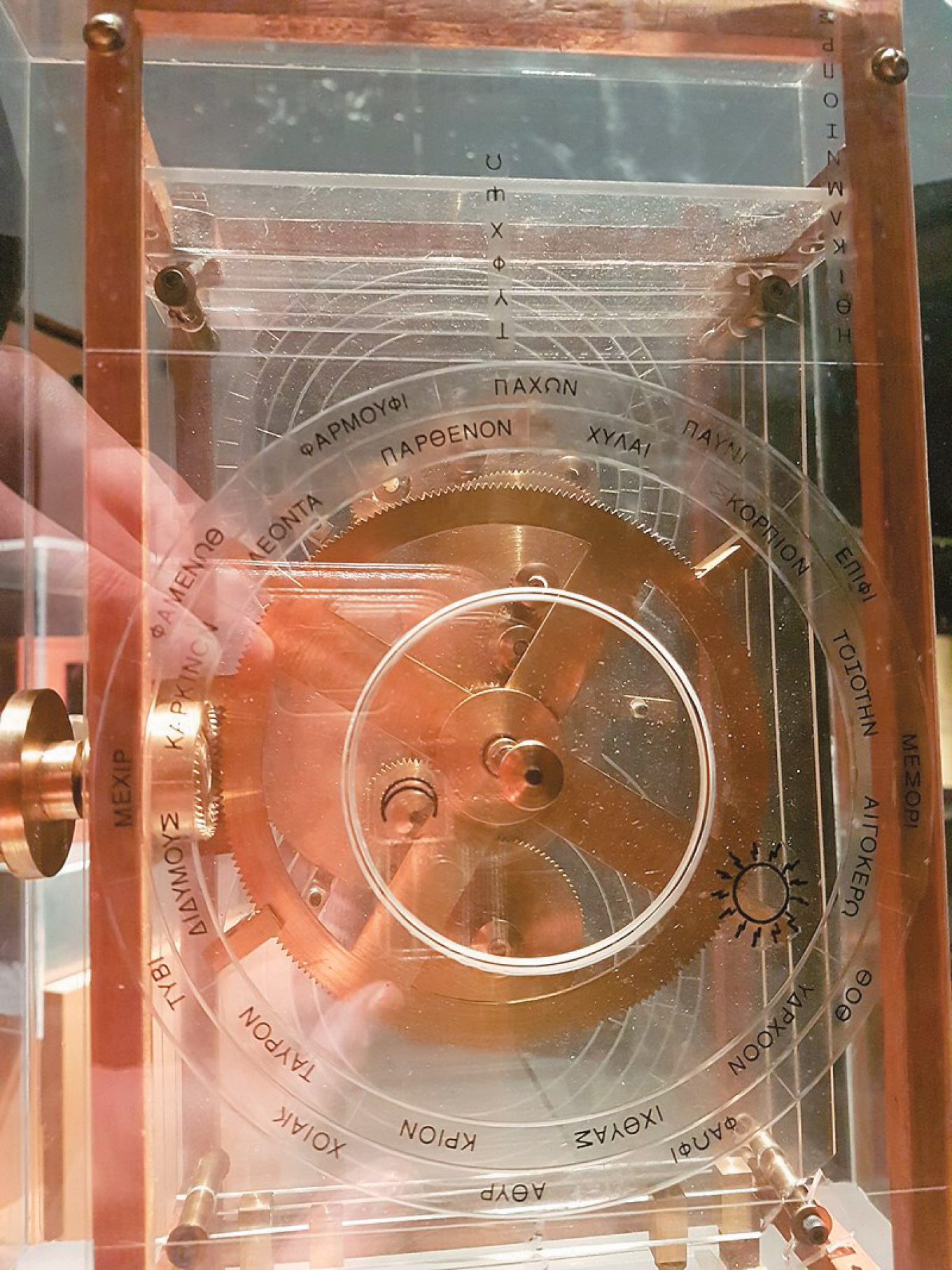
Replica of the Antikythera Mechanism
THE PREVAILING THEORY
Many scientists believe that the mechanism was a kind of primitive computer with gears—a device that helped the Greeks of that era predict the motion of the planets, including the position of the Sun, the Moon, and the movement of celestial bodies, eclipses, and even determine the dates of specific events such as the Olympic Games.
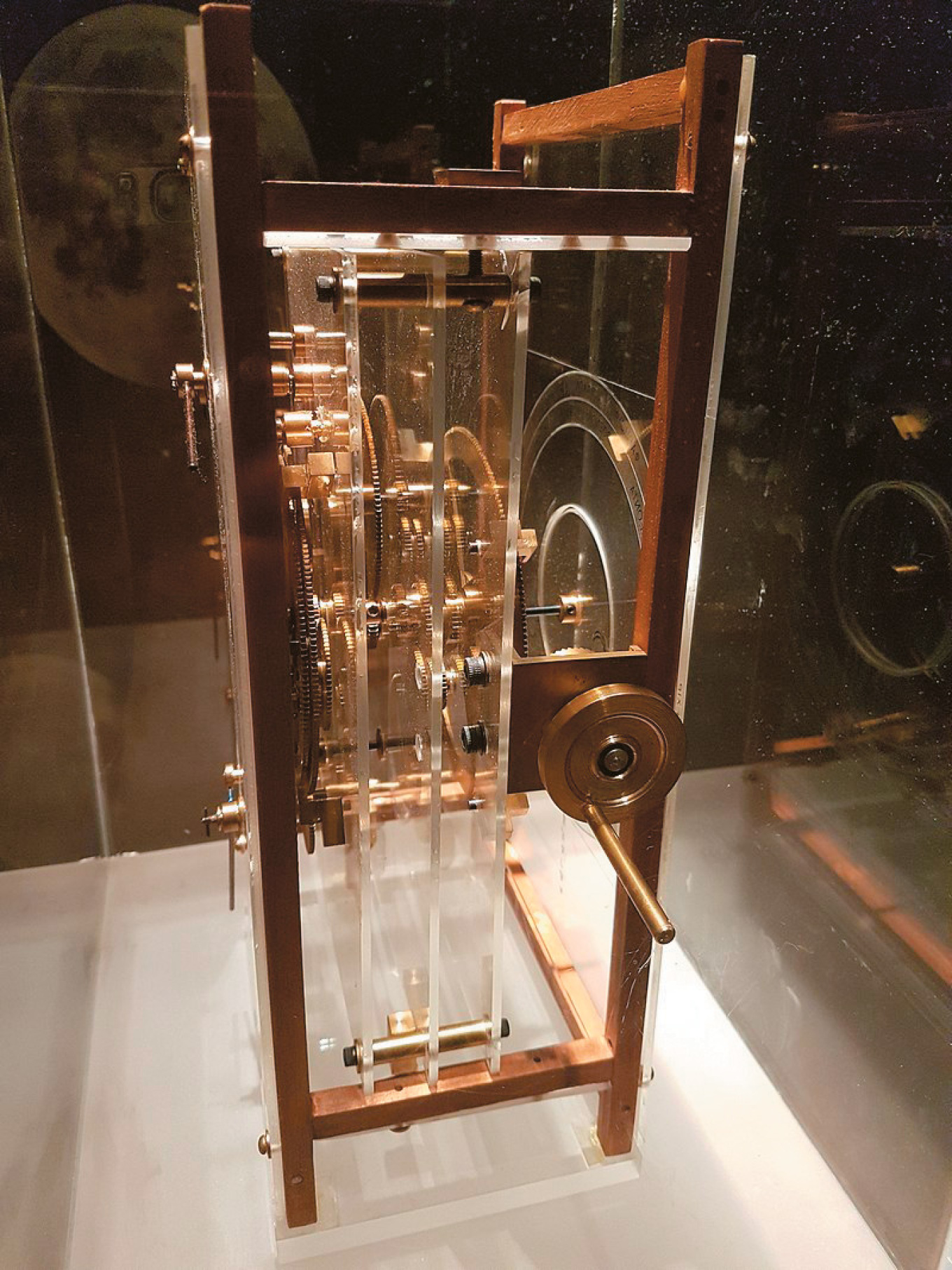
Another replica of the mechanism
THE ANTIKYTHERA RESEARCH TEAM
Scientists from the interdisciplinary UCL Antikythera Research Team describe the mechanism as a feat of ancient Greek genius. The team sheds light on how the gears functioned at the front of the mechanism. As Professor Tony Freeth, head of the Department of Mechanical Engineering, stated:
“The Sun, the Moon, and the planets are presented in a way that is a remarkable achievement of ancient Greek brilliance.”

Ask me anything
Explore related questions




