





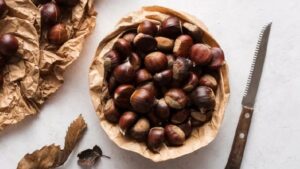
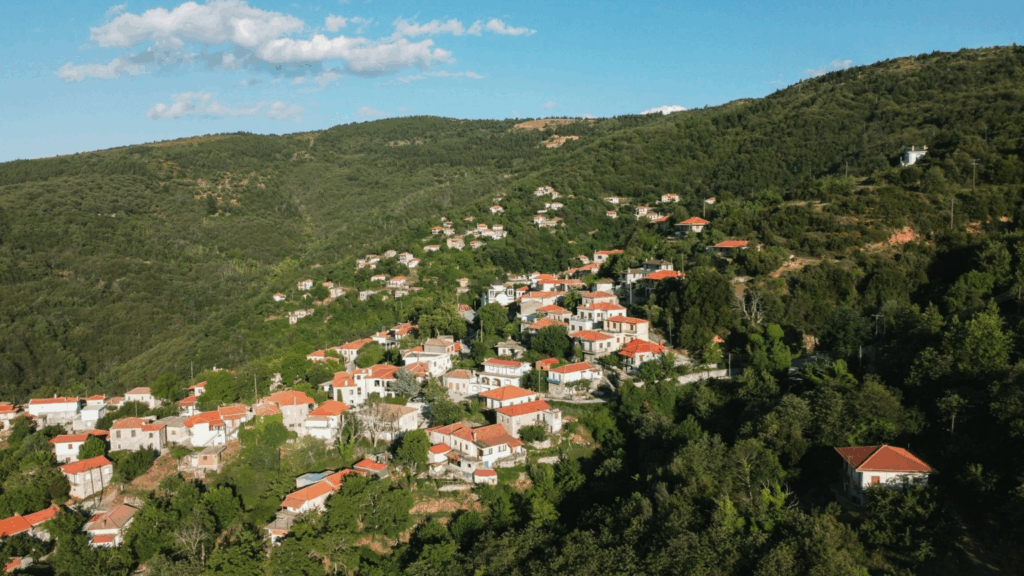
Did you know that just two hours from Athens, nestled in the heart of Arcadia, a small mountain village transforms into a vibrant celebration of one of autumn’s most earthy treasures? Ano Doliana, perched at 1,050 meters on the northern slopes of Mount Parnonas, is one of the largest chestnut-producing villages in the region. Every November, it honors the precious mountain fruit—the chestnut—with a festival filled with village charm, tsipouro, and warmth.
The journey to Ano Doliana is an experience in itself. From Tripoli, the road winds through a landscape painted with purple meadows of native heather, blooming in autumn. The slopes are adorned with majestic chestnut, cherry, oak, walnut, plane, and pine trees, creating a natural mosaic of colors and fragrances.
Each year, around early November, Ano Doliana fills with visitors. From 11 a.m., the village square comes alive with large cauldrons and grills. The chestnut feast draws crowds from across Greece and beyond. Locals roast chestnuts over charcoal, boil and fry them, prepare bean soup, cook wild boar with chestnuts, and offer chestnut sweets alongside tsipouro and wine—all set to the rhythm of traditional music. Trust me, you’ve never tasted chestnuts as sweet as these—they’re fresh, just harvested from the mountain.
It’s more than a festival; it’s a celebration of community, land, and season—an homage to nature’s abundance that deserves to be shared together.
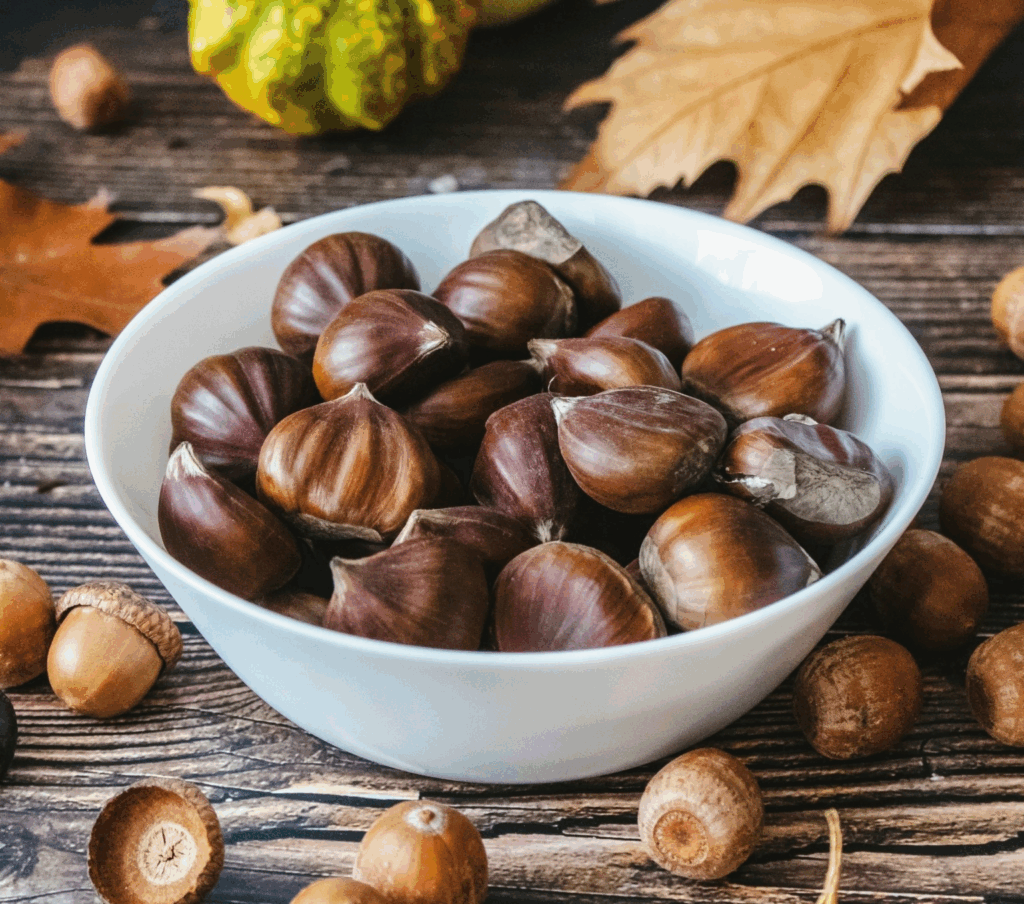
The Chestnut Tree in the Garden
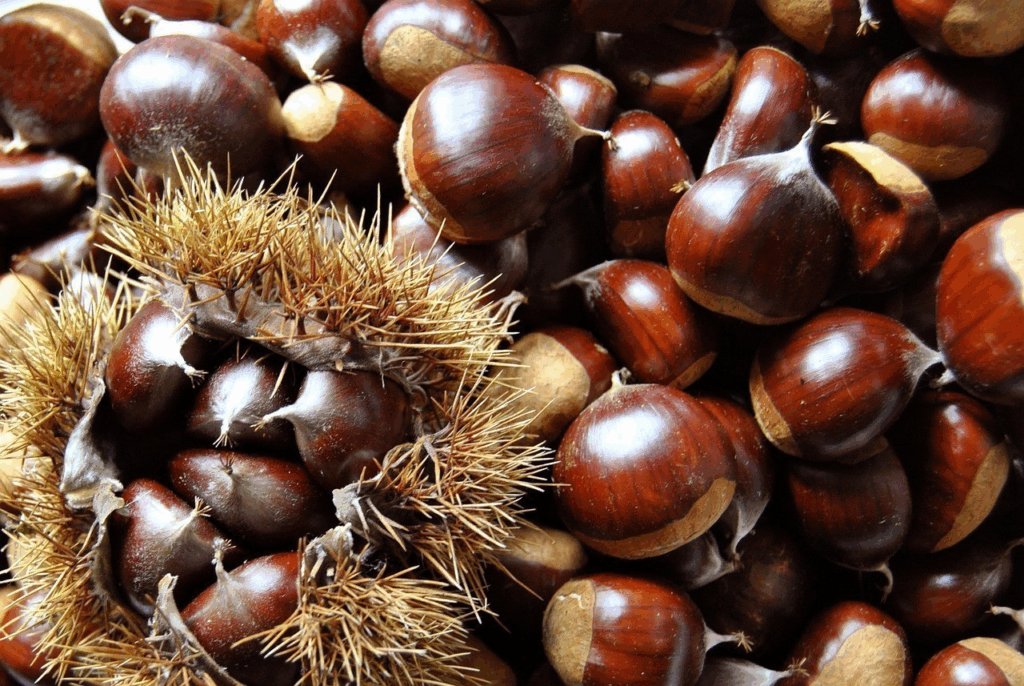
The chestnut tree (Castanea sativa), often called the “bread of the mountains,” has been a lifeline for mountain communities for centuries. Its wood is durable and highly valued in furniture making and construction, while its fruit is a vital source of nutrition and energy. Resistant to cold, the chestnut tree thrives in cool, deep, acidic soils but cannot tolerate calcareous (limestone-rich) ground. It needs moisture but also good drainage.
Cultivation Tips:
- Prefers elevations between 400 and 1,200 meters with adequate rainfall.
- Requires pollinators; for fruit production, planting two or more “compatible” varieties guarantees better yields. Compatible varieties bloom at the same time and produce pollen that can fertilize the other tree’s flowers.
- A spacing of 6 to 7 meters between trees ensures enough room for canopy growth and allows natural pollen transfer.
- Protection from the chestnut gall wasp (Dryocosmus kuriphilus) is essential and can be managed with biological methods. Even in a small garden, two chestnut trees of different varieties are enough to start this natural “conversation.” Proper placement, moisture, and fertilization further boost healthy growth and fruit production.
Chestnuts – The Secrets of the Beloved Winter Nut
Chestnuts are an autumn superfood. They contain complex carbohydrates with a low glycemic index, dietary fiber, potassium, magnesium, and vitamin C—something few nuts offer. Gluten-free, they’re an ideal choice for those following alternative diets.
Festivals like the one in Ano Doliana highlight the uniqueness of local products, connect younger generations with their roots, and showcase the value of local production through immersive experiences. In an age of digitalization and inactivity, such celebrations remind us that the flavors, aromas, and products of Greek land are our most precious heritage.
Ask me anything
Explore related questions




