





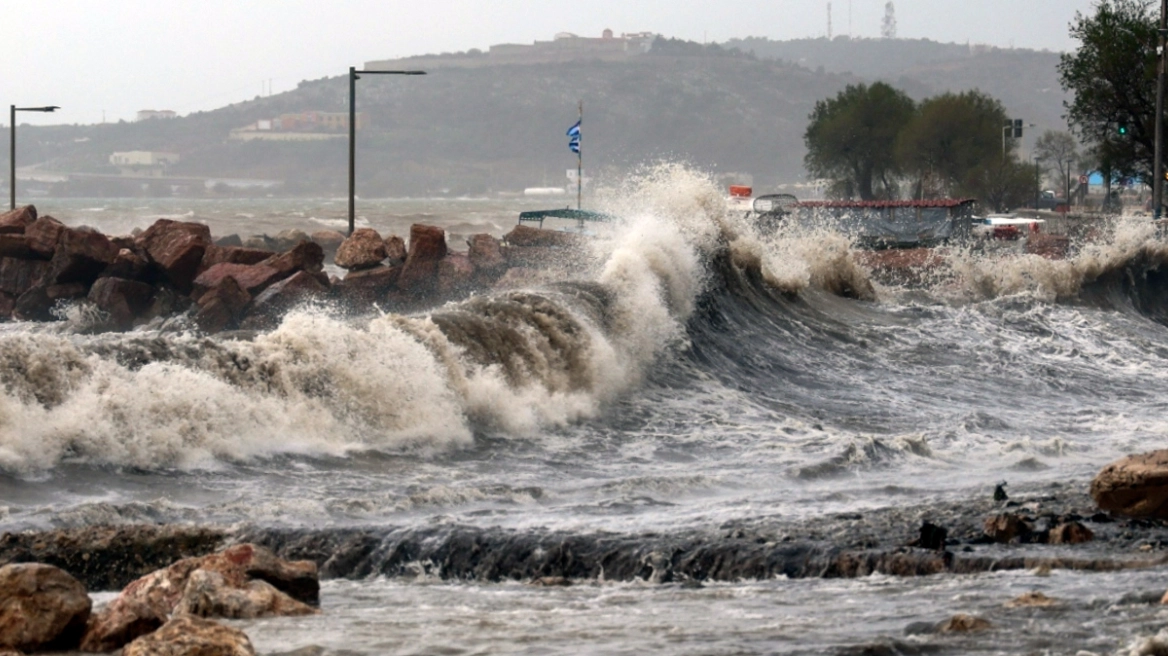
Four meteorologists are warning of a strong wave of bad weather that will affect at least seven major regions of Greece.
Meteorologist Nikos Kanteres raises the alarm for intense weather expected to hit the country on Wednesday (April 1), warning of widespread phenomena across the entire territory.
Speaking to protothema.gr, the former director of forecasts at the National Meteorological Service notes that a low-pressure system will bring heavy rain and thunderstorms, even warning of possible flooding. According to him, current data show that both Attica and Thessaloniki will be affected by the bad weather.
At the same time, he estimates that the National Meteorological Service should issue an emergency weather deterioration bulletin on Tuesday, emphasizing the need for Civil Protection to be on alert. According to him, the bad weather wave is not expected to last long, but it will be intense, with unstable conditions continuing in the following days and gradual improvement from Holy Monday.
Main characteristics of the bad weather
According to meteorologist Giannis Kallianos, a strong low-pressure system forming in the Central Mediterranean is expected to move toward the Adriatic and then directly affect Greece, with Wednesday being the most dangerous and difficult day.
This system will be accompanied by dangerous phenomena requiring particular attention:
- Torrential rain and thunderstorms: Long-lasting and intense
- Flood risk: Increased likelihood of flooding, especially in urban areas and regions with complex terrain
- Dangerous winds: Gale-force winds reaching locally 9 to 10 Beaufort, causing problems in sea transport
- Snow: Snowfall in very mountainous areas
The two scenarios from forecast models
Although the direction of the low-pressure system is certain, numerical models are still “struggling” over its exact path, with two main scenarios:
Scenario 1: The “difficult” scenario for Central Greece
If this model prevails, the most intense phenomena will affect:
- Peloponnese
- Central Greece (including Attica)
- Thessaly
- Central Macedonia
- Evia and the Sporades
- Southwestern Crete
Scenario 2: Shift toward the Aegean
In this case, the core of the intense phenomena will shift eastward, mainly affecting:
- The Eastern Aegean
- The Central and Southern Aegean
- Parts of Thessaly
Ask me anything
Explore related questions




