





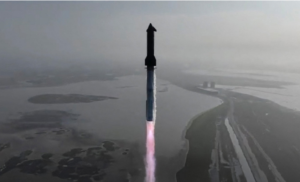
SpaceX called off the critical Starship test launch only seconds before takeoff, when a component holding the launch tower’s chopstick arm failed to retract properly.
The giant rocket was scheduled to conduct its 12th major test mission from the Starbase facility in southern Texas. The next available launch window opens at 5:30 p.m. local time on Friday. The countdown had reached 40 seconds before the launch was ultimately aborted.
Elon Musk stated in a post that the hydraulic pin holding the tower arm did not retract as expected. He added that if the issue is fixed quickly, the company would attempt another launch the following day.
IPO and pressure on Starship
The Starship test was scheduled one day after SpaceX filed paperwork for an initial public offering, which could take place as early as June.
The filings revealed billions in losses, but also outlined Musk’s plan to maintain control of the company through special high-voting-power shares.
SpaceX aims to raise up to $75 billion to fund the development of Starship, the Starlink satellite network, and new artificial intelligence-related ventures.
The third generation of Starship
The mission would have marked the first flight of the rocket’s third generation, known as Version 3 or V3.
The new version is considered significantly upgraded compared to earlier prototypes, featuring more powerful Raptor engines, greater liftoff thrust, and improvements aimed at full system reusability.
SpaceX aims to build the world’s first fully reusable super-heavy rocket, something no other space company has yet achieved.
The company has already demonstrated the ability to “catch” the Super Heavy booster using the launch tower upon its return to Earth, although it has not yet achieved full recovery of the entire system.
NASA’s lunar mission and Mars ambitions
Starship is a central pillar of SpaceX’s future plans. NASA has already awarded the company contracts worth about $4 billion to land astronauts on the Moon, while Elon Musk continues to promote the long-term vision of establishing a human colony on Mars.
SpaceX also plans to use Starship to deploy up to one million satellites, which could even function as space-based artificial intelligence data centers.
However, Starship’s development has been marked by ongoing technical challenges. Previous test flights of the rocket’s second version were affected by explosions and major failures both in flight and at the Starbase facilities.
Space industry analysts describe this mission as the most important to date for SpaceX, as Starship’s success is considered crucial both for NASA’s plans and for the company’s future valuation ahead of the IPO.
Ask me anything
Explore related questions




