





Oil prices rose today after Donald Trump bluntly rejected Iran’s response to the American proposal aimed at ending the war, while Tehran warned France and Britain against any involvement in the area.
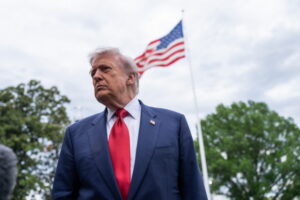
“I just read the response from the so-called ‘representatives’ of Iran. I don’t like it — it is TOTALLY UNACCEPTABLE!” the Republican said on Truth Social, typing the last two words in capital letters.
Even before Asian markets opened, crude oil prices surged again past $104 per barrel, with Brent crude rising 3.29%, as hopes faded for a quick reopening of the Strait of Hormuz. In peacetime, one-fifth of the world’s consumed oil passes through the strait, which Iran effectively shut down after the U.S.-Israeli attack against it began on February 28.
More than a month after a ceasefire was declared, talks between Washington and Tehran appear more deadlocked than ever, and hopes for a settlement are fading. Neither side has publicly revealed the exact terms being proposed. The American president did not even clarify yesterday whether negotiations would continue.
After days of waiting, Iran made it clear yesterday that it had responded to the American proposal, though without giving details.
Iranian state television merely reported that the response — delivered to the U.S. through Pakistan — includes “the end of the war” on “all fronts, especially in Lebanon,” as well as “security guarantees for navigation.”
Opening of the Strait?
According to a Wall Street Journal report citing sources familiar with the matter, Tehran’s proposal includes the gradual reopening of the Strait of Hormuz along with the simultaneous lifting of the blockade of Iranian ports by the U.S. Navy.
According to the American newspaper, Tehran also says it is willing to “dilute” part of its highly enriched uranium and send it to a “third country,” possibly Russia.
The U.S. and Israel argue that the Islamic Republic seeks to obtain nuclear weapons through uranium enrichment. Iran has denied this for decades, insisting that it will not give up its right to maintain a civilian nuclear energy program.
“There are still nuclear materials left — the enriched uranium — that we must remove from Iran,” and “the enrichment facilities must be dismantled,” Israeli Prime Minister Benjamin Netanyahu told CBS News earlier yesterday.
The war, which has claimed thousands of lives — mostly in Iran and Lebanon — allowed the U.S. and Israel “to achieve many things, but it is not over,” he added.
Drones in the Gulf
New drone strikes were reported yesterday in the Gulf region.
In Qatari territorial waters, a bulk cargo ship arriving from Abu Dhabi was struck by a drone but continued its course, according to the emirate’s Defense Ministry.
According to Iran’s FARS news agency, the vessel was “sailing under the American flag” and “belongs to the United States.” The agency did not explicitly say whether Iran was responsible.
Other countries were also hit by drone attacks. Kuwait did not clarify where the drones originated. The UAE directly accused Iran.
Since the outbreak of the war, Gulf monarchies allied with the U.S. have repeatedly suffered Iranian strikes.
The attacks came two days after U.S. armed forces “neutralized” — immobilized — two Iranian tankers in the Gulf of Oman, which provides access to the Strait of Hormuz.
“Our restraint has ended,” warned Ebrahim Rezaei, spokesperson for the Iranian parliament’s national security committee. “Any attack against our ships will trigger strong and decisive Iranian retaliation against U.S. ships and bases,” he added.
“We will never bow our heads before the enemy, and if there is discussion or negotiation, this does not mean surrender or retreat,” Iranian President Masoud Pezeshkian wrote on X.
France and Britain in Tehran’s Crosshairs
Britain and France are continuing their initiative to establish an international coalition that would act to guarantee the security of the strait once the war is resolved.
The defense ministers of the two countries will co-chair a videoconference tomorrow with around forty counterparts from countries willing to contribute to the effort, London announced.
Tehran warned that any intervention would trigger a “decisive and immediate response” from the Iranian armed forces, after Paris and London announced they had sent military assets to be “pre-positioned” in the region, especially the French aircraft carrier Charles de Gaulle.
France “never” considered conducting military operations in Hormuz, French President Emmanuel Macron responded, saying the only goal is to guarantee the security of the strait “in coordination with Iran.”
In the other main theater of the war, Lebanon, Israel and Hezbollah continue hostilities despite the ceasefire that was supposedly implemented on April 17.
Two rescuers from the Islamic Health Committee — an organization linked to Hezbollah — were killed and five others wounded in Israeli strikes in southern Lebanon yesterday, Lebanon’s Health Ministry announced. According to the ministry, since the outbreak of the new war on March 2, Israeli military operations have killed 2,846 people, including 108 healthcare workers.
Ask me anything
Explore related questions




