





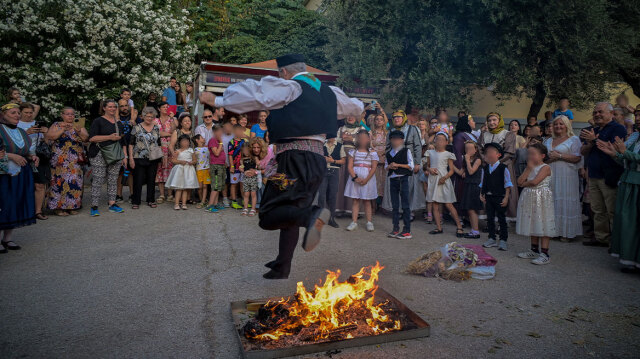
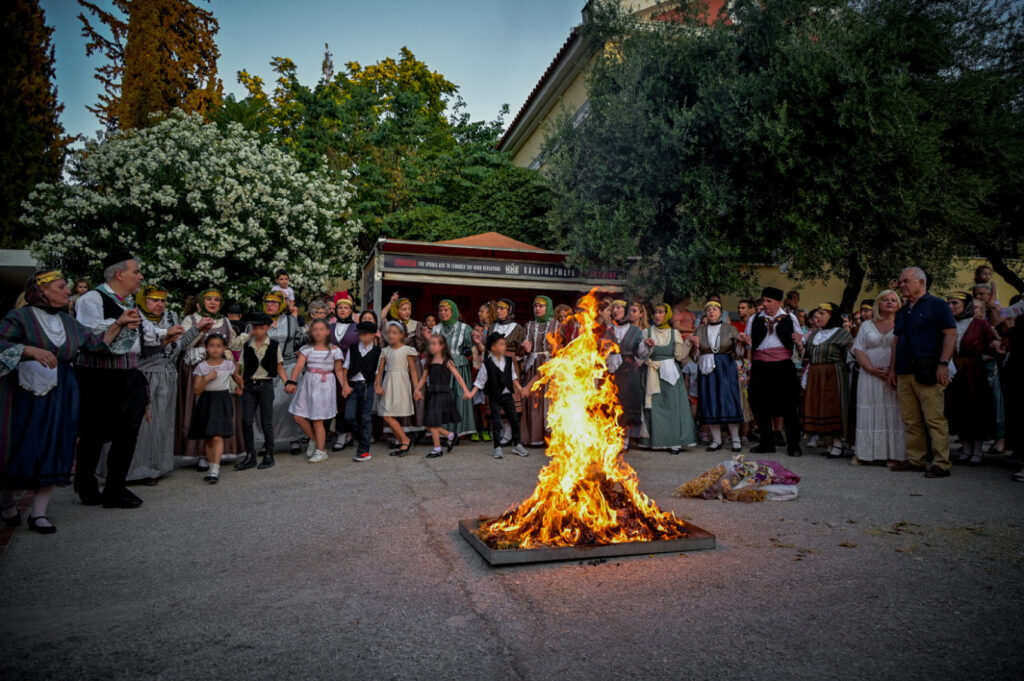
Every year, on the evening of June 23, shortly before the feast of St. John the Baptist, Greece is lit up by dozens of bonfires. In squares, courtyards, and neighborhoods, people of all ages jump over the bonfires of Ai-Yiannis, reviving a custom that seems to come from the depths of time. At the same time, in many parts of the country, the tradition of Klidonas is still observed, with “silent water,” amulets, and fortune-telling verses, which promise to reveal the secrets of fate and love. Behind these folk traditions, however, lies a fascinating thread of cultural continuity that connects modern Greece with the world of ancient Athens.
The story begins on the northern slope of the Acropolis, along the ancient Peripatos, the path that encircles the sacred rock. Among caves, sanctuaries and routes used for centuries by the Athenians stood the Sanctuary of Aphrodite in the Gardens, a site dedicated to the goddess of love, fertility and the generative power of nature.
Its location was significant. Before the worship of Aphrodite became widespread, the area appears to have been linked with older female fertility deities, with roots reaching back to the Mycenaean period. In the ancient world, sacred sites were rarely abandoned outright. New cults often absorbed older ones, preserving earlier religious meanings under new names and forms.
This was the setting for one of the most enigmatic rituals of ancient Athens: the Arrephoria.
The girls who guarded the city’s secret
The Arrephori were young girls from aristocratic Athenian families, usually aged between seven and 11, who were chosen to serve the goddess Athena. Their role was associated with purity, the passage from childhood towards maturity, and participation in the city’s sacred rites.
On a summer night, under the full moon, the Arrephori carried baskets containing the so-called arreta, meaning “the unspoken” or “things that must not be revealed”. For the ancient Greeks, secrecy gave a ritual its force. Once a sacred act was made public, it lost part of its meaning.
The young priestesses followed an underground passage to the Sanctuary of Aphrodite. There, they handed over the baskets and received others, also sealed by silence. The rite was completed without the public ever knowing exactly what had been carried.
In this ancient context, secrecy was not an incidental detail. It was part of the ritual’s power, because a mystery that is revealed loses its sacred character and, with it, its effectiveness.
What was in the ‘unspoken’ baskets?
The contents of the baskets remain a matter of scholarly debate. The satirical writer Lucian claimed they contained small loaves shaped like snakes and phalluses, along with fruit and branches, all of them symbols of fertility and the reproductive force of nature.
Other interpretations offer a more practical explanation. In Attica, where water has always been precious, night dew could be understood as a gift of life. Some scholars believe the ritual may have involved plant elements exposed to the dew, symbolically transferring nature’s fertilising power to the soil and crops.
In the dry heat of the Attic summer, it is easy to understand why this fragile moisture, appearing overnight and helping plants survive, could acquire an almost magical value.
From ancient ritual to wartime resistance
The underground route associated with the Arrephori gained another layer of meaning in modern Greek history.
According to tradition and historical accounts, Manolis Glezos and Lakis Santas, the two young Greek resistance fighters who famously removed the Nazi flag from the Acropolis, used this route on the night of May 30, 1941.
A place linked for millennia with secrecy, fertility and renewal later became associated with national dignity and resistance. The Acropolis has a way of gathering new meanings without erasing the older ones.
Klidonas and the ‘silent water’
The connection between the Arrephoria and Klidonas is also seasonal. The ancient rites were performed in early summer, when nature stood between the end of one productive cycle and the beginning of the next.
Centuries later, Greek communities continued to mark the same period with rituals centred on water, divination, fertility and love.
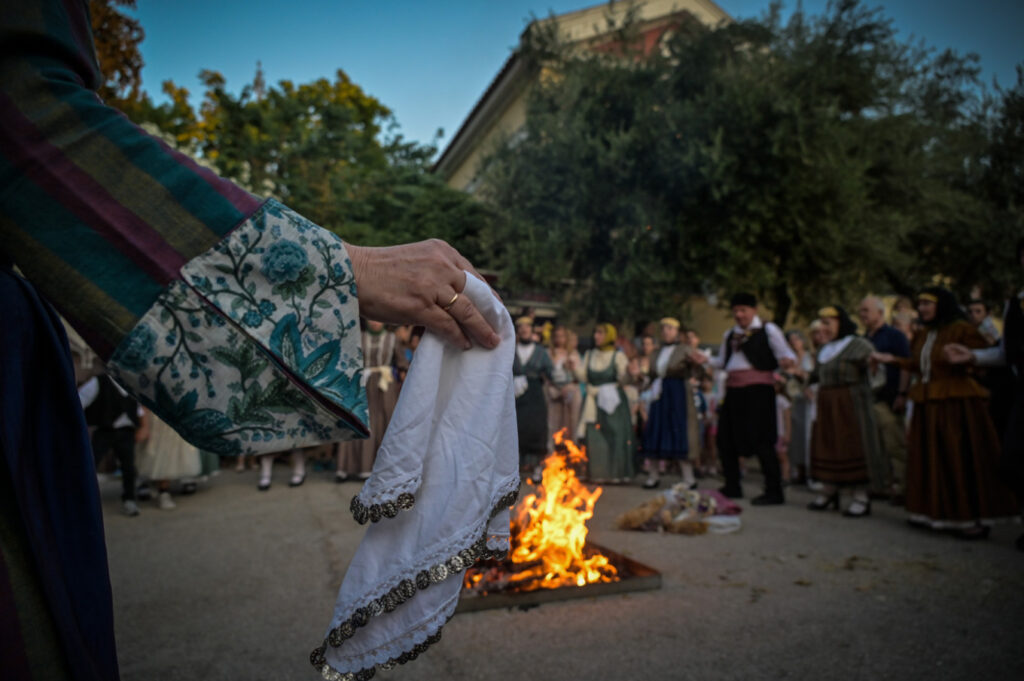
In the Klidonas custom, unmarried young women would collect “silent water” without speaking on the way. They placed personal tokens inside a vessel, covered it with a red cloth and left it under the open sky overnight.
The following morning, the tokens were revealed one by one, accompanied by improvised couplets and divinatory phrases. The future, marriage, love and luck became part of a folk ritual that still survives in several regions of Greece.
The fires of Summer Solstice
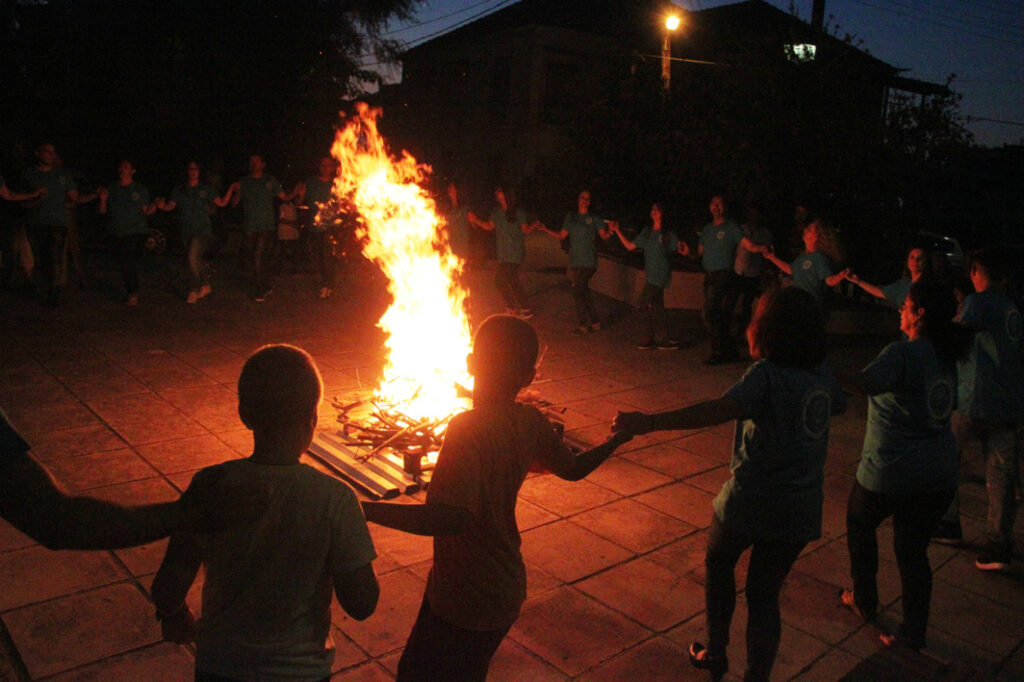
The survival of the June bonfires is equally striking.
Since antiquity, fire has been associated with purification and renewal. It was believed to drive away harmful forces, burn away the old and prepare the way for a new cycle.
The bonfires still lit across Greece around June 23 coincide with the period of the summer solstice, which held special meaning for the ancient peoples of the Mediterranean. The longest day of the year marked a cosmic threshold, celebrated with rituals of light, offerings and seasonal festivals.
Jumping over the flames, a custom still practised in many places, expresses this passage from one state to another: the rejection of misfortune and the wish for health, renewal and good fortune.
Skoumpourdi argues that the customs of Klidonas and Ai-Yiannis are living expressions of a cultural memory that stretches across centuries.
“The custom of the bonfires is linked to the Arrephoria rites, since it is symbolically related and takes place at the same time. Fire purifies all that is perishable and has the power to transform,” she explains. “Pyres were lit during the noumenia, meaning the new moons, and during solstice ceremonies. At the summer solstice, fires were lit and the first fruits of the wheat were offered.”
She also notes that the word Klidonas, from the Homeric kleidon, means a prophetic utterance or auspicious message, and is connected with the “ineffable”, the “silent” water and the prophetic phrases that accompany the custom. “In this way,” she says, “the most ancient rituals for the fertility of the earth are linked to our own impressive celebrations of St John Klidonas.”
From Mycenaean fertility cults to the mysteries of the Arrephori, from the sanctuaries of Aphrodite to the Christian feast days of June, the central symbols remain familiar: water that gives life, fire that purifies, nature that renews itself, and people looking towards the future with hope.
For Skoumpourdi, the custom is far more than a summer celebration. It is a rare moment when modern Greece comes into contact, even unconsciously, with some of its oldest roots.
Ask me anything
Explore related questions




