





From small children to pensioners, everyone has a story about the time they stepped on a sea urchin, along with all the home remedies that followed in the attempt to remove the spines.
It is the most classic seaside story there is, one that stamps itself into our summer memories on the beach and doubles as proof that we made the most of our swims.
Once you realise what has happened, it is natural to panic and just as natural to have your day ruined. The sole of the foot and the toes are the most common casualties. Follow these steps to bring the ordeal to an end as quickly and painlessly as possible.
- As soon as you realise you have stepped on a sea urchin, get out of the water. Do so carefully, avoiding putting weight on the affected foot, since pressing down can drive the spines further into the skin and make them harder to remove.
- Symptoms can include pain, stinging, inflammation, sweating and redness around the area. In more serious cases, symptoms are more intense and can include dizziness, weakness and shortness of breath.
- You may not feel any pain in the first few minutes. The sensation typically sets in after 15 to 30 minutes and can last for hours.
- Soak the affected foot in hot water for 30 to 90 minutes. The hotter the water, within reason, the better.
- If you have olive oil to hand, apply it to the wound to soften the skin and make the spines easier to extract.
- If you have a pair of eyebrow tweezers, try to remove any spines that are visible to the naked eye. If you feel too anxious to do it yourself, or doubt you will manage, ask someone nearby for help. Once the spines are out, disinfect the area with rubbing alcohol or an antiseptic solution.
- If the pain is sharp and unbearable, seek out the nearest pharmacy or hospital. Some organised beaches and campsites have a first aid station on site. Do not drive yourself; have someone else take you. The same applies if you are unable to manage any of the steps above on your own.
Before the swimming season even got under way, the first purple jellyfish were spotted off Evia. Experts say there is no cause for alarm and advise beachgoers to stay calm.
A few facts about sea urchins
You may have heard that clear water means sea urchins nearby. That is not strictly true, since they are also found in polluted waters. Many people are tempted to fish for sea urchins, whether for decorative purposes or to cook them, and this pressure is one of the reasons the species is under threat.
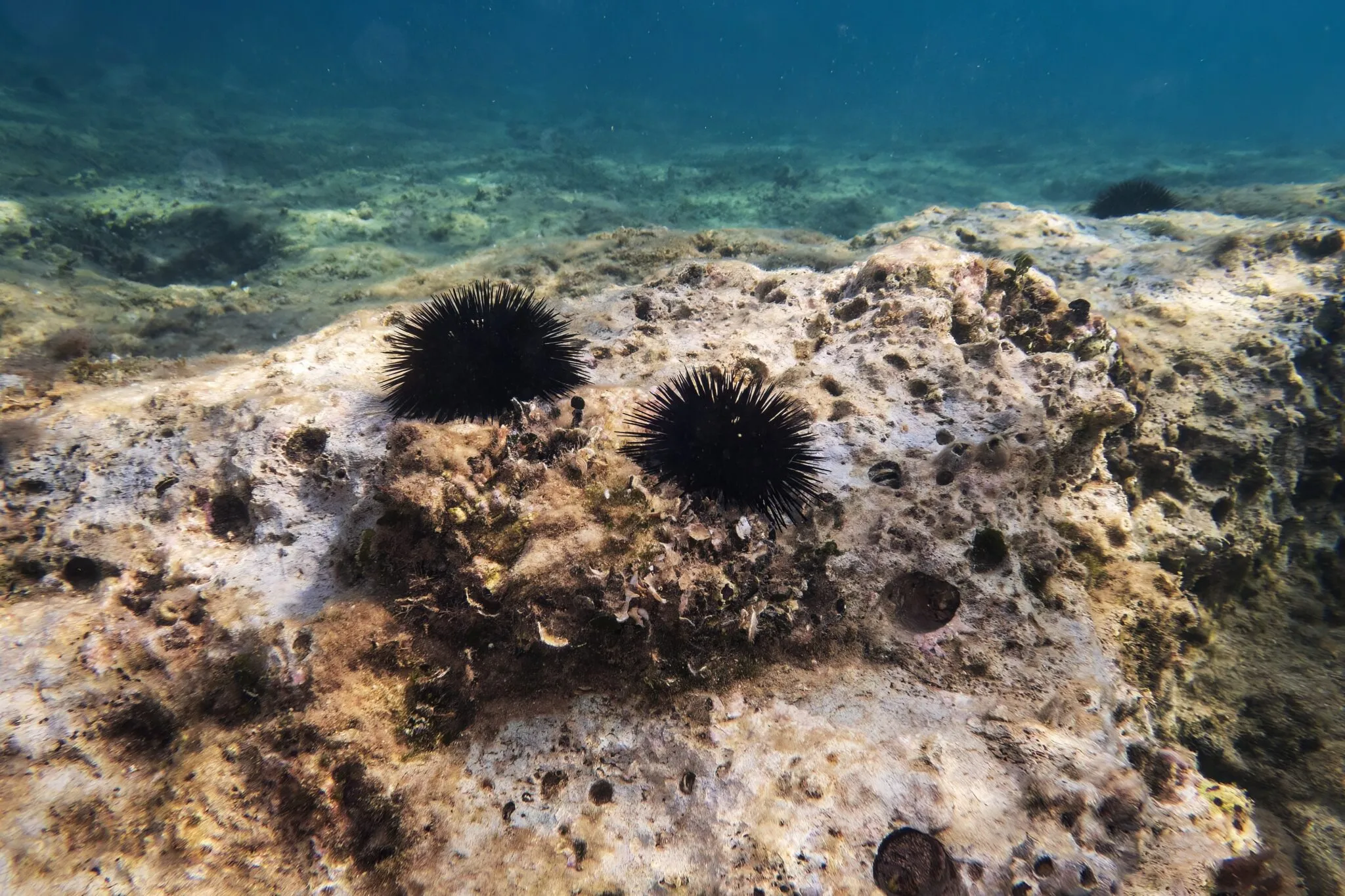
The sea urchin is a marine animal with a spherical, calcified shell covered in spines. Sea urchins are found in seas around the world, with numerous species in existence. In Greece, the two most common are the black sea urchin, Arbacia lixula, and the purple sea urchin, Paracentrotus lividus.
They live in shallow water, clinging to rocks, tangled among seaweed or nestled in the mud of rocky seabeds, though this does not rule out sandy seabeds either. Sea urchins are not aggressive and never attack; any sting comes from a person stepping on one. The pain and symptoms that follow come from the spines themselves.
There are two types of sea urchins: those with larger spines, which commonly cause wounds, and smaller ones called pedicellariae, hidden among the larger spines, which release the venom.
Ask me anything
Explore related questions




