Forty three years ago today, Greek tanks broke down the main gate of the Athens Polytechnic, killing students and marking the start of the end of the seven-year dictatorship that had begun on April 21, 1967. Indignation against the dictatorship were forcefully expressed from early 1973 with student sit-ins at the Athens Law School in February and a demonstration on November 4 on the occasion of a memorial service for statesman George Papandreou.
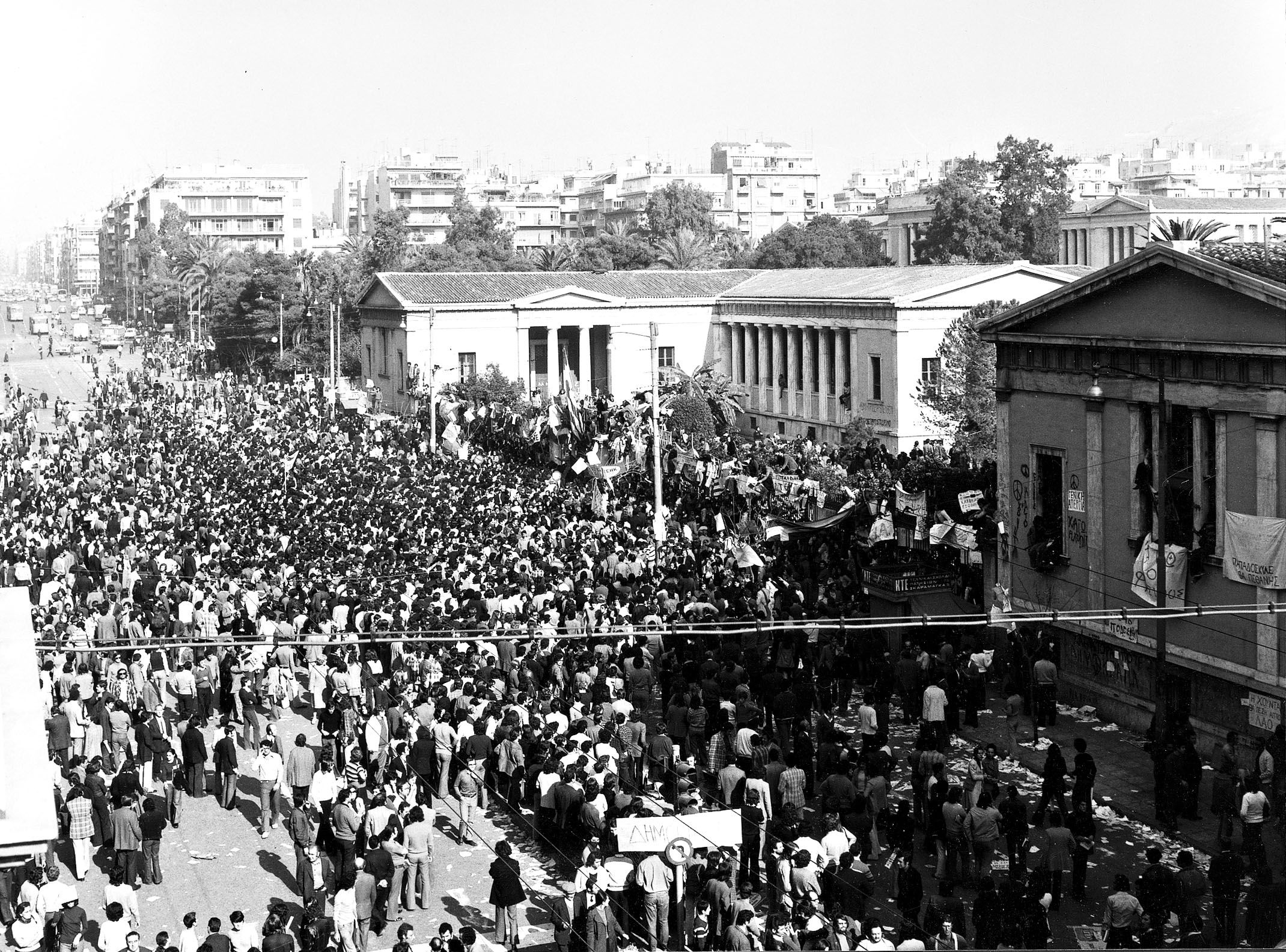
The political upheaval at the Athens Polytechnic began on November 14 with a student sit in and peaked with a pan-Athenian mobilization against the regime whose methods included displacements, mass trials in emergency courts, torture, mock executions and murders.
Wednesday, November 14, 1973
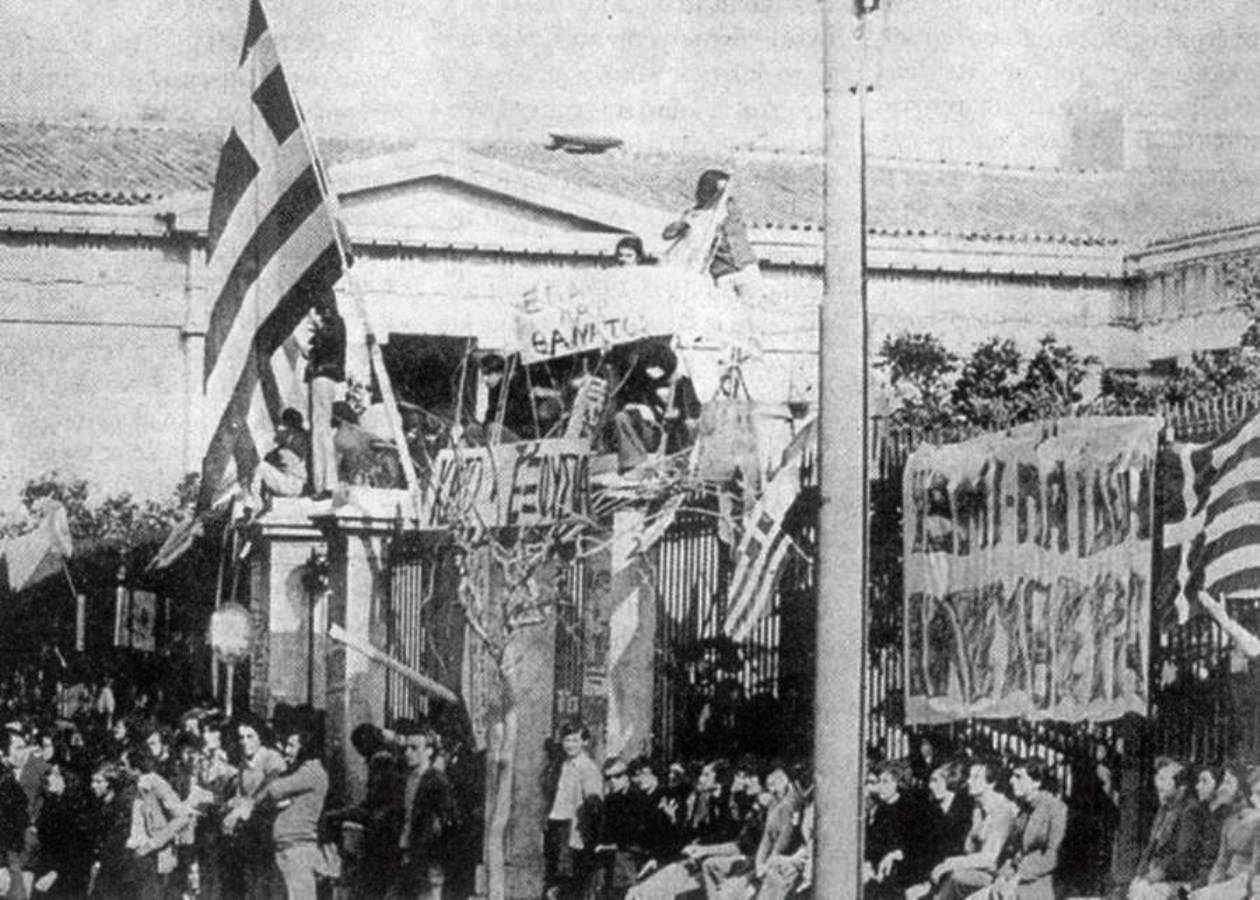
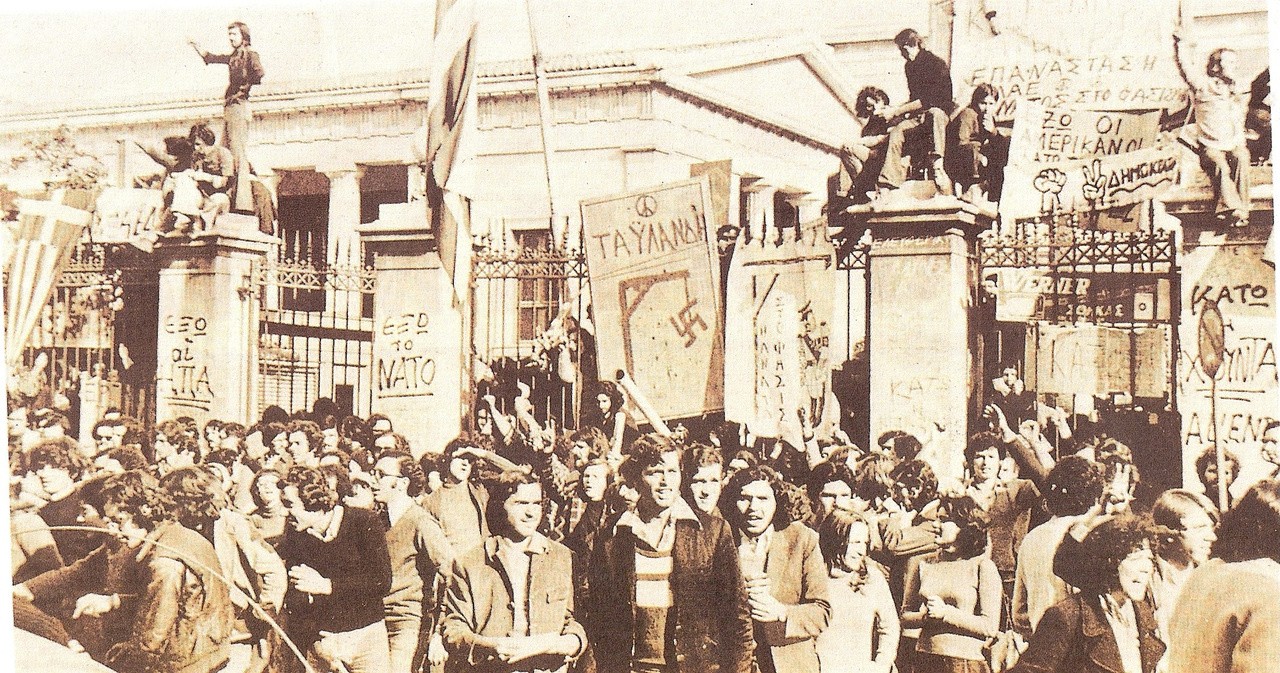
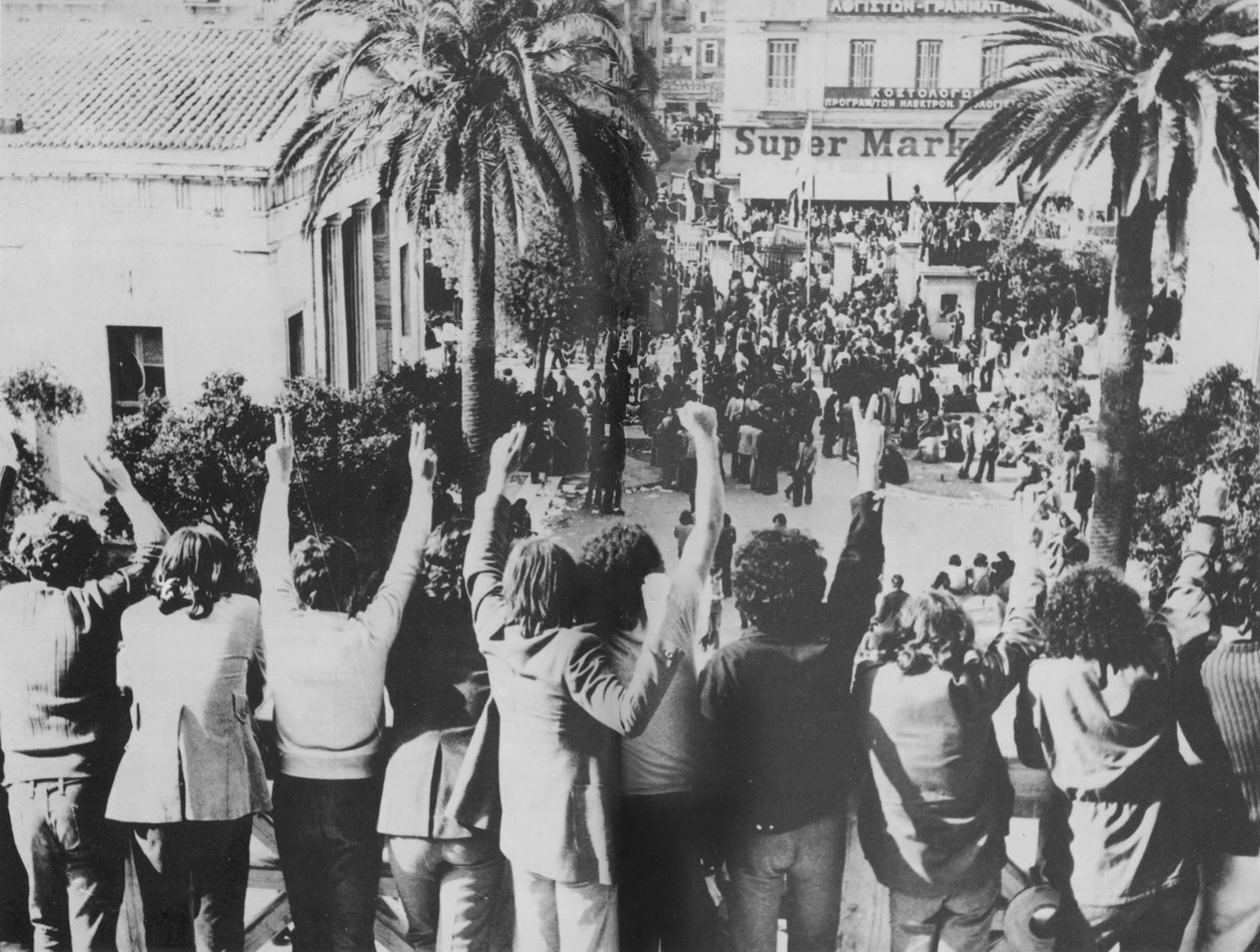
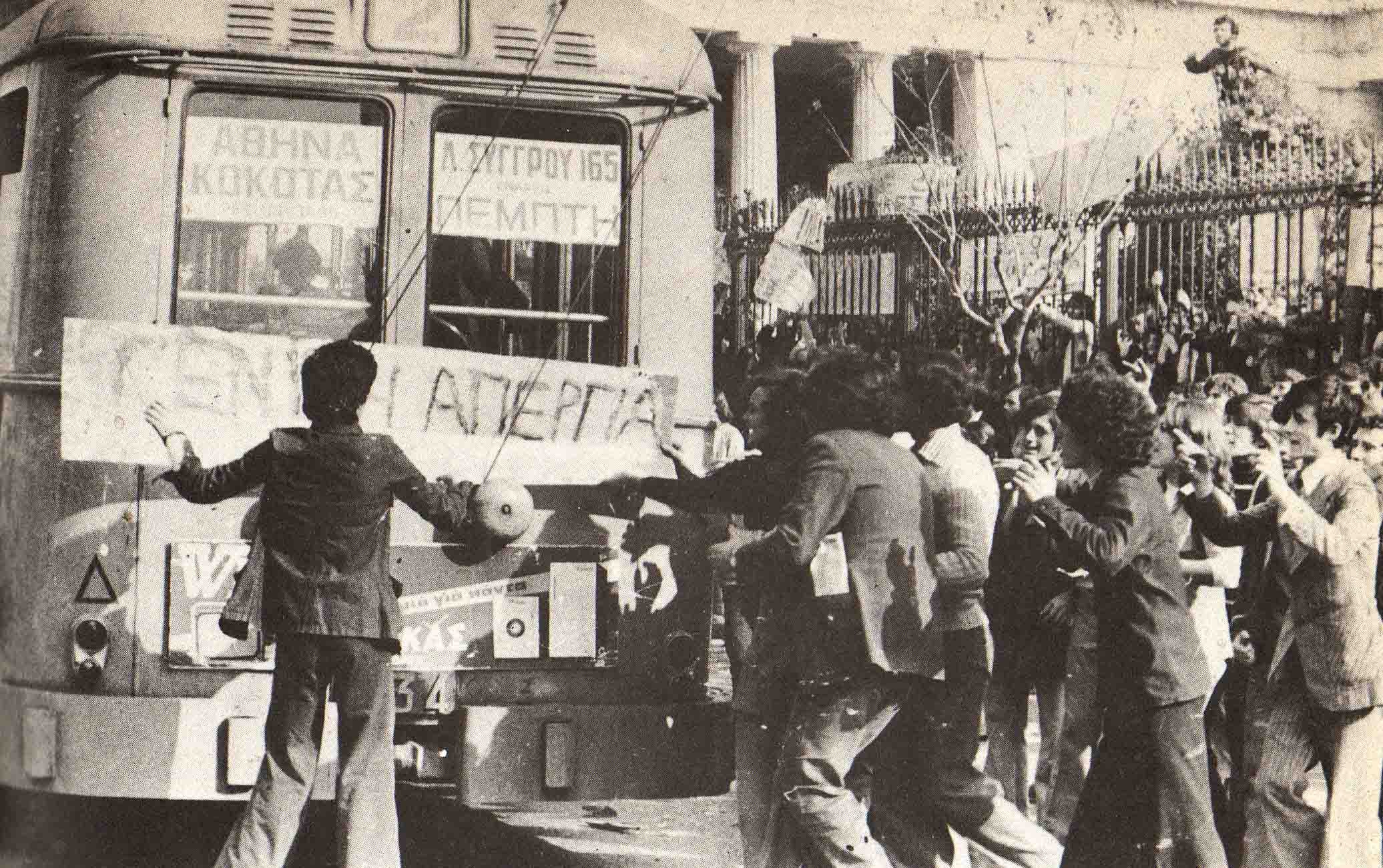
The uprising began with a general meeting of the students’ unions that resulted in the rejection of government measures concerning the planning of student elections. Students gathered there decide to occupy the building and send out clearly political messages that are encouraged by Cretan singer and fighter against the regime Nikos Xylouris. There is a large police presence but more and more students enter the area. The main slogans are: “Bread. Educatio. Freedom.” “People break your chains!” “U.S. Out” and “Down with the Junta” “Freedom” “Today Fascism Dies” “This’ll be another Thailand” (in reference to a student uprising in July 1973) Doors are shut and the first meeting of the Coordinating Committee takes place at 8.30 p.m. while student manifestos are scattered around a crowded Patission Avenue in front of the school.
Thursday, November 15, 1973
Students flock to the Polytechnic. By 9.30 p.m. the sit-in is packed with people shouting anti-American and anti-Junta slogans. Crowds of students camp out at the Polytechnic.
Friday, November 16, 1973
The Polytechnic radio station starts broadcasting the message of struggle. “Polytechnic here! Polytechnic here! This is the radio station of the free fighting students, the free fighting Greeks. Down with the Junta, down with Papadopoulos, Americans out, down with fascism, the Junta will fall to the people. People of Greece, come out on the streets, come and stand by us, in order to see freedom. The struggle is a universal anti-dictatorial, anti-Junta struggle! Only you can fight in this struggle. Greece is governed by foreign interests! The dictator Papadopoulos is trying to hide behind a mask of democracy with the fake government of Markezinis and the fake elections it is proclaiming.”
At 9 a.m. there are two mass demonstrations in Panepistimiou and Stadiou Avenues. A farmers’ committee from Megara protesting against the expropriation of agricultural land joins the radio broadcasts: “The people of Megara promise to stand and fight at the side pf the students and workers… This is a common struggle… It is not just for the town of Megara or the Polytechnic… It is for Greece. For the people of Greece who want to determine their own lives. To walk on the path to progress. The basic requirement is the overthrow of the dictatorship and the restoration of democracy.”
Together they sing Nikos Xylouris song, “Pote tha kanei xasteria” (When will the sky be clear again)
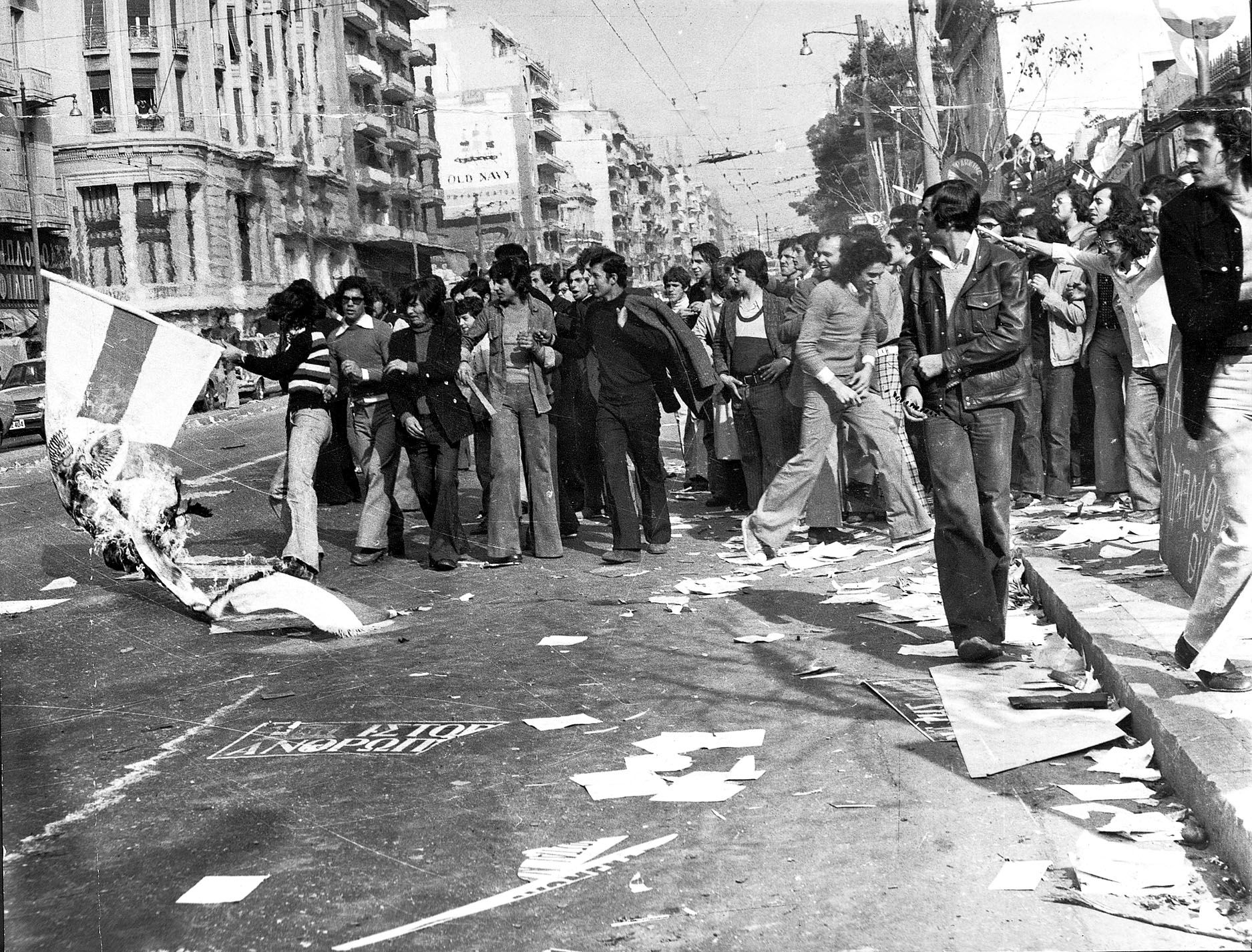
By afternoon there are clashes between police and demonstrators resulting in many injuries. At 7 p.m. police fire shots just as a mass rally heads for the Polytechnic. Fights break out on Solonos, Kaningos, Vathi, Aristotelous and Alexandras avenues as well as Amerikis Squares. A curfew is declared at 9.30 p.m. and the radio stations calls students not to leave at 11 p.m. Teargas is fired within the Polytechnic.
Saturday, November 17, 1973
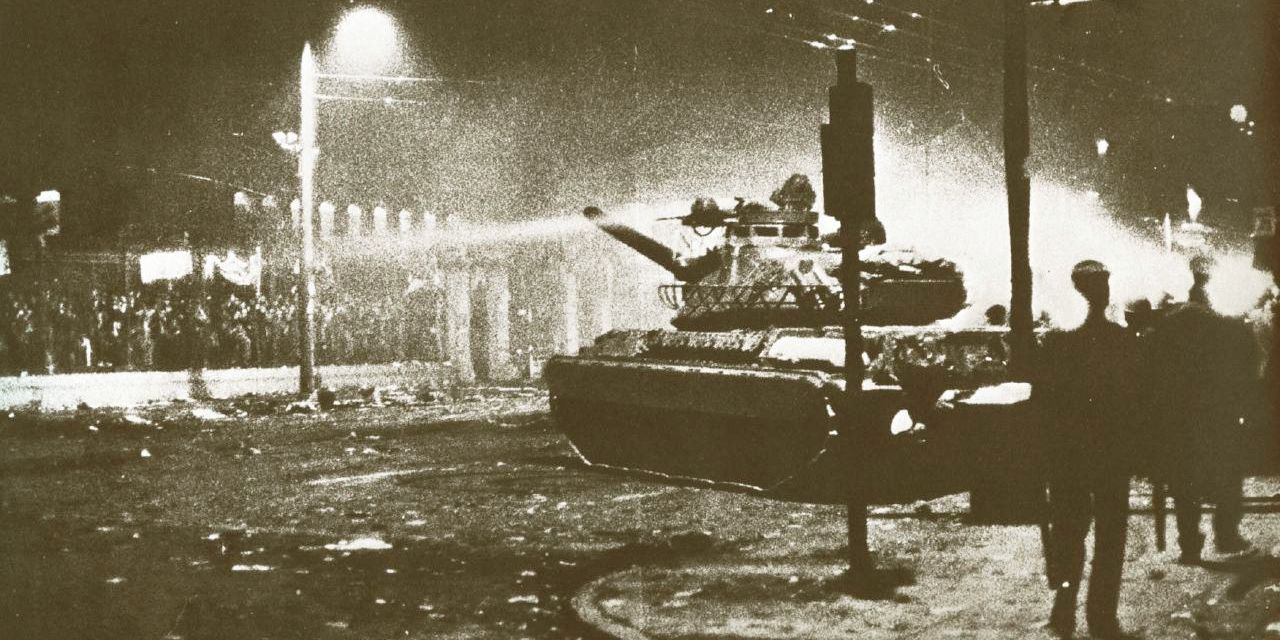
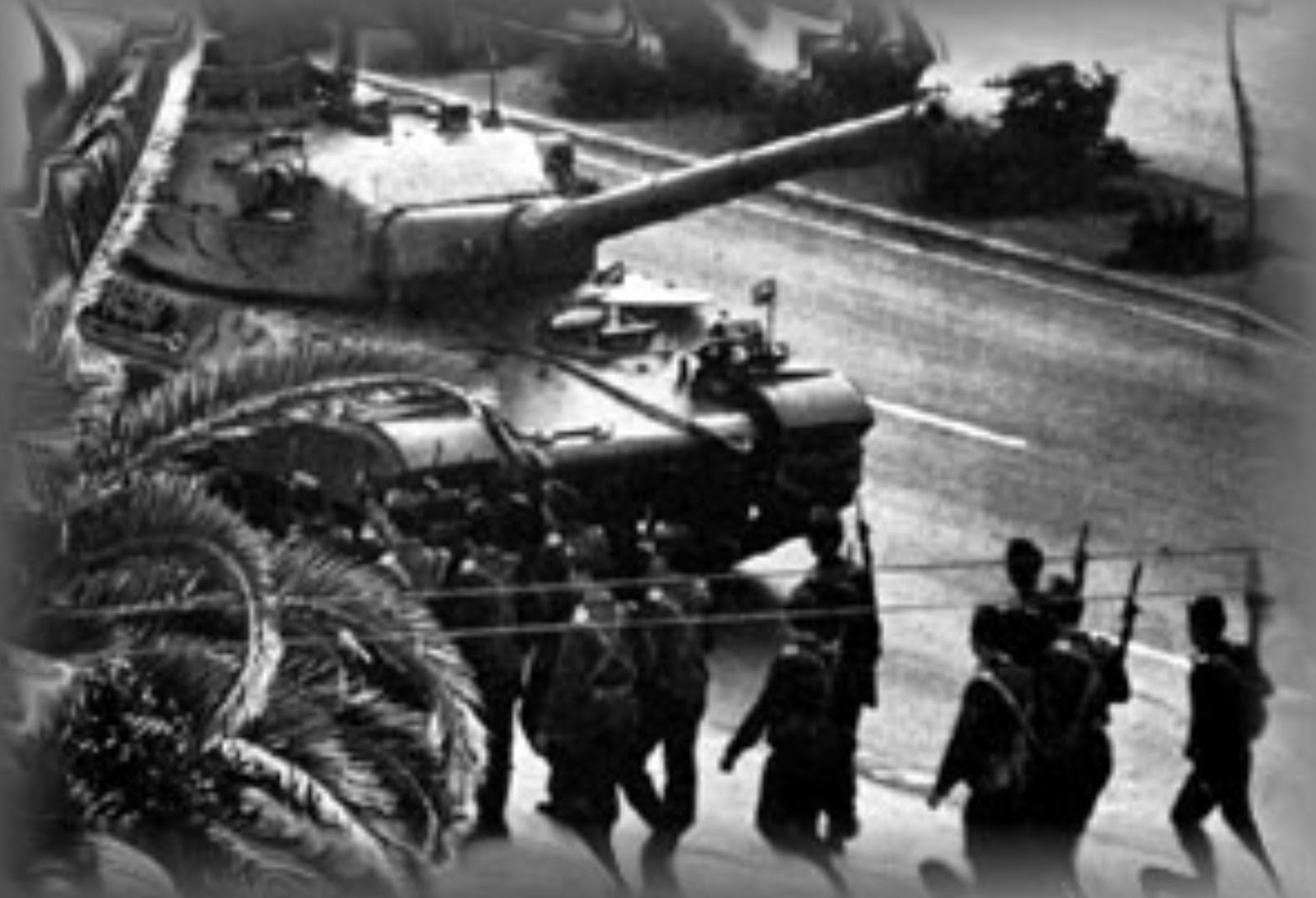
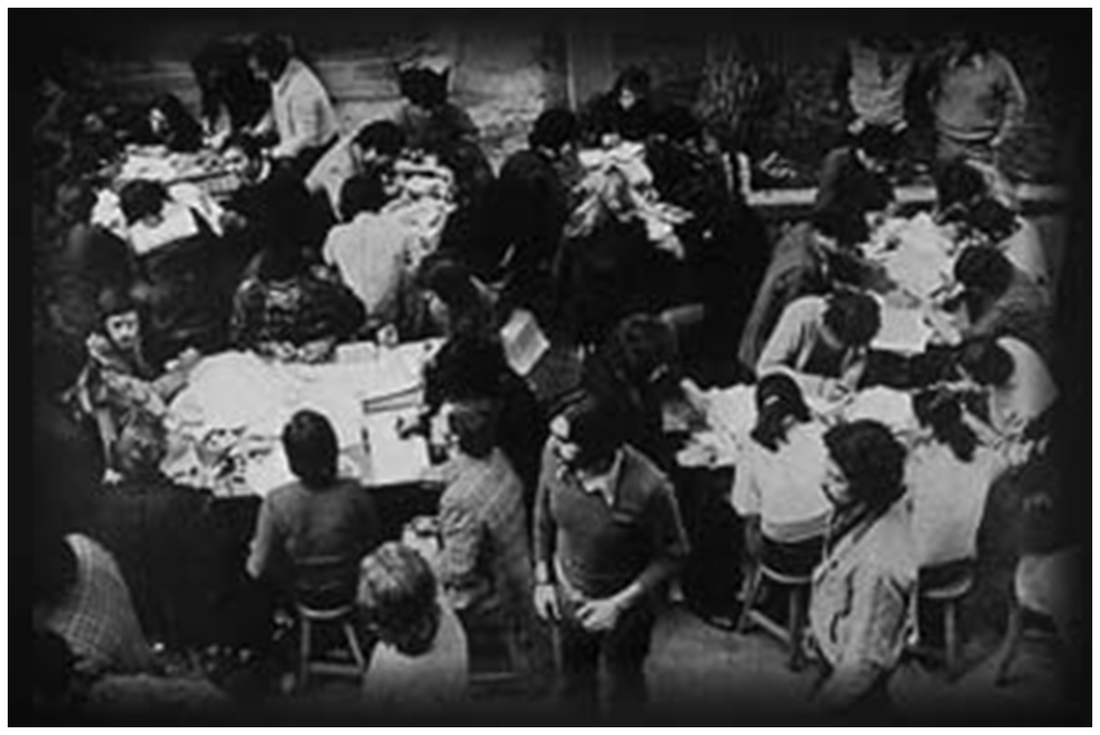
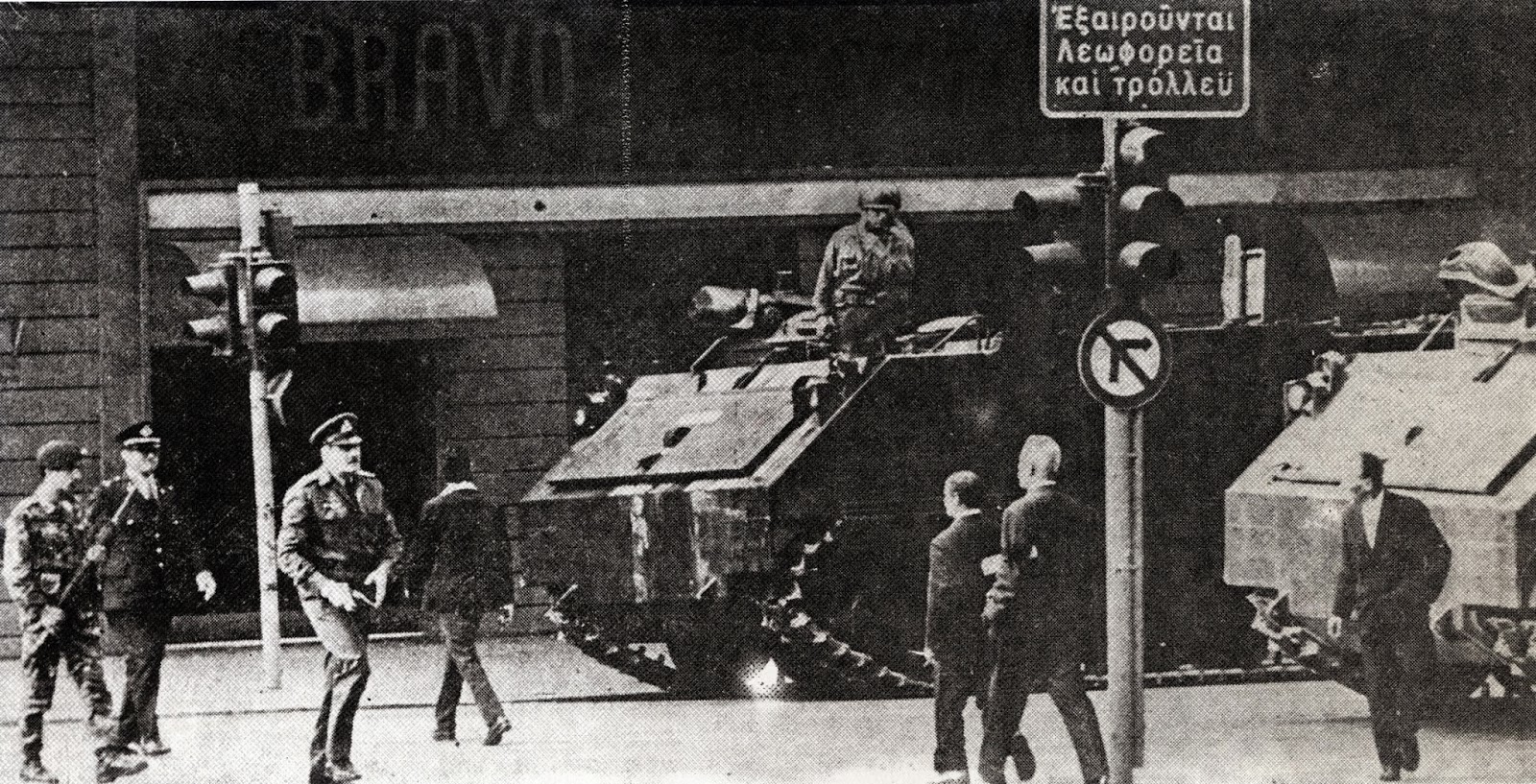
Tanks appear after midnight. A makeshift hospital is created in the Polytechnic where the injured and dead are taken. The area is surrounded by tanks at 1 a.m. and the radio station broadcasts: “Don’t be afraid of the tanks”, “Down with fascism”, “Soldiers, we are your brothers. Don’t become murderers.”
People cling to the gates after the army gives 20 minutes notice for the people to get out. A tank moves forward and pushes down the gates of the Polytechnic. Shots are also fired. Plain clothes policemen make arrests and by 3.20 a.m. the Polytechnic was empty
The aftermath
The event is seen as a turning point of the dictatorship. The legacy of the uprising remains and the anniversary is observed as a holiday for all educational establishments. The commemoration traditionally ends with a demonstration that begins from the campus and ends at the United States embassy. Some people believe that the event was a valiant act of resistance, others criticize the heroes of the event and accuse them of selling out on their ideals.
Ask me anything
Explore related questions