






How many times have you seen a misleading news story spread rapidly through Facebook? In an effort to become more accurate, the company blogged on Tuesday that it would add an option to its social networking service to allow users to flag news stories as hoaxes. Users will henceforth be allowed to handle erroneous reports the same way they currently flag pornographic and violent content on Facebook.
The more times a post is flagged as false, the less it will show up on people’s news feeds. “Many people on Facebook have reported this story contains false information,” may be a disclaimer that may show up.
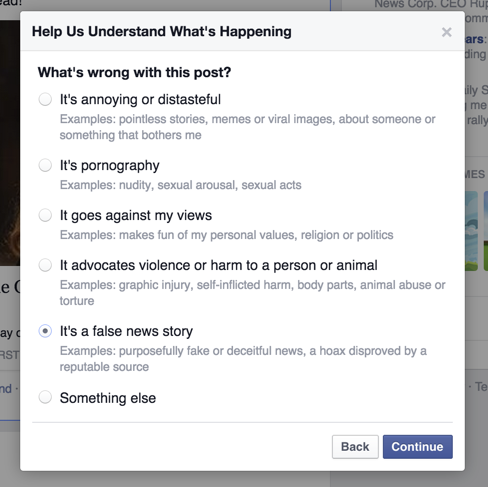
“Stories that include scams, or deliberately misleading news, are reported two and a half times more often than links to other news stories,” wrote Facebook engineer Erich Owens and researcher Udi Weinsberg.
“We’ve found from testing that people tend not to report satirical content intended to be humorous, or content that is clearly labeled as satire. This type of content should not be affected by this update,” write the authors of the report. “The vast majority of publishers on Facebook will not be impacted by this update. A small set of publishers who are frequently posting hoaxes and scams will see their distribution decrease.”

Despite assurances, some critics of this new flagging system worry that flagging is a subjective matter and people may flag stories from entire networks that they may consider propaganda or alternative viewpoints that they may not espouse.

How many times have you seen this?
Ask me anything
Explore related questions




