





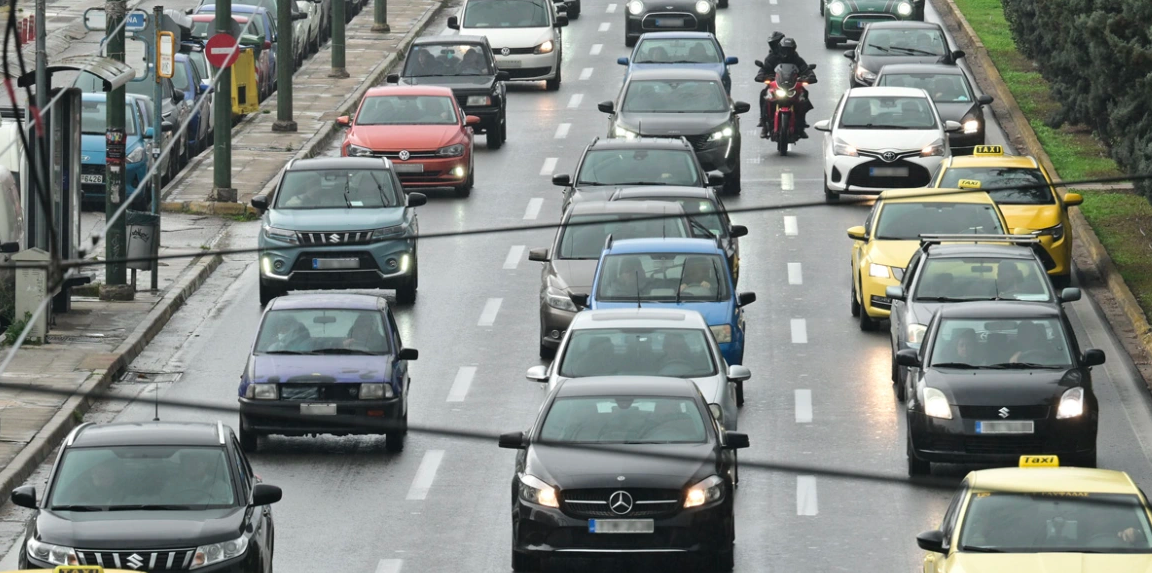
Traffic lights are much more than simple regulators for vehicle and pedestrians. These luminous signalers have now become an integral part of all major urban centers, seem to have completely departed from the almost romantic era of Stamatis (stop) and Grigoris (go).
Given the traffic congestion in major cities much has evolved into the regulators of our daily lives as well as our mental well-being. If we were to calculate how many hours each an everyone one of us spend confined in our car just to commute in Athenian rush hour or the bustling streets of the Attica Basin or Thessaloniki, one may realise that more hours are spent on the roads getting from one place to another. Therefore, traffic lights are not an exaggeration to say that they have become indispensable for every driver. In any case, without traffic lights, there would be absolute chaos.

Many years ago, the need to regulate traffic was evident, especially with the presence of carts on the roads, leading to chaotic situations and tragic outcomes. The first traffic light, dating back to 1868 in London, was based on railway signaling systems. Engineer John Peake Knight modified this system, creating the first traffic light with two manually operated lamps fueled by gas. However, due to a gas leak shortly after installation, there was an explosion, resulting in serious injury or death to the police officer operating it. In 1910, an automated traffic light system was installed in Chicago, featuring two rotating signs for “Proceed” and “Stop.” In the early 1920s, a similar system with different color codes, where green meant stop and white meant go, appeared on Fifth Avenue in New York. Electric traffic lights were introduced in Europe in 1924, starting in Germany’s Potsdamer Platz in Berlin, and rapidly spreading to other major cities on the continent.
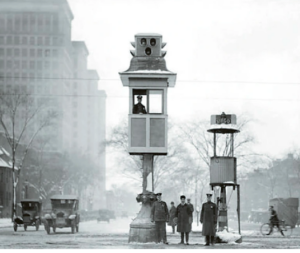
Traffic lights arrived in Greece relatively late, despite the clear need for them dating back to the era of carts. Even in the past, Athens suffered from traffic congestion, with chaotic conditions prevailing on its central streets until the mid-1930s. The first traffic light was installed in July 1936 at the intersection of Stadiou and Pesmazoglou streets in Athens. It featured three colors: green for go, yellow for caution, and red for stop. Subsequently, more traffic lights were installed at critical points and busy intersections. German companies, particularly Siemens, played a significant role in supplying and maintaining traffic lights in Athens, leading to controversies and scandals. Despite this, Greeks have become accustomed to traffic lights over the years. However, the exact number of traffic lights in the country remains uncertain due to jurisdictional issues. Attica, particularly Greater Athens, has the highest concentration of traffic lights, with over 37,000 in operation.
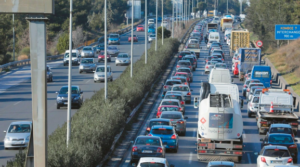
With 2.6 million vehicles crowding Athens’ streets, traffic lights alone can’t solve the city’s congestion crisis. The surge in vehicle numbers, now far beyond the 1935 count of 29,000, overwhelms existing infrastructure despite new additions. COVID-19 fears have led to increased car usage as people avoid public transport, exacerbating the issue. Additionally, the post-crisis economic recovery has flooded roads with delivery vehicles and taxis. The road network struggles to cope, illustrated by Kifisou Avenue designed for 6,000 vehicles but now congested. Irresponsible parking and driver behavior worsen the situation, as do immobilised vehicles from breakdowns or accidents, as noted by the Traffic Management Center of the Attica Region.
 T
T
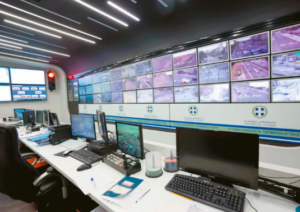
he Traffic Management Center is crucial for monitoring traffic, identifying issues, and detecting hazards on Attica’s main roads. The Attica Region is exploring new methods to enhance traffic management through traffic lights. Pilot testing of new software for automatic traffic light adjustment and real-time information dissemination about traffic incidents is anticipated. The center’s arsenal includes 225 cameras, 550 traffic sensors, an integrated system for traffic estimation, 24 Variable Message Signs, and real-time communication with regulators. Additionally, vans owned by the Attica Region are deployed 24/7 to address incidents as needed.

The importance of collaboration among various stakeholders to address traffic congestion issues, emphasising the need for reliable and attractive public transportation services is a priority. Also, specific initiatives in Thessaloniki and its challenges faced in modernising traffic signal systems will be closly examined. Efforts are being enforced by regional authorities to tackle the problem and calls for a metropolitan approach to finding solutions.

The Region acknowledges the daily struggle of drivers and aims to address it through funding major road projects, emphasising safety and efficiency. However, solving traffic issues requires holistic solutions and collaboration with state and municipal authorities. Plans include infrastructure projects and better traffic management, with a focus on reducing congestion and improving coordination. The Region advocates for a metropolitan approach to shared responsibility in tackling traffic challenges, emphasizing sustainable mobility and committed action.
Ask me anything
Explore related questions




