





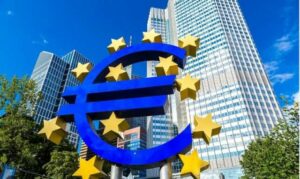
All the scenarios for the next day of France’s parliamentary elections are on the table at the ECB’s iconic tower in Frankfurt.
The common thread among the analyses is that the outcome of the French ballot will be a decisive parameter for how the French and wider European bond market will behave from Monday, although there is optimism that the worst-case scenario will not materialize.
That is, the next day could find France in a state of ungovernability, a possibility that would send strong signals of uncertainty to markets about the direction of the French economy and the ability to make decisions to reduce the budget deficit, which is expected to be between 5-5.% of GDP this year, and the debt, which has exceeded 100% of GDP.
That is why Europe is waiting with bated breath for the outcome of the elections, as a strong signal of uncertainty from them could upset the markets, triggering large waves of turbulence in European bonds and stock markets.
Frame of Defense
In any case, the ECB is ready to react, say officials with knowledge of the discussions and decisions taken at the central bank’s staff. Since the pandemic, the ECB has created a special defence tool, the Transmission Protection Instrument (TPI), which allows for immediate intervention by buying bonds of countries under severe stress. The ECB is ready to use this instrument, if necessary, from Monday in the event of an ‘attack’ on French bonds or a wider domino effect on the European bond market. Frankfurt’s “line of defence”, ECB officials assure, can be activated, if necessary, for all countries from the largest to the smallest, which are usually under the most pressure in such turbulence.
New interest rate cuts
The situation in the bond market in the wake of the French election is certain to be considered at the ECB’s monetary policy meeting on July 18. The other major issue is interest rate policy. At the moment there is no question of a further rate cut, following the June cut. However, the correlations in the ECB’s staff indicate that the policy of lowering interest rates will continue, with a decision on a cut in September and another in December most likely, if market conditions and inflation allow. As regards inflation, which is the decisive factor in the policy of cuts, the estimates reaching Frankfurt are encouraging. They show that it is decelerating in Europe and the US, allowing more flexibility in central bank movements. But in any case, ECB officials say, great care is needed in the next steps.
Ask me anything
Explore related questions




