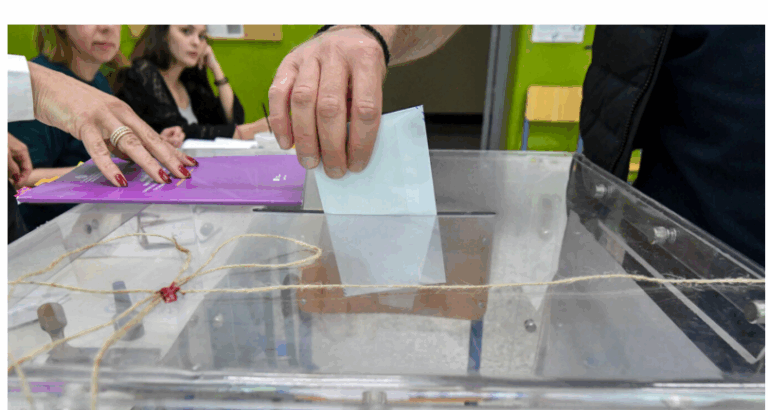
A recent poll conducted by Interview for Politic reveals a dramatic shift in the Greek political landscape, with SYRIZA, for the first time in recent history, falling below the parliamentary threshold at just 2.9% in voting intention. New Democracy (ND) maintains a commanding lead, estimated at 31.3%, while PASOK – Movement for Change (KINAL) holds steady in second place with 14.5%. Notably, the newer party Plefsi Eleftherias emerges as a significant force, polling third with 10.3%, signaling a reshuffling of the centrist and liberal electorate.
The detailed figures paint a fragmented picture of the electorate. In voting intention, ND commands 25.9%, PASOK holds 12%, and Plefsi Eleftherias is at 8.5%. Smaller parties such as Elliniki Lysi and KKE maintain moderate support at 7.0% and 6.5%, respectively. Meanwhile, SYRIZA’s steep decline to 2.9% places it below the critical 3% threshold required for parliamentary representation, marking one of the most significant setbacks for the party in years. The growing share of undecided voters, now at 16.7%, highlights an atmosphere of uncertainty and volatility ahead of the next elections.
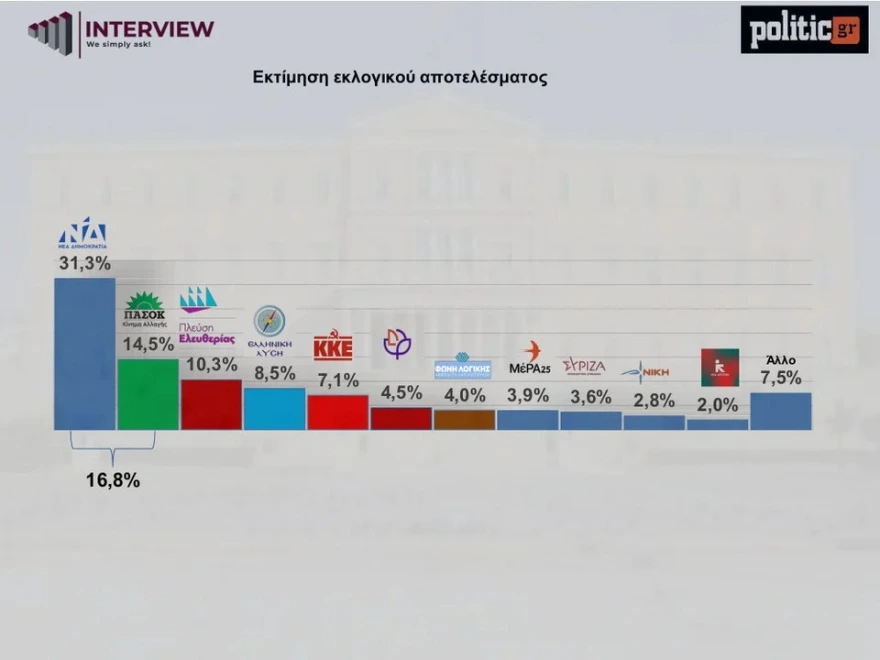
From a political standpoint, SYRIZA’s near-exclusion from parliament signals a profound crisis for the left-wing opposition, likely caused by voter fragmentation and disillusionment. New Democracy’s steady performance consolidates its role as Greece’s dominant political force, while PASOK capitalizes on the left’s disarray to strengthen its position as the main opposition. Plefsi Eleftherias’ rise reflects the electorate’s appetite for new centrist and liberal options, further complicating the political mosaic. The persistence of smaller parties such as Elliniki Lysi and KKE suggests ongoing divisions among nationalist and communist voters.
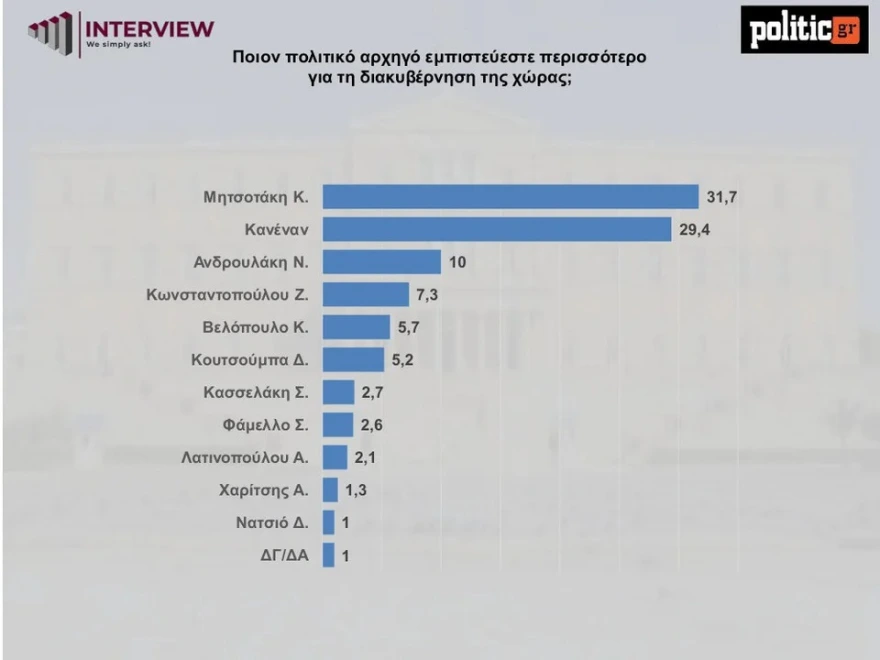
Leadership trust ratings reinforce ND’s dominance, with Prime Minister Kyriakos Mitsotakis enjoying a 31.7% trust rating, slightly up from May. The high percentage of respondents who do not trust any leader, at nearly 30%, underscores widespread political disenchantment. PASOK leader Nikos Androulakis sees modest gains with 10%, while Zoe Konstantopoulou maintains a steady following around 7.3%.
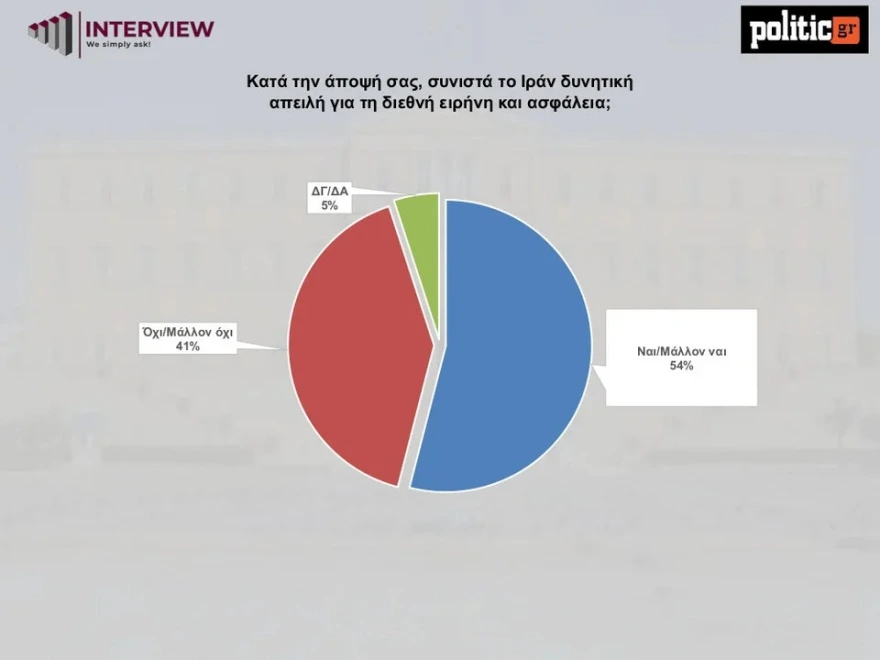
Regarding foreign policy, Greeks favor a balanced approach to the sensitive Greek-Turkish relations supporting both enhanced military deterrence and diplomatic dialogue without compromising national rights. Half of the respondents emphasize strengthening deterrence, while 36% advocate a hardline stance, rejecting any concessions. On the issue of Iran, opinions are divided but cautious; 54% view Iran as a threat to international peace, while 41% do not, reflecting ambivalence in the public mindset.
When it comes to foreign leaders, Cypriot President Nikos Christodoulides enjoys the highest approval among Greeks (43.4%), followed by French President Emmanuel Macron (39%) and Russian President Vladimir Putin (32%). In stark contrast, leaders tied to conflict, such as Donald Trump, Volodymyr Zelensky, and Benjamin Netanyahu, receive predominantly negative ratings, indicating the Greek public’s preference for figures associated with stability and European cooperation.
In summary, this poll highlights a reshaped Greek political map: SYRIZA’s decline leaves a void on the left, ND solidifies its leadership, PASOK advances as the main opposition, and new centrist forces rise. Public opinion on foreign affairs reflects pragmatism and caution, while distrust toward the political elite remains pronounced. The coming months will be critical as parties seek to respond to this volatile and evolving electoral landscape.
Ask me anything
Explore related questions