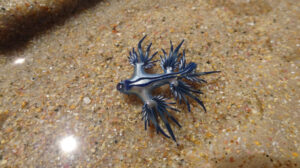
In recent days, a rare and dangerous sea creature, known as the “blue dragon” (Glaucus atlanticus), has appeared along Spain’s Costa Blanca, triggering beach closures.
At Guardamar del Segura, north of Torrevieja, authorities raised red flags along an 11-kilometer stretch of coastline and temporarily banned swimming after two specimens were spotted on Vivers beach.
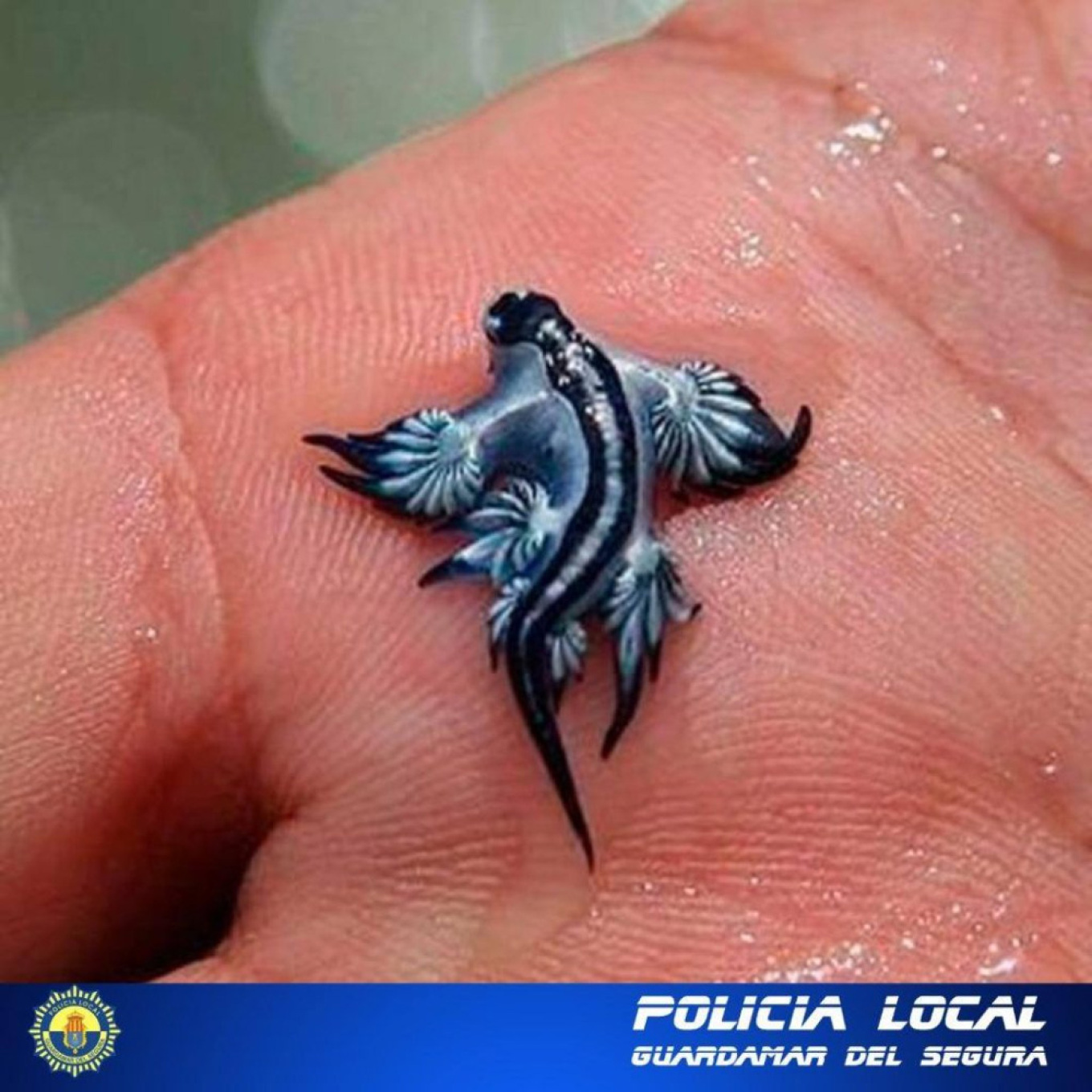
Mayor José Luis Sáez warned that despite their striking metallic-blue color and miniature size, these creatures are “extremely venomous and dangerous”. He urged citizens to stay away:
“Even if you wear gloves, do not touch them. If you see one, notify lifeguards or authorities immediately. If stung, rinse the area with seawater and go straight to the nearest first aid station or health center.”
Authorities have deployed patrols along the coast to check for more blue dragons drifting ashore with the currents, while police and lifeguards monitor the situation closely.
A Tiny but Dangerous Creature
A photo released by local officials shows just how small the “blue dragon” is, resting in the palm of a hand. Though barely a few centimeters long, it carries venom that can cause severe symptoms.
The creature’s mythical name comes from its spectacular appearance: metallic blue coloring and radiating, wing-like appendages that resemble a miniature dragon.
The Sea’s “Most Beautiful Killer”

The blue sea dragon (Glaucus atlanticus) is a rare nudibranch (sea slug) found mostly in tropical waters, including South Africa, Mozambique, and eastern Australia, but occasionally drifts to European shores.
It floats on the ocean surface using an air sac and preys on other venomous creatures, most notably the Portuguese man o’ war (Physalia physalis). By storing its prey’s stinging cells in concentrated form, the blue dragon delivers an even more potent sting—earning it the nickname “the ocean’s most beautiful killer.”
Its sting can cause intense pain, dizziness, nausea, vomiting, and in rare cases, even life-threatening reactions. Experts warn of severe allergic responses including dermatitis, especially in children, those with respiratory or heart conditions, or victims stung multiple times.
Safety Measures and Penalties
Spanish authorities issued strict guidelines for residents and tourists:
- Do not touch the creature, even with gloves.
- Alert lifeguards or police if you spot one on the beach or in the water.
- If stung, rinse with seawater (not fresh water) and seek immediate medical help.
Authorities also warned that ignoring the swimming ban could result in hefty fines. Some swimmers initially defied the red flags at Guardamar, forcing lifeguards to use loudspeakers to clear the water. Police patrols now ensure the restrictions are strictly enforced.
Not the First Incident
This is not the first time Spanish beaches have been shut due to dangerous marine life:
- In 2018, parts of Costa Blanca were closed after mass appearances of the venomous Portuguese man o’ war, which hospitalized an 11-year-old child.
- More recently, six blue dragons were spotted at Santa Barbara beach near Gibraltar. Authorities immediately banned swimming, though the ban was lifted the next day after no further sightings.
These episodes highlight the unpredictable dangers of the sea and the importance of following safety instructions from local authorities.
Ask me anything
Explore related questions