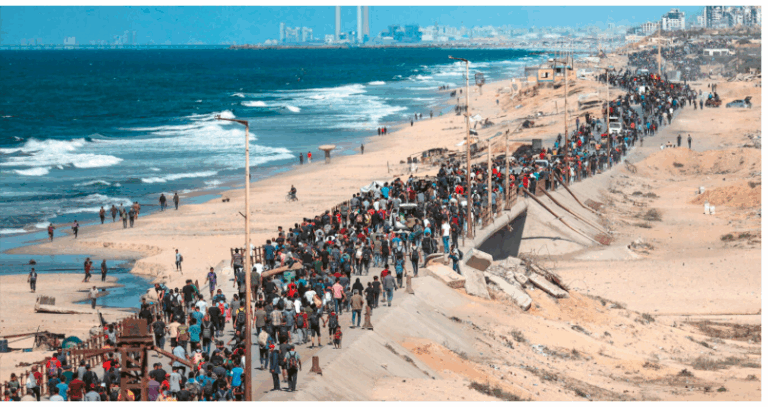
Just 24 hours after the release of Hamas’ last hostages, images of family reunions in Israel are going viral worldwide. Speaking at the Knesset, Donald Trump called the day “the historic dawn of a new Middle East,” while today a summit is expected to begin in Cairo with regional leaders participating to discuss the next phases of the 20-point peace and reconstruction plan for Gaza.
However, according to CNN analysis, there are three critical questions that will determine whether the agreement will hold or collapse.
1. What will Hamas do?
In the last exchange agreement, Hamas used the ceasefire to regain control of Gaza, eliminate dissenting Palestinians, and use hostages as a propaganda tool. The analysis notes that “it seems to be repeating the same pattern,” as there are already reports of new arrests of Palestinians in the streets.
This time, however, the situation is different: the new agreement allows Israeli forces to maintain a presence in more than half of Gaza and, for the first time, involves foreign military forces to ensure Hamas cannot return. The agreement has broad support from most Arab and Muslim states and explicitly calls for the disarmament of Hamas.
If the organization again chooses to target civilians, its room for maneuver will be limited. CNN notes that Gaza’s reconstruction cannot begin if Hamas continues to claim power through violence.
2. Are interim political and military structures being created?
The success of the agreement depends on the rapid establishment of a temporary security and governance mechanism for Gaza. If these institutions are not set up, there is a serious risk that Hamas will regain ground, nullifying any hope for permanent peace and reconstruction.
The question is which countries will send troops to the new peacekeeping force and whether an interim governance authority can be created without months of disputes. Positively, the United States has already activated Central Command, placing forces outside Gaza to monitor the situation.
CNN emphasizes that U.S. forces will not enter Gaza but will play a crucial role in gathering international contributions and coordinating the mission. Politically, which Palestinians participate in the interim body is an internal matter; however, without U.S. leadership, the process could derail, leaving a power vacuum that Hamas could exploit.
3. Is there a viable reconstruction plan?
Rebuilding Gaza is estimated to take at least a decade and cost hundreds of billions of dollars. The U.S. organized a similar effort ten years ago for Mosul in Iraq, but Gaza is an even more complex case: over 300 miles of tunnels run underground, the result of 20 years of construction by Hamas.
Reconstruction requires a global alliance, led by the U.S., with participation from Palestinians independent of Hamas and funding from Arab and Western states. The upcoming summit in Cairo is expected to be the first step in coordination. Its success will depend on the commitments of resources and whether a concrete action plan is established.
The analysis warns that if Hamas retains control of areas north of the Israel line, it will remain the main obstacle to reconstruction — no country will invest in Gaza while the risk of Hamas returning exists.
The human side behind the agreement
CNN reminds that the emotional relief of the hostages’ release should not overshadow the horror that preceded it. 740 days in Gaza’s underground, with torture and inhumane propaganda, as in the case of 22-year-old Evyatar David, who was used by Hamas in repeated videos, forced to watch friends being freed and then returned to darkness.
His fate, the article notes, is a reminder that peace cannot exist as long as Hamas survives with weapons in Gaza. Therefore, beyond celebrating the release, the essential goal of the next 24 hours is the full implementation of Trump’s 20-point plan — the most ambitious yet precarious peace plan in the Middle East in decades.
Ask me anything
Explore related questions