





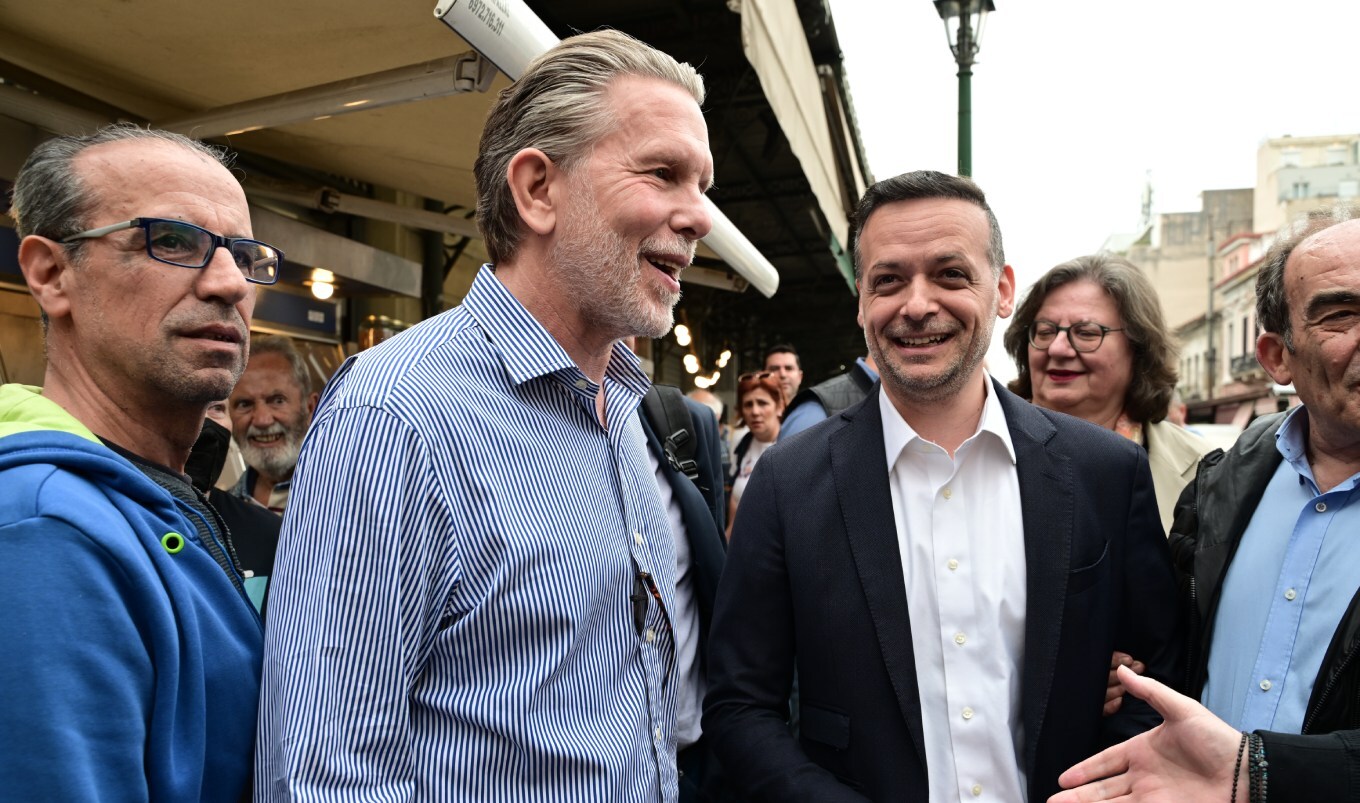
PASOK appears to be heading toward an irreversible internal clash, with the upcoming Congress as the backdrop and the real causes behind months of polling stagnation—and a recent drop in support—at the center of the dispute.
Figures from the so-called “presidential camp” have placed Haris Doukas and Pavlos Geroulanos squarely in their sights, even calling for the expulsion of anyone who puts forward a different view on PASOK’s course, regardless of whether such proposals are made within official party bodies. Dissenting proposals are reportedly dismissed with little discussion, while the time leading up to the Congress—traditionally used for political debate—is instead marked by escalating tension.
The party’s inability to move the polling needle upward is being directly attributed by the leadership to senior figures, while dissenters across the country counter that Harilaou Trikoupi is attempting to marginalize every alternative voice and weaken opposing views ahead of the Congress.
Over the weekend, PASOK organizational members accused the leadership of engineering changes to elected local heads through appointments. At the same time, today’s scheduled meeting of the Organizational Secretariat—intended to decide on the Congress model, the delegate selection “algorithm,” and guarantees of inclusion for all party factions—was postponed. This delay also pushes back a meeting of the Political Secretariat, where senior figures previously expressed blunt views about the party’s direction and the need for strategic reassessment.
“Our strategy so far has failed,” Haris Doukas said at that earlier Political Secretariat meeting—remarks that later turned him into a red flag for the presidential camp, which accuses him of undermining the leadership. Pavlos Geroulanos, who first spoke of the party’s “frozen needle” in the polls, insists that society cannot change at breakneck speed while PASOK’s governing bodies meet only every two and a half months.
Many PASOK figures share this view, calling— even at the eleventh hour—for openness and frank discussion ahead of upcoming elections. At the Congress, clashes will go beyond organizational maneuvering and extend to substantive policy positions, in a political climate where polling data clearly signal dissatisfaction with PASOK’s opposition strategy and the need for change.
Supporters of the Athens mayor see expulsion threats as misplaced, arguing that the “messenger” should not be blamed for delivering unwelcome news. Doukas has proposed a Congress resolution explicitly rejecting any post-election cooperation with New Democracy—a position supported by Geroulanos, Michalis Katrinis, and Manolis Christodoulakis. He has also called for primary elections to select parliamentary candidates, a proposal rejected by the leadership but set to be debated at the Congress.
So far, Doukas has avoided responding directly to personal attacks and expulsion calls, though he may do so later, reiterating his positions and stressing that dissenting views should not be “criminalized.” All leadership contenders are expected to take the floor at the Congress, including Geroulanos, who has argued that an open process will ultimately strengthen PASOK and help reverse polling stagnation by spring.
Anna Diamantopoulou has also raised objections regarding party operations, though she disagrees with Doukas and Geroulanos on prioritizing an unequivocal rejection of post-election cooperation with New Democracy.
Meanwhile, figures from the Androulakis camp have revived talk of expulsions, urging the PASOK leader to “take heads off” before the Congress to clear the landscape. Party headquarters, however, has effectively distanced itself from these voices, denying any strategic divergence. Party spokesperson Kostas Tsoukalas emphasized that no senior figure disputes the core position that political change requires New Democracy to leave government, and that PASOK’s goal is to lead a progressive government.
Ask me anything
Explore related questions




