The well-known historian and author speaks, on the occasion of the photographs from the execution of the “200” in Kaisariani, about German propaganda, the Civil War, the executions, and the KKE (Communist Party of Greece).
Unauthorized use or appropriation of this material in any way is prohibited under Intellectual Property law, with severe civil and criminal penalties for the offender.
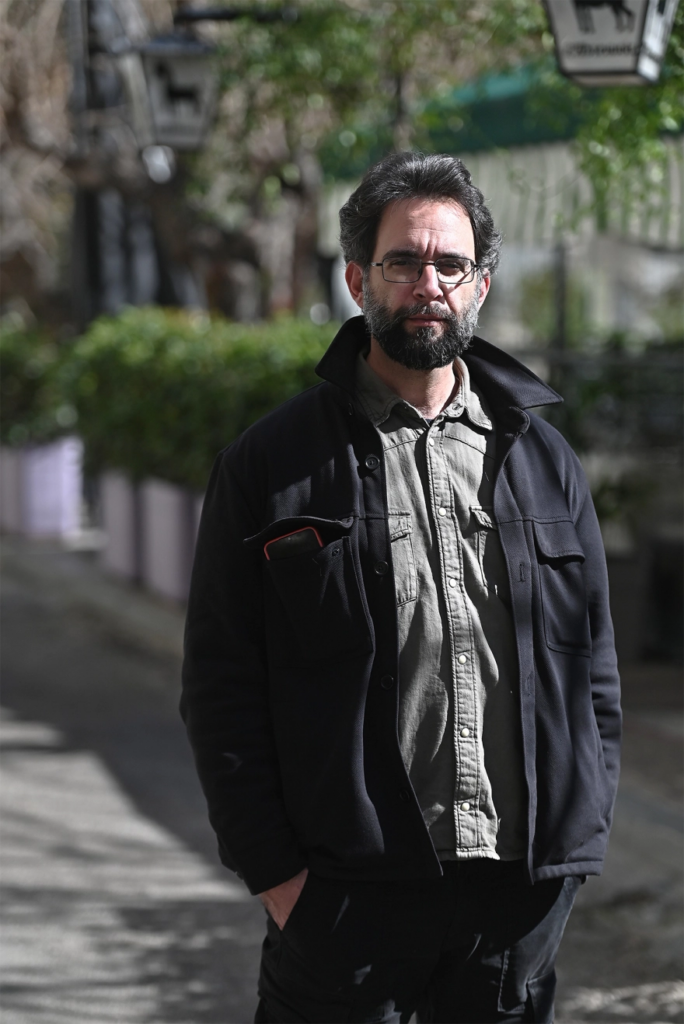
Iasonas Chandrinos to Danikas: “German propaganda labeled everything communism in order to provoke a Civil War.”
Takeaways (by Protothema AI)
Iasonas Chandrinos, historian and PhD candidate, discusses the period of the Occupation, the Resistance, and the Civil War, focusing on the events in Kaisariani.
The 200 executed in Kaisariani were mainly political prisoners from the Metaxas dictatorship, most of them from Akronafplia prison. Their execution was carried out in retaliation for an ELAS ambush.
Chandrinos analyzes the activity of OPLA, describing it as a dark chapter of the Resistance with extensive lethal action, while also examining the stance of the KKE and Nikos Zachariadis during that period.
German propaganda aimed to create civil strife by presenting communists as the enemy in order to secure the tolerance or collaboration of other Greeks.
The photographs of the executions in Kaisariani, taken by a German officer, are considered documentary evidence of the criminal nature of Nazism and proof of the dignity of the victims.
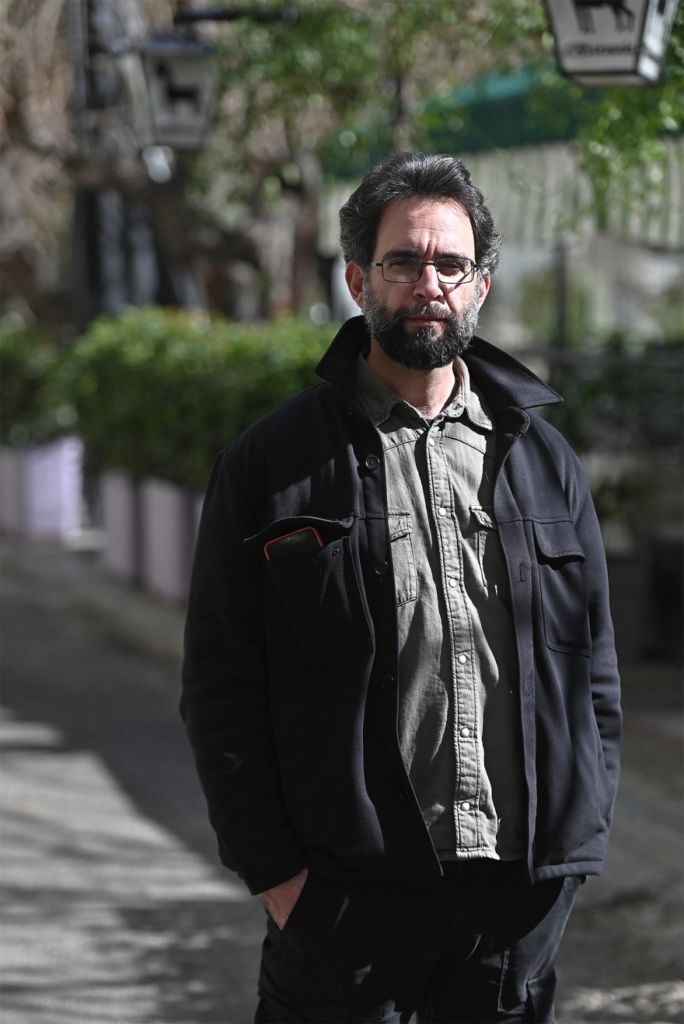
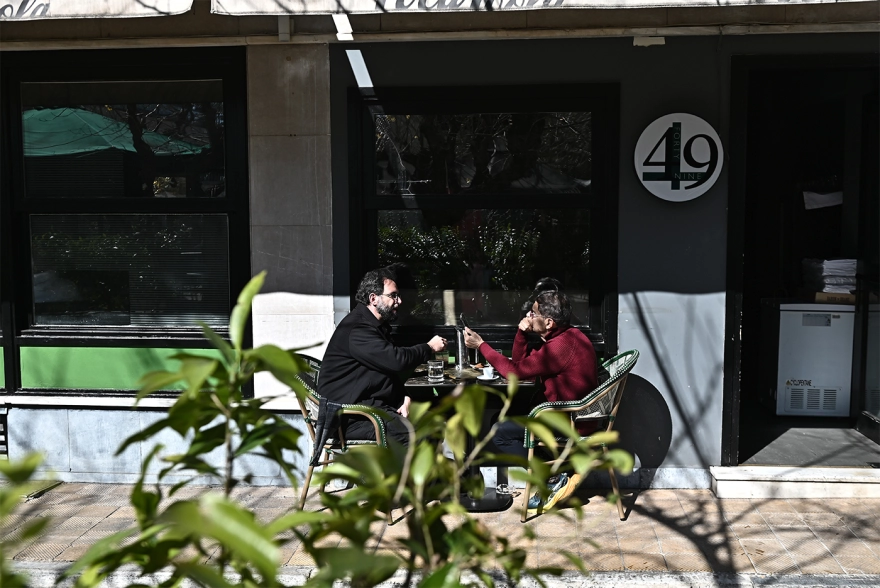
He arrived at the interview carrying one of the four books he has authored, titled “The Avenging Hand of the People – The Action of ELAS and OPLA.” From its pages, he showed me the KNE slogan:
“EAM–ELAS–EPON–OPLA–DSE / This is the KKE.”
“Even these days, do they still use that?” I asked.
“Of course,” he replied.
The occasion for this compelling conversation was the 200 executed at the altar of sacrifice in Kaisariani. The photographs. The incidents. And everything that happened around them — civil division, Nikos Zachariadis, the December 1944 events.
His name is Iasonas Chandrinos. Just forty-two years old. A graduate of the Department of History and Archaeology at the University of Athens. A PhD candidate in Modern and Contemporary History, with a dissertation comparing the experience of War and Occupation in Greek and European urban centers, under the supervision of Professor Hagen Fleischer.
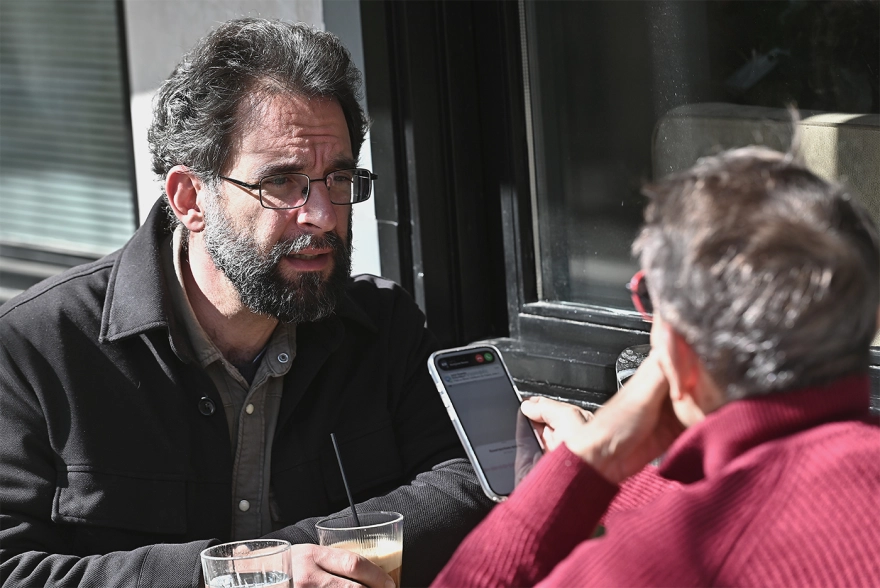
On the back cover of his book he quotes L’Humanité, the official organ of the French Communist Party during the Occupation:
“Those cowards who betray patriots to the Huns should know that we lie in wait for them, that they are condemned and at the first opportunity will be exterminated like animals.”
If there is today a Greek scholar deeply engaged with that turbulent era, it is the restless and sharp-minded Iasonas Chandrinos. When he speaks, it is as if he stands inside a time machine — reliving events while simultaneously judging them with clarity and even admiration.
For example, when he says, “The 200 went gladly to meet death because their lives were filled with meaning.” And about the photographic documents now in the hands of a Belgian collector: “Death, executions — all for sale.”
One of the most gripping interviews I have conducted. A lesson in History and Memory.
Scene 1: “Zachariadis had been fooled — he believed Maniadakis’s mechanism was the real KKE.”
Chandrinos explains that during the Metaxas dictatorship, the KKE had been dismantled. Security Minister Maniadakis created a fake party mechanism using broken or coerced members who collaborated with the regime. Zachariadis, imprisoned in Corfu, believed this mechanism represented the real party — a confusion that deeply affected the movement.
Scene 2: Haidari — the “warehouse” of the condemned
After the German occupation in 1941, around 1,200 political prisoners of the Metaxas regime — mostly communists — were already in Greek prisons and exile camps. Many were held at Akronafplia. Eventually, hundreds were transferred to Haidari, which the Germans converted into the central Nazi camp in Greece under SS control — effectively a holding site for future executions.
Scene 3: Was Zachariadis a German agent?
The interviewer presses on whether Nikos Zachariadis survived Dachau because he collaborated. Chandrinos rejects the claim that he was a German agent. He suggests Zachariadis may have made himself useful inside the camp — he spoke languages and was educated — but there is no evidence of collaboration. When the KKE removed him in 1956, it investigated this question and concluded he was not an agent, though he was considered doctrinaire and sectarian.
Chandrinos emphasizes that the Nazis treated Greece as experimental ground, improvising policies and gradually developing racist attitudes toward modern Greeks despite their admiration for ancient Greece.
Scene 4: Kaisariani — the place of sacrifice
On April 27, 1944, ELAS ambushed German forces near Molai in Laconia, killing General Franz Krech and three officers. In retaliation, the Germans decided to execute 200 prisoners from Haidari — primarily long-imprisoned communists from the Metaxas era.
Kaisariani was Athens’ principal execution site during the Occupation. When Athenians heard “Kaisariani,” they knew executions were taking place.
Scene 5: German propaganda and civil division
Chandrinos argues that German authorities deliberately labeled nearly all executed victims as communists, even when they were not, to frame their reprisals as anti-communist action. This was strategic: by presenting themselves as fighting communism, they sought to divide Greek society.
The message was clear: “We kill communists.” Non-communist Greeks might then think they were safe. This, he argues, deepened the seeds of Civil War already present during the Occupation.
Scene 6: The Holocaust in Greece
Discussing the Jewish communities of Greece — especially Thessaloniki — Chandrinos calls it a Holocaust. Around 70,000 Jews lived in Greece before the war across 28 communities. Most were deported to Auschwitz.
He describes the industrial nature of extermination — the hair used for pillows, gold teeth removed, bones ground, even experimental soap production. The roots lay in centuries-old Christian antisemitism combined with 19th-century “scientific racism” in Germany.
Scene 7: The photographs — death for sale
The photographs of the Kaisariani executions were likely taken by a German officer as personal mementos, not official propaganda. They appear to have been part of a family album later sold.
“The mere existence of these photographs,” Chandrinos says, “underscores the criminal nature of Nazism.” Executions became souvenirs — and now commodities.
Scene 8: The Civil War and the “missed revolution”
Chandrinos argues that the KKE overestimated its strength, misjudged international conditions, and was swept along by events. The December 1944 clashes (Dekemvriana) represented, in his view, the moment when revolution was possible — and lost.
The KKE, he says, oscillated between compromise and insurrection. After 1945, Greece returned to prewar political elites such as Themistoklis Sofoulis and Konstantinos Tsaldaris, figures who had not participated in the Resistance.
The Civil War, he concludes, was ultimately a tragic defeat — even a form of political suicide given the geopolitical realities and Western alignment of Greece.
Epilogue: “Lenin Square, formerly Syntagma”
They discuss the alternate-history novel “Lenin Square, Formerly Syntagma” by Dimitris Fyssas, imagining a Greece where the KKE won the Civil War. Syntagma Square becomes Lenin Square; Omonia becomes Soviet Union Square. A communist regime suppresses an anti-communist student uprising in 1973 — a reversal of history.
“What if?” remains a haunting question.
As Chandrinos leaves, the image that lingers in the interviewer’s mind is “Lenin Square, formerly Syntagma.” A chilling thought.
Ask me anything
Explore related questions