





This text is excerpted from the book Dawn of the Code War: America’s Battle Against Russia, China, and the Rising Global Cyber Threat, by John P. Carlin with Garrett M. Graff Copyright © 2018 by John P. Carlin with Garrett M. Graff. Reprinted by permission of PublicAffairs, New York, NY. All rights reserved.
Junaid Hussain originally wanted to be a rapper. As it turned out, the Pakistani kid in Birmingham, England, lived life instead on the internet, and at internet speed. In just a decade, from age 11 to 21, he went from gaming to hacking to killing, an arc the world had never seen before, unfolding faster than anyone might have imagined. For the first half of his digital life, the hacker operated with impunity, bragging in an interview that he was many steps ahead of the authorities: “One hundred percent certain they have nothing on me. I don’t exist to them, I’ve never used my real details online, I’ve never purchased anything. My real identity doesn’t exist online—and no, I don’t fear getting caught.”
By 2015, at age 21, he knew different—he was a marked man, hunted by the United States, the No. 3 leader of the Islamic State in Iraq and Syria (ISIS) on the government’s most wanted list. Living on the run in ISIS-controlled eastern Syria, Hussain tried to keep his stepson close by, ensuring that U.S. airstrikes wouldn’t target him. Inside the Justice Department where I worked at the time, as assistant attorney general for national security, Hussain’s efforts made him a top threat. Nearly every week of 2015 brought a new Hussain-inspired plot against the United States; FBI surveillance teams were exhausted, chasing dozens of would-be terrorists at once. We’d pulled agents from criminal assignments to supplement the counterterrorism squads. Within the government, alarm bells rang daily, but we attempted to downplay the threat publicly. We didn’t want to elevate Hussain to another global figurehead like Osama bin Laden, standing for the twisted ideology of Islamic jihad.
We wouldn’t even really talk about him publicly until he was dead.
Hussain represented an online threat we long recognized would arrive someday—a tech-savvy terrorist who could use the tools of modern digital life to extend the reach of a terror group far beyond its physical location. In the summer of 2015, he successfully executed one of the most global cyber plots we’d ever seen: A British terrorist of Pakistani descent, living in Syria, recruited a Kosovar hacker who was studying computer science in Malaysia, to enable attacks on American servicemen and women inside the United States.

Hussain’s path to becoming a cyber terrorist started with a simple motive: revenge. According to an interview he gave in 2012, Hussain—who originally went online by the moniker TriCk—said he started hacking at around age 11. He’d been playing a game online when another hacker knocked him offline. “I wanted revenge so I started googling around on how to hack,” he explained. “I joined a few online hacking forums, read tutorials, started with basic social engineering and worked my way up. I didn’t get my revenge, but I became one of the most hated hackers on this game.”
By 13, he found the game childish, and by 15, he “became political.” He found himself sucked online into watching videos of children getting killed in countries like Kashmir and Pakistan and swept into conspiratorial websites about the Freemasons and Illuminati. Those rabbit holes led Hussain to found a hacker group with seven friends; they called themselves TeaMp0isoN, hacker-speak for “Team Poison,” based on their old hacking forum p0ison.org. They became notorious in 2011 for their unique brand of “hacktivism,” defacing websites, often with pro-Palestine messages, and attacking online key websites such as BlackBerry and NATO and figures such as former Prime Minister Tony Blair—they hacked his personal assistant and then released his address book online. Hussain dismissed other “hacktivist” groups such as Anonymous, saying they symbolized the online equivalent of “peaceful protesting, camping on the street,” whereas his TeaMp0isoN executed “internet guerrilla warfare.” In April 2012, TriCk told a British newspaper, “I fear no man or authority. My whole life is dedicated to the cause.”
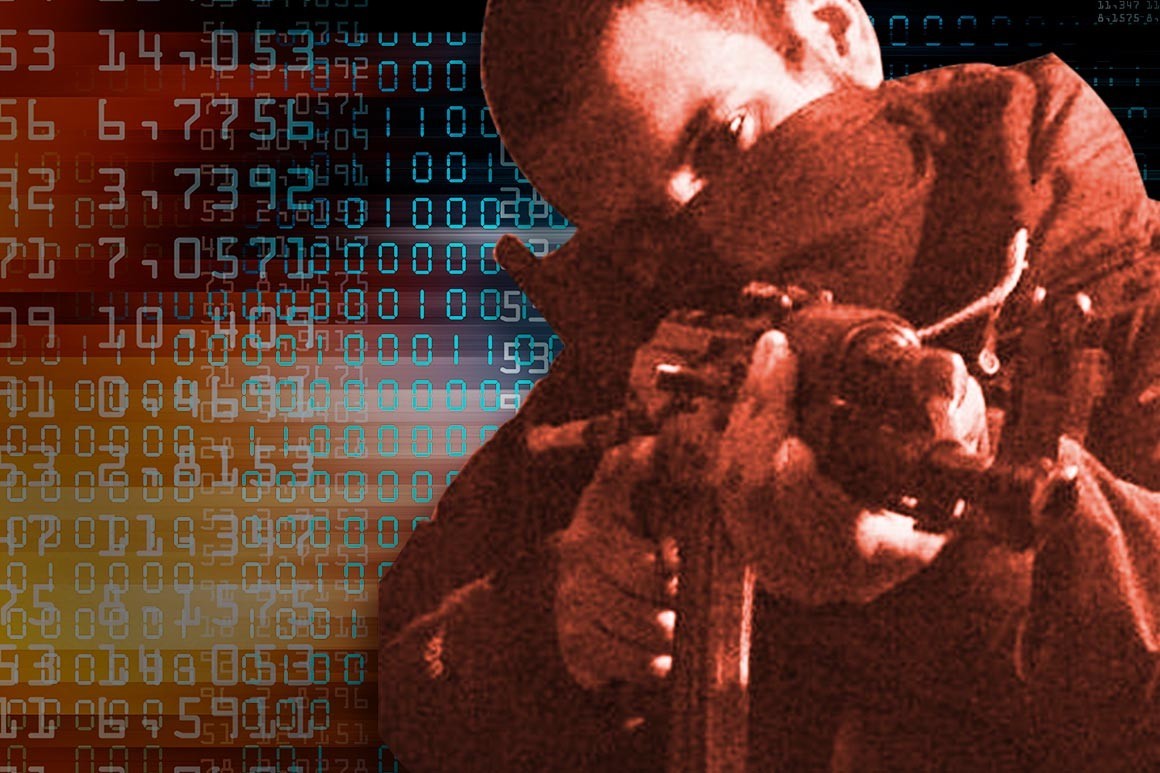
His online exploits didn’t last long: By September 2012, he had been arrested and sentenced to six months in prison for the Blair stunt. TeaMp0isoN faded away, but Hussain’s anger and resentment at Western society continued to boil. Sometime soon after his release, he made his way to ISIS’s territory in Syria and married another British would-be musician-turned-ISIS-convert, Sarah Jones. There, he threw himself into ISIS’s online propaganda war, remaking himself as Abu Hussain al-Britani with a Twitter avatar that showed him, his face half-covered by a mask, aiming an AK-47-style rifle at the camera. He turned everything he’d learned about online culture and tools into what one journalist called “a macabre version of online dating,” as he quickly gained prominence as ISIS’s lead propagandist in the CyberCaliphate, recruiting disaffected youth like himself to the global battlefield. “You can sit at home and play Call of Duty or you can come here and respond to the real call of duty … the choice is yours,” he announced in one tweet.
Read more HERE
Ask me anything
Explore related questions




