





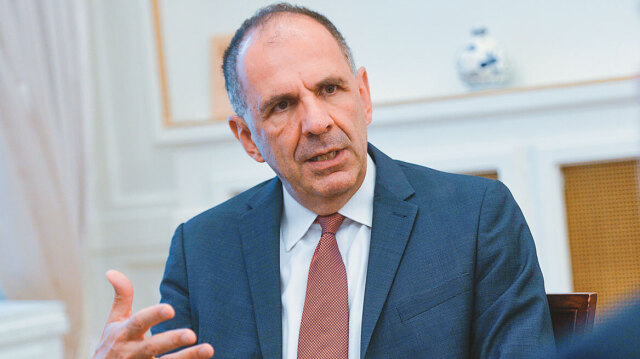
Senior diplomatic sources, briefing journalists, outlined the main directions of Greek foreign policy across a number of critical geopolitical fronts, including Gaza, the Cyprus issue, Libya, Greek–Turkish relations, the strategic dialogue with the United States, the Western Balkans, and the GSI electricity interconnection project.
Regarding Gaza, the sources clarified that Greece intends to participate in the next phase of the plan focused on humanitarian aid and reconstruction. However, it is stressed that Greece neither plans nor considers participation in any stabilization force or peacekeeping mission. Greek involvement will be strictly limited to humanitarian and developmental assistance.
On the Cyprus issue, the sources spoke of “significant momentum,” expressing hope that an expanded 5+1 conference will be convened within the first quarter of 2026. As noted, the Greek side’s objective is a substantive discussion on a comprehensive solution to the Cyprus problem, rather than a narrow focus limited to confidence-building measures.
With regard to Libya, Greece seeks balanced relations and maintains open channels of communication, fully respecting the country’s sovereignty. The recent meeting with Aguila Saleh was described as “highly substantive,” with the sources emphasizing that every side has the right to articulate positions concerning its national interests. It was also noted that just as Malta has maritime entitlements, the same applies to Crete. Furthermore, according to the Greek assessment, the maritime blocks delineated by Libya respect the median line.
Concerning Greek–Turkish relations, senior diplomatic sources stated that political dialogue and continuation of the positive agenda are expected in the near future, noting that structured dialogue contributes to maintaining a functional relationship. Emphasis was placed on the importance of convening the High-Level Cooperation Council within the first quarter of 2026, even in the absence of immediate results, as dialogue and personal contact are considered crucial.
As highlighted, relations between Athens and Ankara are described as “satisfactory and functional,” allowing communication channels to remain open, although the issue of maritime delimitation has not yet been addressed. According to the same sources, only a relatively short period has passed since the Athens Declaration, yet the unresolved delimitation issue continues to generate new challenges. While there is room for progress, expectations remain measured. Greece insists on discussing delimitation exclusively and, in the absence of agreement, on referring the matter to The Hague, while Turkey seeks to link the issue to broader topics. Despite the difficulties, open communication has prevented tensions, and scenarios involving external interference in Greek–Turkish or Greek–Libyan affairs are categorically dismissed.
Regarding the Strategic Dialogue with the United States, the sources indicated that it is scheduled to take place within the first quarter of 2026.
In the Western Balkans, Greece plans to undertake an initiative in 2026, including visits to all countries in the region, ahead of Greece’s presidency of the European Union in the second half of 2027.
Finally, concerning the electricity interconnection cable, the sources underlined the project’s particular importance for Cyprus. The project must proceed and will proceed, they stressed, noting that both leaders have requested further techno-economic studies. The same sources assess that there is no geopolitical issue involved and express confidence that Turkey will not obstruct the project, which is supported by Europe and grounded in international law. Once the financial and technical issues are resolved, the project will continue as planned.
Ask me anything
Explore related questions




