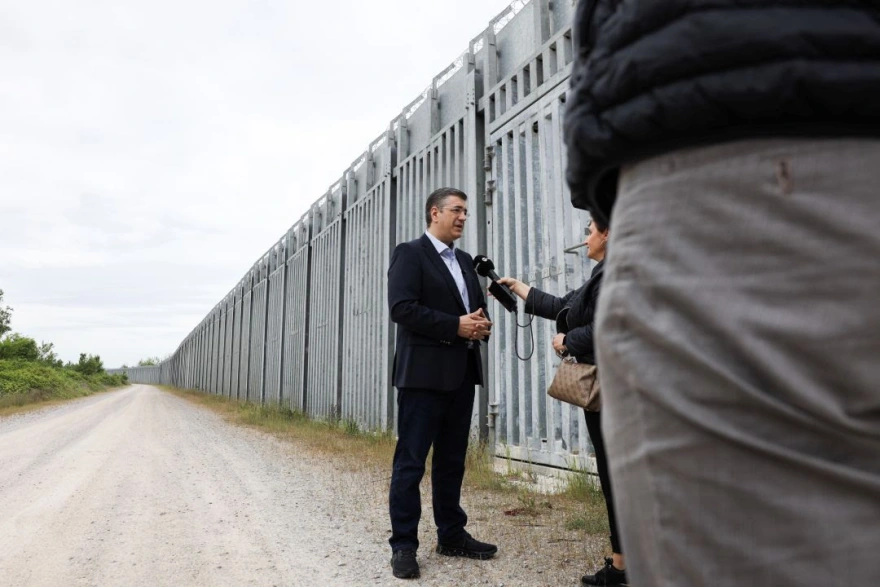
The visit to Evrosby the European Commissioner for Sustainable Transport and Tourism, Apostolos Tzitzikostas, was completed as part of his presence in Thrace for Europe Day 2026.
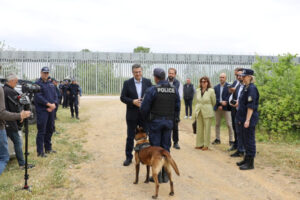
Mr. Tzitzikostas first visited the Evros border fence, where he inspected the installation and made the following statement:
“The European Union is a territory of values. At the same time, it is a geographical territory. And as a geographical territory, it has borders. And its borders are here, in Thrace, which constitutes the shield of the European Union. Today here, we see the image of Europe that protects us, that does not leave its borders to chance, that cooperates, that understands citizens have the right to feel safe.
The construction of the fence is a Greek initiative. An initiative supported by the European Union with €1.7 billion in funding for equipment, new technologies, and surveillance systems. In practice, it is proven that protecting our borders is a shared European responsibility. Because Greece’s borders are also Europe’s borders. And the security of Greek citizens is simultaneously the security of all European citizens.”
The Commissioner also met with the mayor of Alexandroupoli, Ioannis Zampoukis, and held discussions with high school students participating in the EU Ambassadors program at the Municipal Library (“Kapnomagazo”) in Alexandroupoli.
Mr. Tzitzikostas referred to European policies for young people, the opportunities the EU is creating for the new generation, and the prospects developing in Evros and Thrace so that young people can remain in the region and contribute to its growth. As he noted:
“Europe’s future is built through dialogue, knowledge, and the participation of young people. And this is the most optimistic message of today: that at Europe’s borders, here in Alexandroupoli and Thrace, a new generation of European citizens is growing up with confidence, knowledge, and belief in a shared European future.”
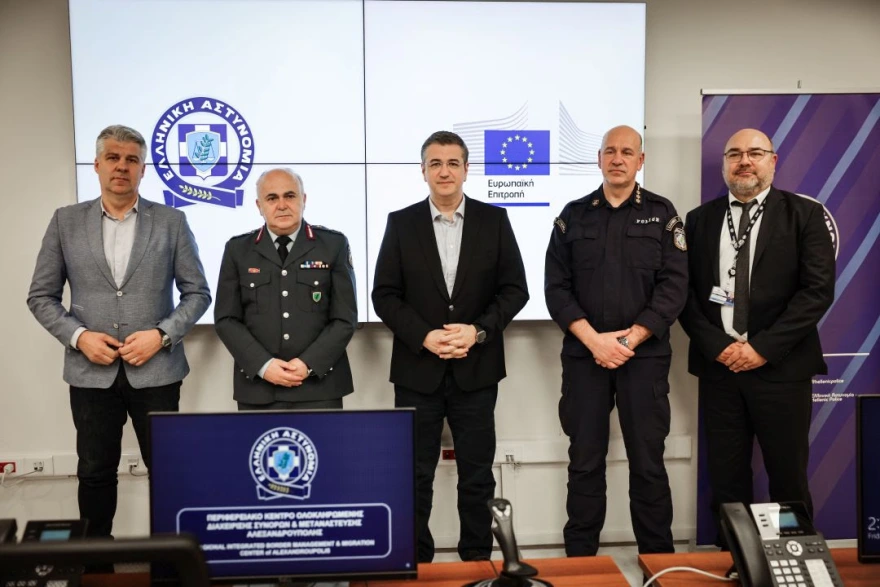
The Commissioner then visited the Joint Operational Center of the Greek Police, Frontex, and Europol at Alexandroupoli “Democritus” Airport.
Mr. Tzitzikostas was briefed on the work and cooperation regarding security matters and the resources available to protect European and Greek borders. He stated:
“Here, at the Operations Center at Alexandroupoli airport, where FRONTEX, EUROPOL, the Greek Police, and the Armed Forces cooperate, European security is being built every day. Here we see the image of Europe coordinating services, utilizing technology, people, experience, and institutions, understanding that security is not something abstract, but an everyday operational reality.
We know very well the repeated and complex migration pressures Thrace has faced over the years. And in these difficult moments, the women and men serving here demonstrated professionalism, composure, endurance, and a high sense of responsibility. That is why I express my respect and gratitude on behalf of society for their important work in safeguarding Greece’s security and the security of all European citizens. This is exactly the Europe that functions properly.”
He later visited the DESFA Natural Gas Measurement and Regulation Station in Amfitriti.
Among other remarks, the Commissioner stressed:
“The repeated energy crises of recent years proved that energy security is not merely an economic issue and cannot be taken for granted. That is why Europe must continue investing—and is investing—in the diversification of energy sources, suppliers, and networks. Greece is rapidly evolving into a critical energy hub for Southeastern Europe. And Thrace today has special geopolitical and energy significance for all of Europe.
LNG arriving here at the Amfitriti station enters the Greek network and from there supplies Southeastern and Central Europe, strengthening the energy security of the entire region. In essence, Alexandroupoli has now become a key strategic point on Europe’s new energy map. And this is especially important because Europe’s energy independence is a prerequisite for its economic strength, social stability, and strategic autonomy.”
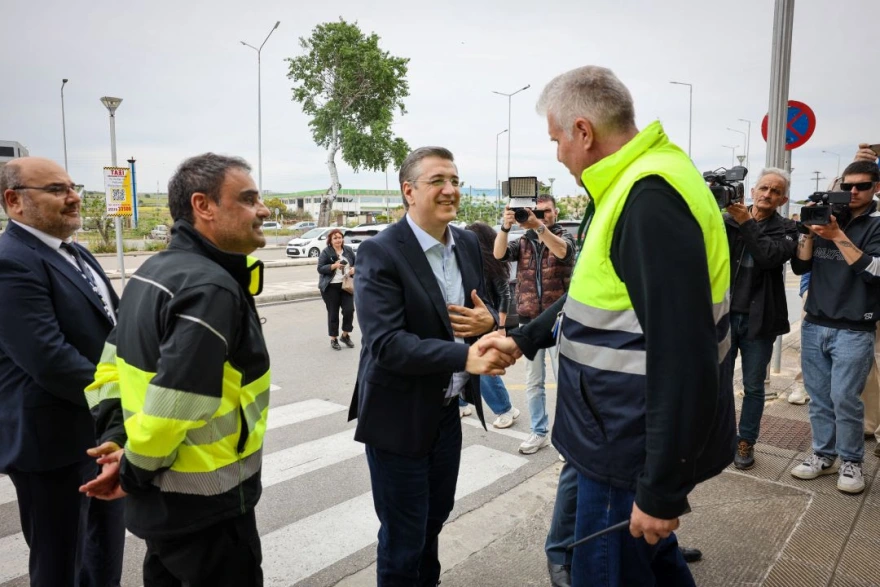
As part of his visit, the Commissioner also met with the Regional Governor of Eastern Macedonia and Thrace, Christodoulos Topsidis, at the Alexandroupoli Prefecture building, where he referred to the decisive role of regional authorities in turning European funding into measurable projects for citizens and businesses.
He emphasized that over the last ten years, the Region of Eastern Macedonia and Thrace has secured €1 billion in European funding, upgrading infrastructure, improving quality of life and daily living conditions, and supporting more than 22,600 local businesses. He also referred to the upcoming launch of road and railway projects on the Alexandroupoli–Pythio route, part of the new Aegean–Black Sea corridor.
“All these projects demonstrate in practice what a Europe of cohesion means: a Europe that invests in regions, reduces inequalities, and strengthens local communities,” he underlined.
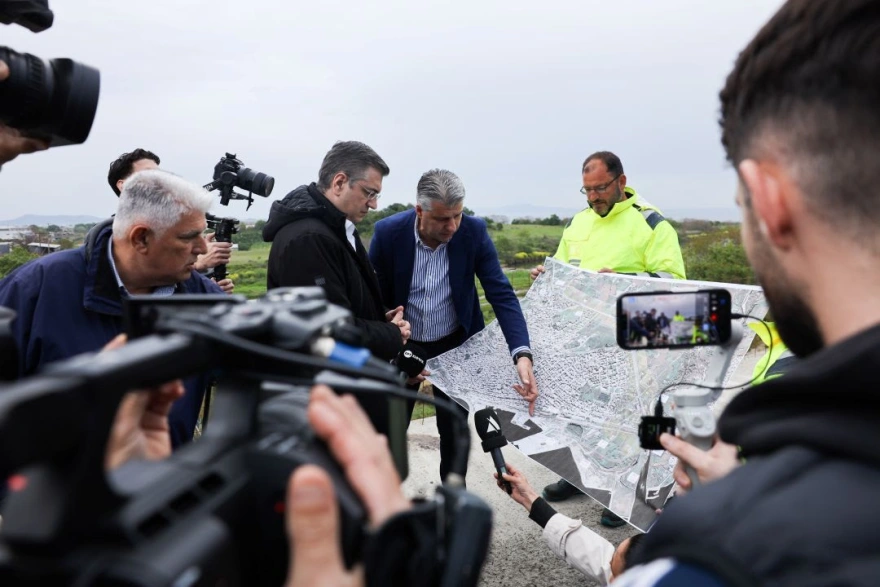
The Commissioner also visited the construction works of Alexandroupoli’s Eastern Ring Road and met with young entrepreneurs from Thrace involved in startup businesses at the Business Support Structure in the former Bank of Greece building in Alexandroupoli.
Addressing the young entrepreneurs, he stated among other things:
“The real economy is not theory. It is you. It is your businesses. It is the employees you hire and the families who depend on you. When we talk about European policies, we must talk about how they affect your daily lives. And the EU now understands this well. Competitiveness is no longer just one among many priorities. It is the top priority.
That is why, in practice and not just in words, the Commission is reducing bureaucracy and excessive legislation by 30%, simplifying regulations and procedures, and removing obstacles that protected no one but burdened everyone. Because we want a Europe that regulates when necessary, but trusts when appropriate. A Europe that is an ally of entrepreneurship, not an obstacle.”