





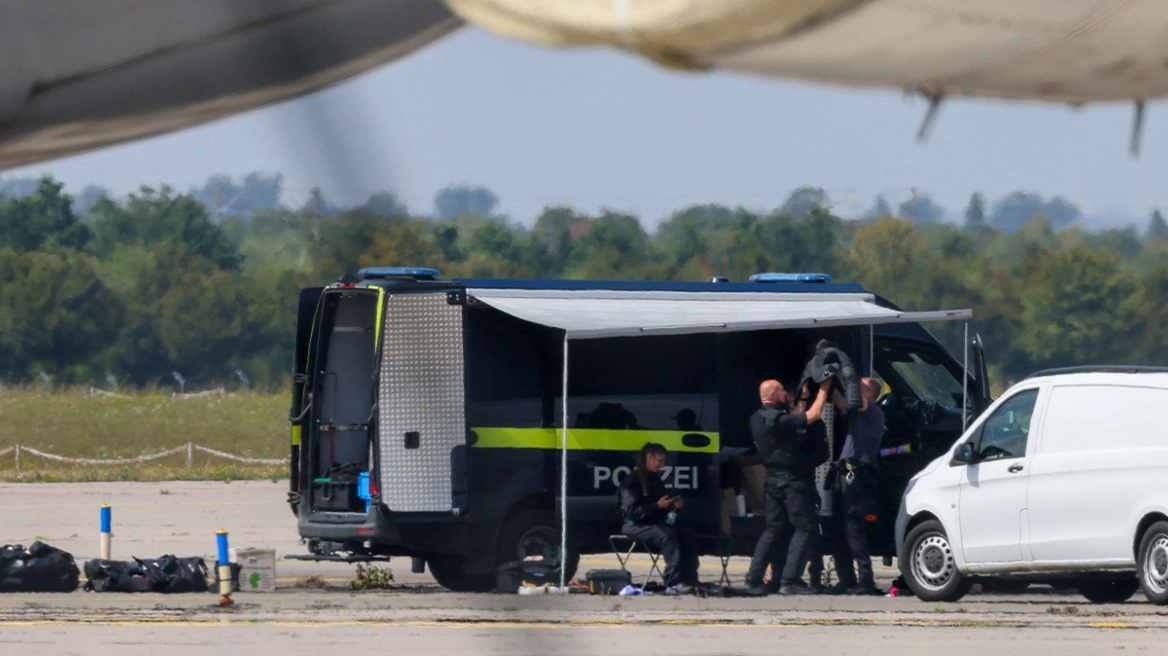
German authorities have identified two men as suspects in the attempted drone attack at Leipzig Airport in early August, which reportedly targeted a Ukrainian transport aircraft.
According to Süddeutsche Zeitung, a leading German newspaper, and the public broadcasters NDR and WDR, the suspects are a man of Russian origin holding a Latvian passport and a Belarusian national, already known to the authorities, who holds a Russian passport. Investigators believe the two men are linked to the drone attack, in which Leipzig Airport is understood to have narrowly avoided a serious incident.
German Interior Minister Alexander Dobrindt, speaking at a press conference on Tuesday evening, described the attempt as an operation that had been planned and carried out professionally, with “a high degree of technical expertise and significant organisational preparation.”
Dobrindt said the characteristics of the attack pointed to a “known pattern of hybrid Russian operations in Europe.”
Investigations by German authorities so far indicate that the drone attack attempt at Leipzig Airport was carried out by individuals allegedly acting on behalf of Russian state agencies, Dobrindt said.
The Interior Minister referred to “low-level agents” and said the federal government had concluded that Russia bore responsibility for the attack on 4 August. He did not disclose the suspects’ names or provide further details of the evidence leading investigators to conclude that Russian intelligence services were behind the operation.
He noted that the investigation was still ongoing and required particularly strict protection of information. Nevertheless, according to German media, the inquiry has already progressed significantly, with Germany’s Federal Prosecutor’s Office, which handles cases of national significance, reportedly investigating two specific suspects.
Alleged coordinator of Russian origin, DNA evidence led to Belarusian suspect
According to German media, authorities believe they have identified the man who coordinated and directed the operation, a man of Russian origin holding a Latvian passport who is reported to maintain contacts with the Russian secret services.
The suspect reportedly entered Germany in late July via Berlin’s BER airport before travelling by rental car to Leipzig. Two days before the failed drone attack, he left the country, again by air, through the same airport.
DNA evidence found at the scene appears to have played a decisive role in the investigation, leading to the second suspect. Genetic material was found on one of the drones, inside a metal container holding explosives, and on an antenna that had been fitted to a tree near the airport.
Investigators believe the antenna was likely used to boost the mobile phone signals controlling the drones. Comparing the genetic evidence with European databases produced matches in Lithuania and Finland.
This led investigators to the man from Belarus, who had previously come to the attention of authorities in other countries over separate offences. He also holds a Russian passport, and investigators have managed to reconstruct his movements in and out of Germany.
According to the same sources, he had entered the country on an Italian tourist visa, issued in late April by an Italian diplomatic mission in Minsk.
Despite the progress made, German authorities remain cautious about whether the suspects can be brought to justice.
Moscow denies any involvement in the case. The Russian embassy in Berlin described the incident as a “hastily staged provocation” and voiced “concern about a new wave of anti-Russian hysteria in Germany.”
Ask me anything
Explore related questions




