





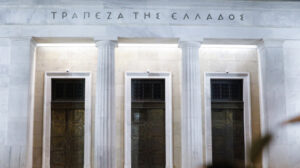
Inflation in Greece is rising sharply, driven primarily by rising energy prices and substantial increases in the cost of services, according to the Bank of Greece’s latest Inflation Monitor. The central bank forecasts that annual inflation will reach 3.5% in 2026, up from 2.9% in 2025.
Inflationary pressures intensified significantly in September, when Greece’s Harmonised Index of Consumer Prices (HICP) rose to 5.1%, from 3.7% in August. A similar acceleration was recorded across the eurozone, where inflation reached 3.8%, according to preliminary estimates.
Despite the sharp increase in September, average inflation in Greece stood at 3.8% over the first nine months of 2026.
According to the Bank of Greece, persistent inflation is primarily linked to steep price increases in services and continued rises in energy costs, which remain a burden on households and businesses.
Tourism and energy costs drive price increases
The sharp acceleration in Greek inflation in September was largely attributed to the services sector, where significant price increases were recorded for hotel accommodation and air fares.
This trend reflects strong tourism demand as well as the indirect impact of higher energy costs.
Meanwhile, energy inflation accelerated as a result of substantial increases in natural gas, electricity and transport fuel prices.
The combined impact of these factors is keeping inflationary pressures elevated, despite the gradual easing seen in previous periods.
A notable rise was also recorded in core inflation, which excludes energy and food prices. Its increase in September coincided with accelerating service prices, indicating that inflationary pressures extend beyond energy products.
Ask me anything
Explore related questions




