





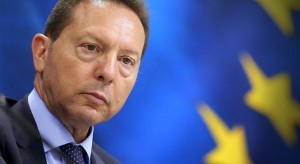
The preparations on the Greek debt relief have lasted over six months. Tonight, however, Mr. Yannis Stournaras and Mr. Wolfgang Schaeuble will meet at the Eurogroup meeting to deal officially for the first time the debt issue.
Mr Stournaras has all the documens that prove that Greece has met the conditions set by the finance ministers of the Eurozone in 2012 (achieving a primary surplus, implementation of the agreed actions with the troika) so as to to take action and setup the Greek debt issue.
However, decisions should not be taken before the end of 2014.
Mr. Stournaras will explain that Greece did whatever it could and is committed to achieve new primary surpluses. However, all these will not be enough if the debt relief that was promised by the partners is not confirmed.
During the meeting of finance ministers it is expected to hear the view of the IMF that a “haircut” of the debt is required. Mr. Schauble does not even want to hear about that right now. Therefore, the discussions will be based on extending the loan maturity date to 50 years instead of 30 years and at the same time reducing the interest rates. Or switching to a fixed rate to avoid affecting the Greek debt from a future increase in ECB interest rates .
It is estimated that all these, under preconditions, can be translated into a relief of up to 25 billion euros in a period of decades making the Greek debt sustainable in 2022.
Under these circumstances, the government is expected to move in two directions:
– stretching the maturity of 192.8 billion euros in loans the country has to 50 years. The loans received through the first memorandum amount to 52.9 billion euros and have an average maturity of 17 years. The loans verified by the second memorandum Greece received from the European Financial Stability Facility (EFSF) amount to 139.9 billion and have an average maturity of 30 years.
The extension is expected to reduce Greece’s debt repayments over the next couple of decades by about 6 billion euros a year.
-switching to a fixed interest rate on the loans. Currently, Greece is paying an interest rate of 0.82% (3-months Euribor + 0.50%) but as the Euribor rate is expected to rise up to 2 units over the next few years, Greece wants to ensure lower repayments by fixing it at a low rate.
Ask me anything
Explore related questions




