





It’s that time of year again! Christmas is just around the corner and if you haven’t put the scales away yet, you’d better do it before the end of this week.
The countdown to the end of the year has began and in spite of the high temperatures in Australia, Greeks are getting ready for massive caloric consumption over the next 15 days.
With the majority of Greeks being Christian Orthodox, many have been fasting for up to 40 days, before indulging themselves in the traditional flavours this season has to offer.
From the first kalanda (carols), the festive season officially begins on 6 December, St Nicholas day for the Greeks and typically lasts until the Epiphany of the Lord on 6 January and the blessing of the waters.
Christmas is a special time of year, as it unites family and friends, sometimes even enemies and it symbolizes love and hope for new and better beginnings. While faith is officially the common denominator, in reality it is the copious amounts of food that brings people together.
Greek cuisine is famous for its scrumptious dishes, flavoured with the enticing aromas of herbs and spices and the Christmas holidays are no different.
The traditional Hellenic festive table honours almost religiously the likes of pork, veal, lamb, or goat meat as the main dish, with turkey and chicken having also entered the Advent feast in recent decades. Lamb and pork, however, have been part of the Greek table since ancient years and became a staple again after Christianity became a popular religion in the region, around 700 AD.
Most families would eat meat twice a year, slow cooked alongside fruits, nuts and braised in olive oil and honey. People would slaughter a goat or lamb in Christmas and Easter, inviting all relatives and neighbours to share the the food and rejoice. Meanwhile, in Northern Greece, stuffed cabbage leaves are called yiaprakia and are made with not fresh but toursi (brined) cabbage and ground pork, and are a traditional Christmas dish.
Another custom in many areas of Greece, a symbolism of the Holy Communion, is baking Christopsomo, also known as Christ’s bread, dipped in Krasomelo, the Greek version of mulled wine. While many argue this tradition is best fitting for Easter, for many first Christians the recreation of the scene signifies the rebirth of Christ, every year. While the Christopsomo was originally flatbread, throughout the years it took the form of a sourdough karveli, often spiced up with nutmeg and most recently, people find it in a tsoureki like version sans the eggs. The bread is usually round and bears a cross on the top; made the day before Christmas, and eaten on the following day, at the Christmas table passed on from guest to guest with the first bite dipped in mulled wine.
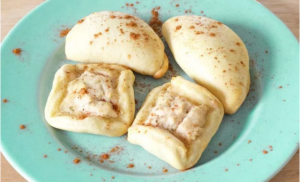
In most regions of Greece people also bake cookies flavoured with orange, cinnamon and cloves. Greece’s favourite cookies for the season, however, are the melomakarona (soft, nut-filled cookies dipped in syrup and sometimes chocolate on top) and the kourambiethes (butter-based almond cookies covered in white, powdered sugar). In Crete, most families hounour one of the island’s signature recipes, the kalitsounia, every day of the festive season adding a dash of sugar in the mix.
There’s also the Vasilopita, which is served on New Year’s Day and in some Greek towns it resembles a sweat tsoureki, while in others a classic vanilla and orange sugar coated cake.
In this edition, we will share some of the least known Christmas recipes from home.
Veal stew garnished with fruits and nuts
Ingredients:
1.5 kg of quality veal, cut into 14-16 pieces
600g leaks, sliced
2 large carrots, sliced
2/3 of a cup olive oil
1/3 of a cup cognac
2 tbsps soya sauce
250g warm water (1 cup)
16 dried plums (pitted)
16 dried apricots (pitted)
16 almonds (without skins)
juice of 2 lemons
salt and freshly ground pepper
1 garlic
Method:
1. Cut the veal into large pieces and wash thoroughly; wipe with some paper towel (it is important to dry the meat well, in order to be nicely browned).
2. Heat the oil in a large saucepan, add the meat and garlic in batches so that the temperature of the oil remains high, and sauté, until browned on all sides, with as many garlic cloves as pieces of meal.
3. When done, remove with a slotted spoon, place on a platter, cover and set aside.
4. Slice the leeks, add in the same oil used to brown the meat and sauté. Add the veal and pour in the cognac; wait for a while, until it evaporates. Add the soya sauce, the carrots, the warm water and season with salt and pepper.
5.Place the lid on, turn the heat down and let it simmer for 1 and 1/2 hour. About 10-15 minutes before the veal is ready, add in the pan the dried plums, apricots and almonds and stir.
Serve with pilaff, mashed or roast potatoes. Enjoy!
*Recipe courtesy of www.mygreekdish.com
More recipes HERE
Ask me anything
Explore related questions




