





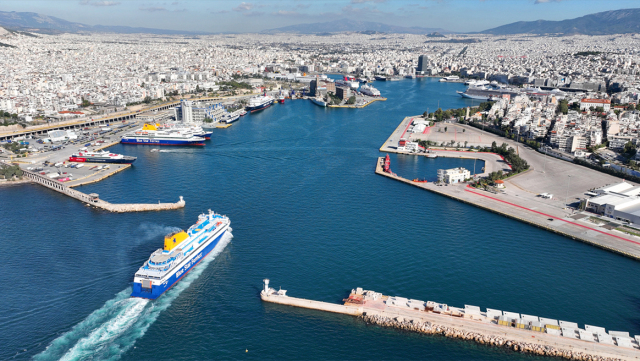
The picture travellers see today is full of discounts, family packages and last-minute deals. Behind this marketing push, however, the reality facing ferry companies is far more challenging. Despite growing demand for travel to the Greek islands, operating costs remain high, significantly limiting the scope for across-the-board fare cuts.
Data from 2025 confirm that the ferry sector continues to expand. Passenger numbers this year increased by 2.4 percent compared with 2024, reaching 18.42 million, while vehicle traffic recorded an even sharper rise of 13.2 percent, exceeding 3.47 million.
Growth was not uniform across all routes, however. Some connections to Crete saw significant increases, while other destinations, including the Cyclades, the Sporades and parts of the North Aegean, experienced a decline.
Shipping Minister Vasilis Kikilias maintains that ticket prices have not risen this year, though industry figures counter that the underlying cost of ferry travel remains the real issue. Companies point to persistently high fuel prices as the main pressure on their margins: after shipping firms switched from IFO 380 to the costlier MGO fuel in 2025, prices spiked further from February 2026, with MGO in Piraeus briefly exceeding 1,600 dollars a tonne. Prices have eased since but remain above 1,000 dollars a tonne, well above 2025 levels.
To offset criticism over high fares, operators are leaning on targeted offers rather than blanket reductions, including discounted combined hotel-and-ferry packages to islands such as Lesvos, Chios and Samos, loyalty scheme discounts of up to 30 percent, and reduced vehicle return fares on select routes. Social tourism schemes for vulnerable groups can cut fares by up to 75 percent.
Ask me anything
Explore related questions




