





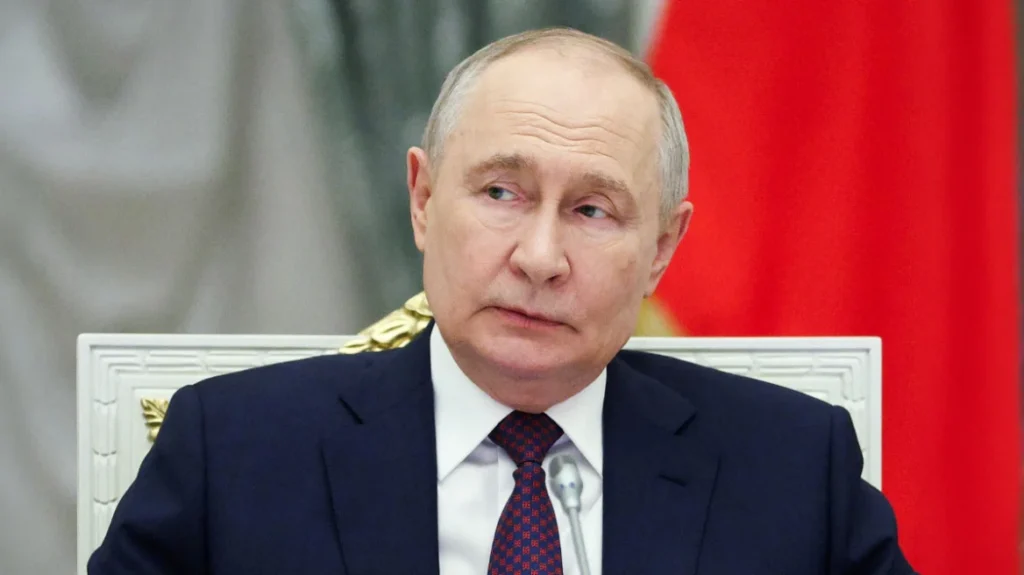
Some of Russia’s wealthiest businessmen are beginning to imagine a country without Vladimir Putin. Despite their billions, they have lost almost all ability to influence political affairs.
According to an extensive BBC report, members of Russia’s economic elite are already discussing, albeit discreetly, what might happen after Putin leaves the Kremlin, considering the possibility of a return to a system in which oligarchs once again have a meaningful say in how the country is governed.
These discussions do not mean that there is an organised plan to oust the Russian president. On the contrary, fear of Putin remains so deeply entrenched that even the most dissatisfied billionaires avoid any public challenge to his authority.
From the dominance of the 1990s to submission to Putin
The relationship between Putin and Russia’s most powerful businessmen was vividly illustrated on 24 February 2022, just hours after the invasion of Ukraine began. More than 36 of the country’s wealthiest individuals gathered at the Kremlin, visibly exhausted and anxious. Putin sat some distance away from them and called on them to work with the government to support the economy. Not one of them voiced any objection.
The scene was a far cry from Russia in the 1990s, when oligarchs, having amassed enormous fortunes through the privatisation of state-owned companies following the collapse of the Soviet Union, were able to influence governments and political decisions.
When he came to power in 2000, Putin brought that era to an end, making it clear that wealth would no longer translate into political power. A notable example was Mikhail Khodorkovsky, then Russia’s richest businessman, who spent ten years in prison after publicly accusing the president of corruption. He had been convicted of financial offences, which he denied.
Today, despite Western sanctions and the war, Russia is home to 155 billionaires, according to Forbes, with their combined wealth approaching $700 billion. However, their fortunes afford them neither political influence at home nor the freedom of movement they once enjoyed abroad.
“They are rich because they have some relationship with Putin, not the other way round,” Dmitry Nekrasov, an exiled Russian politician and analyst, told the BBC.
The three scenarios for Russia after Putin
Although there is no indication that Putin, who turned 74 in October, is preparing to leave office, the question of who might succeed him is attracting growing interest among Russia’s elite.
The BBC outlines three main scenarios being considered by analysts for the post-Putin era.
The first is a transition to a more democratic system, with greater political freedoms and genuine competition between political parties. However, this is considered the least likely outcome, as democratic institutions have been severely weakened during Putin’s time in power.
The second is the continuation of the authoritarian model under a new leader. According to Alexandra Prokopenko, an exiled Russian analyst, Putin’s successor would initially be likely to be weaker, as they would lack the same political influence and machinery of power that the current president has spent decades building.
The third scenario, and one that holds particular appeal for many tycoons, is a return to a form of “oligarchic democracy”, in which powerful business and political groups share power.
“They would like to return to a time when their opinions mattered, when their assets were not being taken away and when they understood the rules of the game,” Prokopenko explains.
From “the boss” to “grandpa”: How the way they refer to Putin has changed
Prokopenko also reveals a particularly telling detail about the way businessmen now refer to the Russian president in private conversations.
In the past, they called him “Nachalnik”, meaning “boss”, or “Perviy”, meaning “first” – titles that reflected respect and recognition of his authority. Now, according to Prokopenko, they use the word “Ded”, meaning “grandpa” or “old man”, with a hint of contempt.
This change does not amount to open defiance. On the contrary, fear remains the dominant sentiment. Prokopenko even describes a case involving a tycoon who, during an interview, sat on his mobile phone, believing this would make it more difficult for the security services to monitor him.
“This is fear of an entirely Stalinist kind,” she comments.
The Russian billionaire’s interview that made headlines
One of the clearest signs of the changing mood came from Andrey Melnichenko, Russia’s eighth-richest man, internationally known as the “fertiliser king”.
In a rare interview with The Economist, Melnichenko argued that Russia needed to open up more to the rest of the world and undergo changes that would bring an end to one-man rule.
He did not call for Putin to step down and, on several occasions, reiterated the Kremlin’s official positions on the war in Ukraine. Nevertheless, his public comments were considered unusual for a businessman of his stature.
Arkady Ostrovsky, the journalist who interviewed him, believes Melnichenko was not expressing solely his own personal views, but may also have been voicing the thinking of other powerful businessmen.
According to Ostrovsky, many of Russia’s wealthiest individuals feel that the war has led the country into an “absolute dead end”, creating a sense that there is no future.
Why no one dares to move against him
Despite their discontent, analysts agree that the chances of oligarchs attempting to challenge Putin while he remains in power are extremely slim.
Bill Browder, formerly a major foreign investor in Russia and a prominent critic of the Kremlin, argues that the tycoons are well aware of the risks.
“They understand that if they did anything that could challenge Putin, he would kill them. And Putin is a very paranoid little man,” he told the BBC.
Some businessmen are already seeking to cultivate relationships with ministers and security service officials, discreetly preparing for the balance of power that may emerge in the future. However, according to political analyst Dmitry Nekrasov, any more decisive move would be far too dangerous.
The crucial question, therefore, is not simply when the Putin era will come to an end, but who will be able to control the succession. Russia’s oligarchs, who once had the power to shape the country’s political developments, appear keen to reclaim some of the influence they have lost.
It remains unclear, however, whether the power structures Putin has created will allow them to do so.
Ask me anything
Explore related questions




