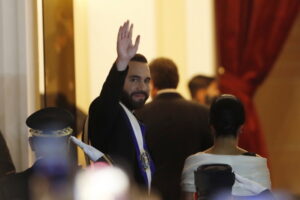
El Salvador‘s president Nayib Bukele said he would rather be called a “dictator” than allow criminals to walk free, defying criticisms against him.
In power since 2019, Nayib Bukele is known, in the country and internationally, for his iron-fist policy to crack down on crime, which has earned him enormous popularity in the country but has been criticized by human rights advocacy groups.
El Salvador’s president has justified the recent arrests of human rights activists in the name of his government’s crackdown on corruption and denied that these arrests constitute political persecution.
“They say we are imprisoning human rights defenders, dissidents, opponents of the regime. How can we fight corruption if the entire opposition enjoys guaranteed impunity?” he said, without naming the individuals he was referring to.
“We continue to focus on results,” he added. “Contrary to lies spread day and night, we have achieved more results than any other government in our history.”
Bukele’s war on gangs has led to a drop in the homicide rate to its lowest level in 30 years. But the Latin American country’s leader has faced a wave of criticism following the May 18 arrest of Ruth Eleonora Lopez, a prominent lawyer and activist.
The 47-year-old head of the non-governmental human rights advocacy group Cristosal, which criticises the security policies of El Salvador’s president, has rushed to help the families of 252 Venezuelan migrants imprisoned in El Salvador after being deported from the United States. She was arrested by police following a warrant issued by the prosecution accusing her of committing abuse while working for the Electoral Tribunal ten years ago.
El Salvador’s president has become a key partner of his US counterpart, Donald Trump, in his policy to fight illegal immigration.
Ask me anything
Explore related questions