





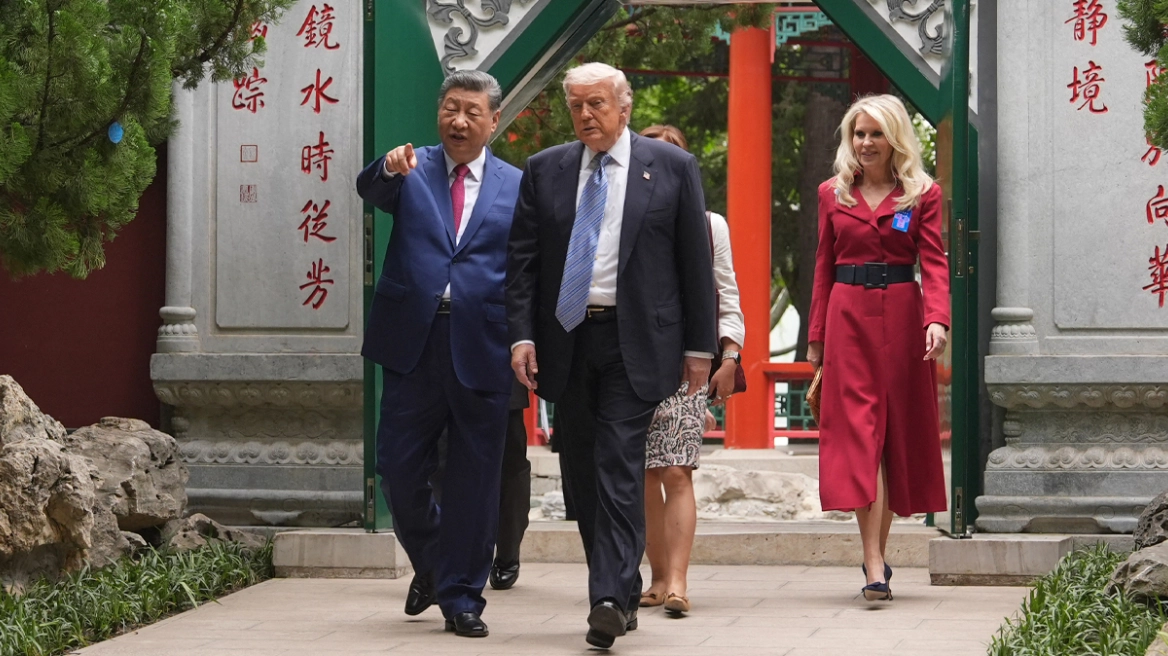
By promoting trade agreements that nevertheless failed to excite markets, Donald Trump concluded his two-day trip to Beijing, while China warned Washington over its handling of the Taiwan issue and stated that the war with Iran “should never have started.”
Trump’s visit to his country’s main strategic and economic rival—the first by a US president since his own trip in 2017—aimed to produce tangible results that would boost his declining popularity ahead of crucial midterm elections.
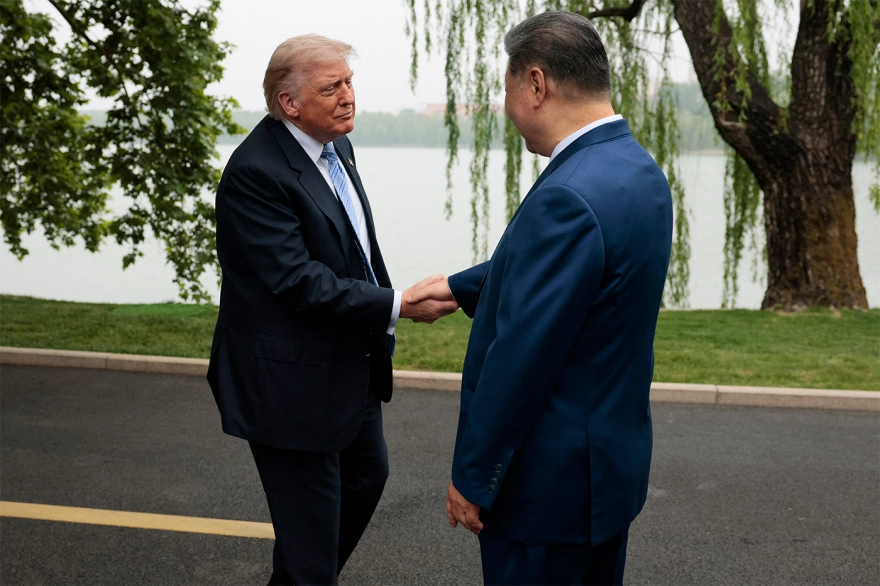
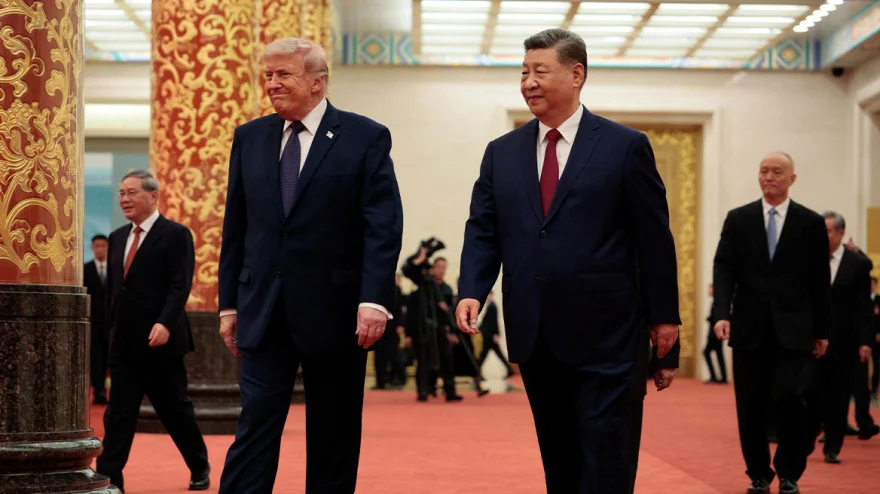
The summit with Xi Jinping was marked by impressive ceremony and symbolism: grand welcomes with soldiers in formation, lavish formal dinners, and private tours of secret gardens, while Trump repeatedly praised his Chinese counterpart, commenting on his “warmth” and “prestige.”
“It was an incredible visit. I think a lot of positives came out of it,” Trump told Xi during their final meeting at the Zhongnanhai complex, the former imperial gardens that now house China’s leadership offices, before the two leaders dined on a menu that included lobster meatballs and Kung Pao scallops.
Sharp statement on Iran
Shortly before Friday’s meeting, however, China’s Foreign Ministry issued a sharp statement expressing displeasure over the US and Israel’s war with Iran.
“This conflict, which should never have happened, has no reason to continue,” the Chinese Foreign Ministry said, adding that Beijing supports efforts for a peace agreement in a war that has severely affected energy supplies and the global economy.
At Zhongnanhai, Trump said the two leaders discussed Iran and that their views were “very similar,” although Xi did not publicly comment on the issue.
The US president was expected to push China to use its influence over Tehran to reach an agreement. However, analysts doubt whether Xi is willing to apply serious pressure on Iran or limit its support for the Iranian military, given Tehran’s strategic value to Beijing as a counterweight to the US.
A brief White House statement on Thursday’s talks focused mainly on the shared desire of the two leaders to reopen navigation in the Strait of Hormuz, through which once passed about one-fifth of global oil and gas, as well as China’s interest in purchasing US oil to reduce its dependence on the Middle East. “What stands out is that there is no concrete Chinese commitment regarding Iran,” commented Patricia Kim to Reuters.
On the economic side, US officials said that agricultural sales were agreed and progress was made in creating mechanisms to manage future trade relations, with both sides expected to identify $30 billion worth of non-sensitive products.
However, details of the agreements remained limited, and there was no significant progress on the sale of Nvidia’s advanced H200 artificial intelligence chips to China, despite the surprise participation of the company’s CEO Jensen Huang in the delegation.
Trump told Fox News that China agreed to order 200 Boeing aircraft, the first purchase of American commercial planes in nearly a decade. However, this was significantly lower than the roughly 500 aircraft markets had expected, causing Boeing’s stock to fall more than 4%. “For markets, the summit may offer strategic relief, but it disappoints in substance,” said Chim Lee.
Decline in Chinese stocks
Chinese stocks fell on Friday, as the meeting between the leaders of the world’s two largest economies failed to produce deals that would excite investors.
The main outcome of the summit appears to be the maintenance of a fragile trade truce agreed at their previous meeting in October, when Trump suspended triple-digit tariffs on Chinese goods and Xi avoided cutting exports of critical rare earth minerals.
US Trade Representative Jamieson Greer said on Bloomberg TV that it has not yet been decided whether the truce will be extended beyond its expiration later this year.
Warning over Taiwan
The sharpest moment of the summit came with Xi’s warning to Trump that mishandling the Taiwan issue could lead to conflict.
Democratically governed Taiwan, located just 80 kilometers from China’s coast, has long been a major point of tension in US–China relations. China has not ruled out the use of military force for reunification, while the US is legally committed to providing Taiwan with defensive capabilities.
US Secretary of State Marco Rubio, who accompanied Trump on the trip, told NBC News that US policy on Taiwan “remains unchanged.” “The Chinese always raise it, we clarify our position and move on,” he said.
Taiwan’s Foreign Minister Lin Chia-lung thanked the US for its continued support.
Rubio also revealed that Trump raised the case of imprisoned Hong Kong media tycoon and outspoken Beijing critic Jimmy Lai, who was sentenced to 20 years in prison in February in the largest national security case in the city’s history.
China’s Foreign Ministry has repeatedly said Hong Kong cases are an internal matter, while Lai denies all charges.
Despite limited agreements, both sides tried to present the meeting as a step toward stabilizing what Xi called “the most important relationship in the world.” “We must keep it functioning and never destroy it,” the Chinese president said at Thursday’s official dinner.
Ask me anything
Explore related questions




