





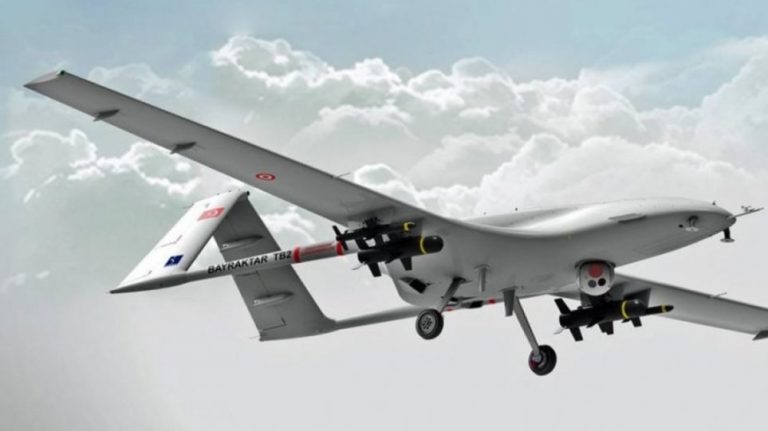
Project Ploughshares, has issued an very interesting Special Report regarding the way Canada practically allows military Canadian-made equipment to be used in at least questionable operation by Turkey. The analysis is called and you can download it: “Killer Optics: Exports of WESCAM sensors to Turkey – a litmus test of Canada’s compliance with the Arms Trade Treaty”.
Summary
L3Harris WESCAM, the Canadian subsidiary of U.S. defence giant L3Harris, is one of the world’s leading producers and exporters of Electro-Optical/Infra-Red (EO/IR) imaging and targeting sensor systems, with approximately 500-million CAD in annual exports. WESCAM is located in Burlington, Ontario.
Like most Canadian-based weapons manufacturers, WESCAM exports most of what it produces. Its products are used in more than 80 countries on more than 190 platforms, primarily to perform intelligence, surveillance, target acquisition, and reconnaissance (ISTAR).
Since 2017, Turkey has been a major customer for WESCAM products, second only to the United States. During this time, the Turkish military has not only been active in trying to put down an insurgency in southeast Turkey, but has become increasingly involved in armed conflicts in Syria, Iraq, and Libya.
Based on an analysis of Canada’s international obligations, domestic arms controls, and an evaluation of Turkey’s recent conduct during warfare, Canada’s export of WESCAM sensors to Turkey poses a substantial risk of facilitating human suffering, including violations of human rights and international humanitarian law. Canadian officials are obligated by international and Canadian law to mitigate the risks of such transfers, including through the denial of export permits, when such risks are apparent from the outset—which appears to be the case with WESCAM exports to Turkey.
Gary Oldman & NBCUniversal sued over Oscar-nominated “Darkest Hour”
Moria: Illegal immigrants destroyed the church of Agios Georgios – Unbelievable photos
Project Ploughshares has collected evidence in government and public records, media reports, academic sources, accounts from credible human-rights monitors, and open-source data that strongly indicates that WESCAM EO/IR sensors, mounted on unmanned aerial vehicles (UAVs), have been used extensively by Turkey in its recent military activities. Such use raises serious red flags, as it has been alleged that Turkey’s military has committed serious breaches of international humanitarian law (IHL) and other violations, particularly when conducting airstrikes.
It appears that Turkey has also exported UAVs equipped with WESCAM sensors to armed groups in Libya, a blatant breach of the nearly decade-old UN arms embargo.
The dramatic rise in exports of WESCAM systems to Turkey has persisted despite Canada’s 2019 accession to the Arms Trade Treaty (ATT), the first binding framework that aims to regulate the international trade and transfer of weapons, and reduce the human suffering posed by their proliferation. The export of WESCAM sensors to Turkey constitutes a troubling case study of the way in which Canada is complying with its obligations under the ATT. If they are an indication of future Canadian practice in authorizing arms exports, the outlook is hardly promising.
Source: Project Ploughshares
Ask me anything
Explore related questions




